Receiving PIP Doesn’t Mean You Aren’t Allowed to Have a Life
There’s been a lot of talk about PIP recently, especially with the ongoing Timms Review looking at how it works and what might need to change.
Alongside that, I’ve seen some horrible rhetoric about disabled people online.
Apparently we’re all “gaming the system”.
I’ve seen that written in comments multiple times now, alongside this idea that if someone receives PIP they shouldn’t be working, going out, having hobbies, going on holiday or doing anything that might make it look like they’re enjoying their life.
But that’s not what PIP is.
PIP is there to help with the extra costs that can come with having a long-term health condition or disability. You can receive it while working or if you have savings.
Being Disabled Is Expensive

Scope’s 2025 Disability Price Tag research found that disabled households need an extra £1,095 a month on average just to have the same standard of living as non-disabled households.
PIP doesn’t come close to covering all of that.
There are the bigger expenses, such as mobility equipment and adaptations, but also so many little things that add up.
For me, there are things like eye drops, supplements, extra electricity because I need to keep warm in winter and cool in summer, wheelchair insurance and easier meals for the days when I’m in a complete crash.
On those days, eating is more important than anything else.
Then there’s equipment. What you’re able to get through services can depend on where you live and your circumstances, so sometimes you end up having to buy the things you need yourself.
My home isn’t wheelchair accessible, for instance, even though I need a wheelchair. That affects what equipment works for me and what I have to sort out myself.
Why Being Non-Means-Tested Matters
Something I think gets missed in conversations about PIP is that it isn’t means-tested.
It isn’t based on whether you work, whether your partner works or whether you have savings. It’s about how your disability or health condition affects you.
And I think that’s incredibly important.
If disability support was instead restricted to people who qualified for a means-tested benefit, the need for support wouldn’t suddenly disappear for everyone who no longer qualified.
The disability wouldn’t disappear because someone’s partner worked or because their household had savings.
Neither would the extra costs.
There can be knock-on effects elsewhere too. Receiving the daily living part of PIP can make the person caring for you eligible for Carer’s Allowance, as long as they meet the other criteria.
Some disabled people supported by family or friends could also need more formal support if that care became harder to provide.
That’s why I think PIP remaining non-means-tested matters.
Interestingly, the emerging recommendations from the Timms Review agree on this point. They say PIP should remain a flexible, non-means-tested benefit that contributes towards the extra costs disabled people and those with long-term health conditions face. These aren’t the final recommendations yet, but I was glad to see that principle included.
PIP Doesn’t Mean You Can’t Work

This is another thing I really wish more people understood.
You can work and receive PIP. It isn’t a loophole or someone getting away with something.
I work.
Blogging isn’t a conventional way to work, but that’s part of why I can do it.
On a bad day, I do nothing. I lie down and try to recoup some energy.
Another day I might suddenly pick up for an hour in the evening and manage to get something done. More and more I work lying on the sofa using my phone because sitting up at my laptop is hardddd.
It lets me keep using my brain, which is important to me. It lets me feel like I’m doing something and I’m paying taxes.
But being able to work like this doesn’t mean I could suddenly manage a conventional working day.
A Photo Doesn’t Show You Everything
This is something I worry about myself.
I don’t really share the bad days online.
If you look at my social media, you might see a day out, something I’ve bought or something I’ve enjoyed and think that’s what my life looks like.
It isn’t.
Most of the times I leave the house are for appointments. I average around two a week with different people and my energy is normally depleted afterwards.
If I manage a proper day out, you don’t see all the lying down beforehand and afterwards.
You don’t see the people helping me get there and back, the wheelchair, checking whether the venue is accessible, checking the toilets and all the other planning that goes into making it possible.
You see a photo.
A snapshot isn’t the full picture.
Disabled People Are Still Allowed to Enjoy Things
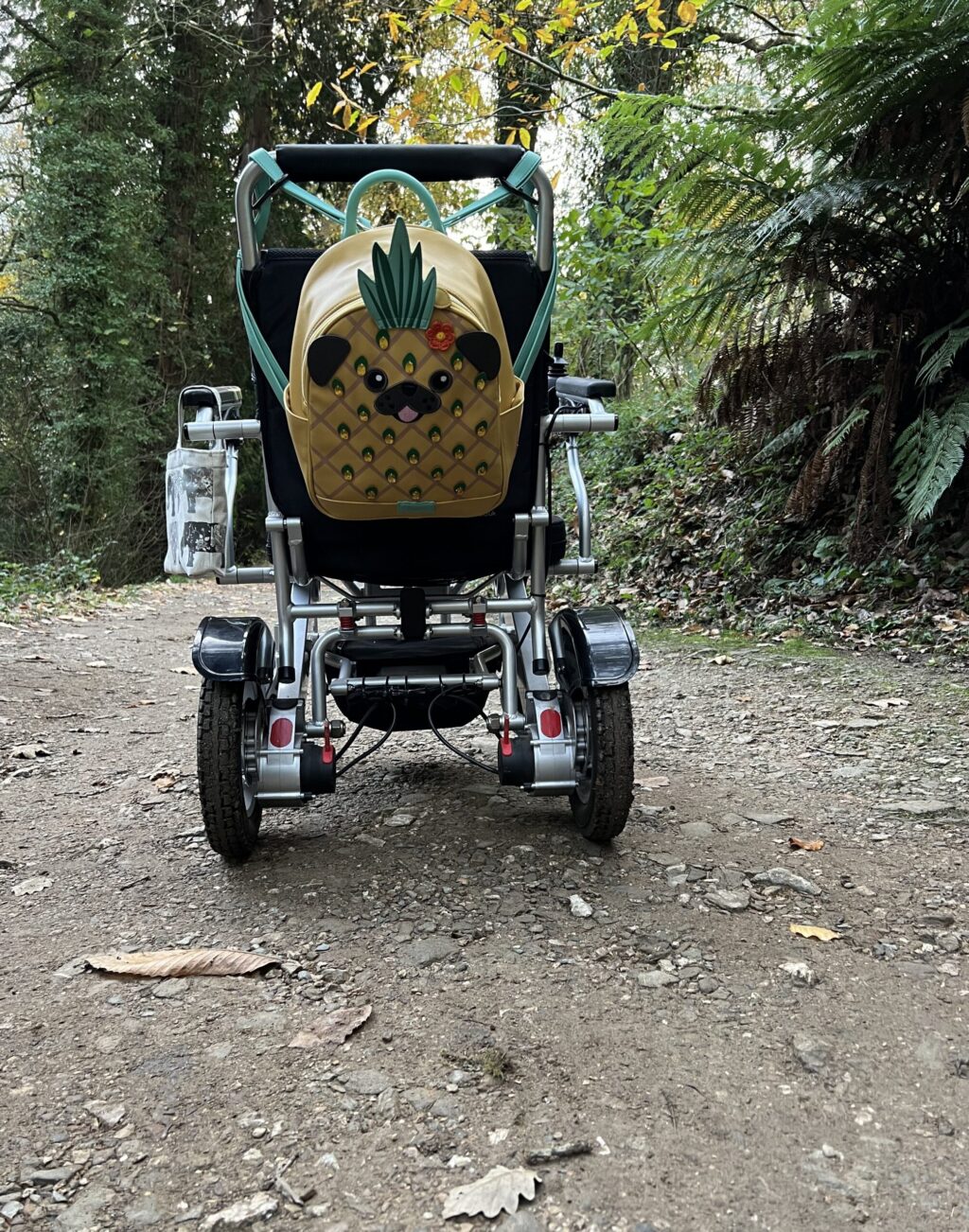
I find the idea that disabled people shouldn’t have hobbies, holidays or other things they enjoy really difficult.
Being disabled can already make your world incredibly small.
There are times when it feels like my life is appointments and recovering from appointments.
Having something I enjoy doesn’t change that.
My bad days outnumber my good ones by a long way, but I don’t think anyone looking in really sees just how much of my life is affected.
On the outside I can look “OK”.
That doesn’t tell you what I’m able to do, what help I’ve needed or what doing something is going to cost me afterwards.
And I think that’s what gets lost in so many of these conversations about PIP.
Someone might work. They might have a hobby. They might go away for a few days. They might post a photo where they’re smiling and having a good time.
That is one tiny snapshot of their life.
You can’t tell someone’s disability or abilities just by looking at them.
Being disabled is expensive.
And receiving help towards those costs shouldn’t mean you’re no longer allowed to have a life.
Pin It!



One Comment