The Good Day Box
AD
When someone asks whether you’ve had a good week and your mind returns absolutely nothing, it isn’t because there was nothing good in it. It’s because the filing system has stopped cooperating.
A friend asked me a few months ago whether anything nice had happened lately. Ordinary question, kindly meant. And I sat there with my mouth slightly open, scrolling back through the week, and came up with nothing at all.
Not “nothing much”. Nothing. A blank week. I said something vague about it being quiet and moved the conversation on, and then spent the rest of the evening quietly rattled, because I knew that wasn’t true. There had been a morning that week that was genuinely lovely. I could not have told you a single thing about it while she was sitting in front of me.
It isn’t ingratitude, and it isn’t lying

This took me an embarrassingly long time to stop taking personally.
Memory isn’t a filing cabinet you can search on demand. What comes back to you depends enormously on the state you’re in when you go looking, and low mood pulls hard towards the matching material. Ask a brain that’s having a rough month for evidence about how life is going, and it will hand you the rough months. Not out of spite. It’s just what’s nearest the top of the pile.
The good week had happened. I simply couldn’t get at it with the tools I had to hand at the time.
So I stopped trying to argue with my memory and started keeping evidence outside of it.
What’s actually in the box
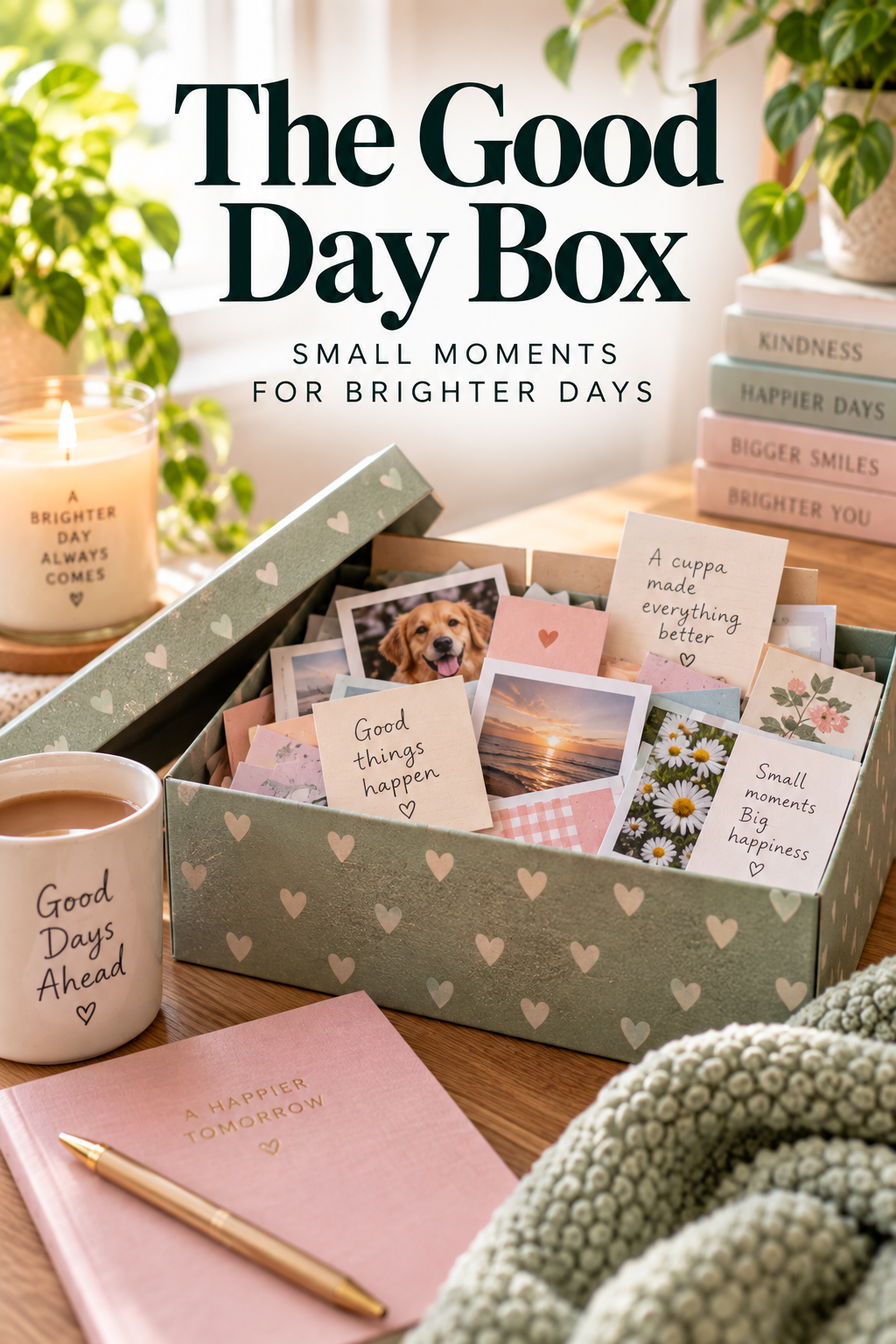
It’s a shoebox. There’s nothing clever about it. It lives within reach of where I usually am, which matters more than it sounds like it should, because a box that requires a good day to get to is no use on a bad one.
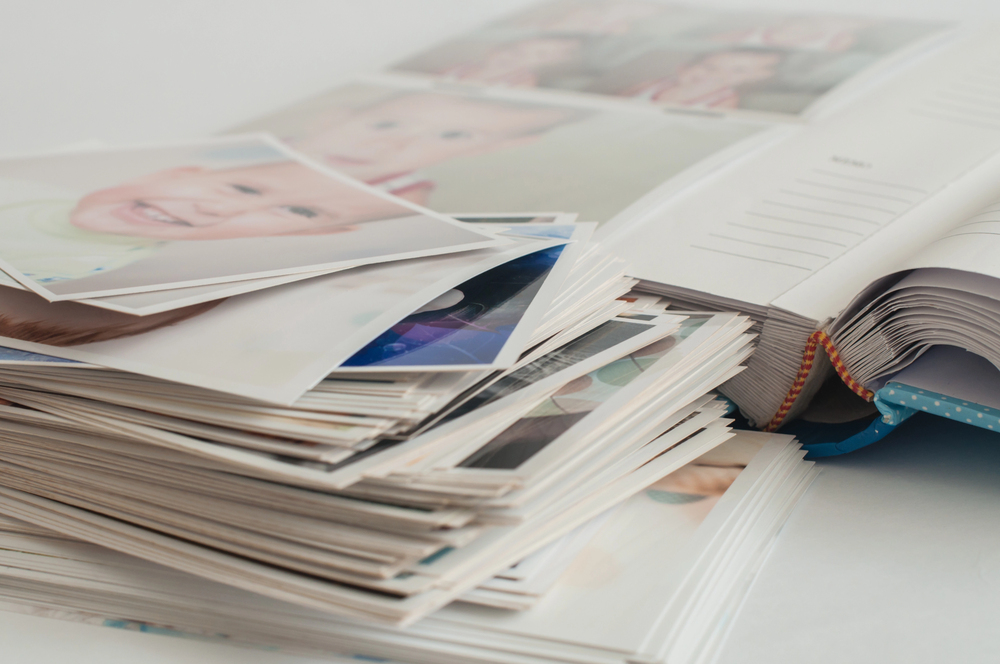
Inside are printed photographs of small, ordinary, entirely unremarkable good moments.
Not holidays. Not birthdays. Not the handful of properly good days a year that I’d remember anyway. The box is deliberately full of the opposite: a cup of tea photographed for no reason, a random Tuesday where the pain was a four instead of a seven and I noticed and took a picture of absolutely nothing to mark it. Somebody’s terrible handwriting on a card. The sky doing something slightly better than usual out of the window.
The unremarkable ones do the work. Big occasions prove that life can be good if the conditions are exceptional, which is not the reassurance you need at nine on a Wednesday evening. What you need is proof that ordinary days have been fine before, because an ordinary day is what you’re going to get tomorrow.
Why print them
They were all on my phone already, obviously. The phone didn’t help, for two reasons.
The first is that a camera roll is a filing system too, and a worse one, twenty thousand images deep, no order, and finding a specific good afternoon means scrolling past a great deal of everything else, including the photos you took of a rash to show the GP.
The second is more important. The phone is also where the bad things live. Going to it for comfort means passing the news, the messages you haven’t answered, the emails, and everyone else’s edited highlights on the way. I have never once opened my phone feeling shaky and come away feeling steadier.
A box doesn’t do any of that. You open it, and there is only the thing you came for.
The practical bit

You can do a batch every month or two, whenever there are enough. They don’t have to be big, for instance; pick the small ones, order 6×4 photo prints, from Photo Zone, and they work out at pennies each once you order a decent batch, which matters when you’re printing pictures of your neighbour’s cat coming to visit rather than anything you’d frame. Then on the back of each one write the date and a single line about what was happening. That line turns out to be at least as valuable as the photograph.
Ordinary 6×4 is the right size to go for as it is big enough to see properly, small enough that a hundred of them sit in a shoebox without it becoming a project, and cheap enough that you never once hesitate over whether a moment is worth printing. The hesitation is the thing that kills it. If you find yourself deciding a day wasn’t good enough to qualify, you have accidentally built another way to be hard on yourself.
What it doesn’t do
I want to be straight about this, because I’ve read too many posts that promise a shoebox will fix your brain.
On genuinely bad days, the box does nothing. I’ve opened it in that state and looked at a photograph of something that would normally bring so much joy and felt precisely nothing, and then felt worse for it. It isn’t treatment; it doesn’t replace medication, therapy, or telling someone you’re struggling, and it has no opinion about any of those.
Where it earns its place is the middle ground, which is where most of life actually happens. The flat evenings. The stretches where things aren’t awful but you’ve lost the thread of why they’re worth it. On
those, having something physical that says this happened, and you were there, and it was fine is oddly hard to argue with. You can dismiss your own reassurance. It’s more difficult to dismiss a photograph with your own handwriting on the back.
The part I didn’t see coming
Filling it turned out to matter more than opening it.
Once there’s a box to put things in, you start noticing candidates. You catch the light doing something nice, and you photograph it, not because you’re feeling grateful or doing a wellness practice, but because you have a box and it needs stock. It’s a low-effort excuse to look up, and it works on days when anything framed as self-improvement would be met with a flat refusal.
I still can’t answer the question when somebody asks it. Put me on the spot about my week, and I’ll still go blank.
But I can go and look now, which is not the same as remembering and is, on balance, better than nothing at all.
Pin It!






That’s an interesting post. It’s not something I would have thought of but if it helps you that’s good
I have a few different boxes for different things depending on how I am.