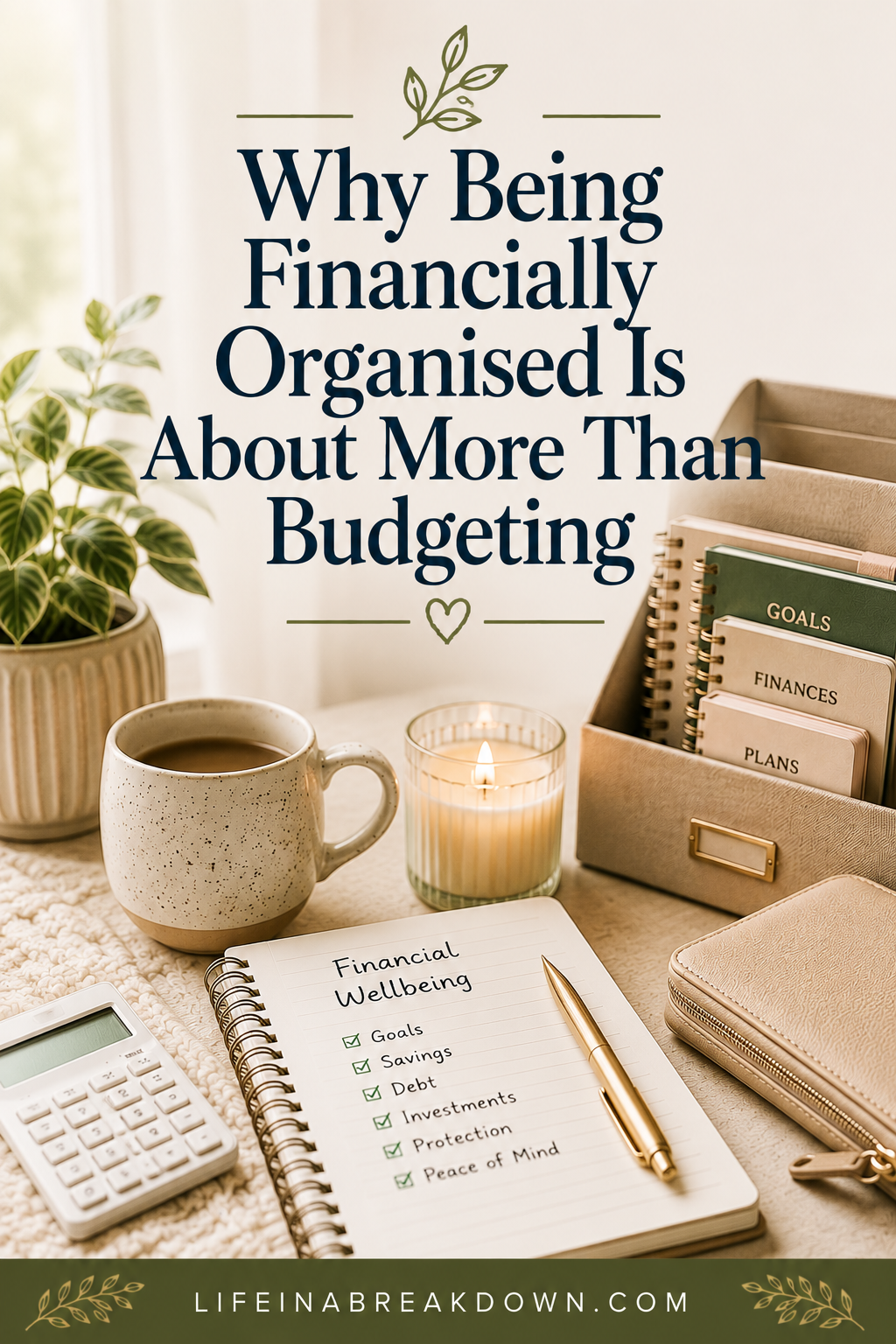
Why Being Financially Organised Is About More Than Budgeting
Some people assume that being better with money just means spending less each month. While that might be important in some circumstances, generally keeping your money in good order goes much further. If you know where everything is and nail the basics, day-to-day money management and future planning become much easier.
Keep your financial information in one place

Knowing where to find bank details, insurance documents, mortgage paperwork and account passwords can save valuable time. A simple folder system, with separate sections for banking, bills, savings and tax records, helps you find what you need without searching through drawers or old emails.
Store digital copies securely alongside paper records where possible, and create one central place for all your financial documents if you can. This approach reduces stress if you need information quickly during a house move or family emergency.
Plan for financial events before they happen
Unexpected events often bring financial decisions that are harder to make under pressure. An emergency fund can help cover urgent costs, while an up-to-date will and an appropriate life insurance policy can protect the people who depend on you.
Set aside time once a year to review your mortgage, insurance policies and other long-term commitments. A regular review makes it easier to spot gaps and update your plans after major life changes, such as getting married or having children.
Review direct debits and regular bills
Monthly payments can build up without attracting much attention. A quarterly review may reveal certain services you no longer use or duplicate insurance cover.
As a general rule, check your recurring payments every three months. Even saving £20 or £30 a month could help build your emergency fund or increase your savings for a holiday or home improvements.
Keep important dates and deadlines organised

Renewal dates, tax paperwork, savings targets and insurance policies all have deadlines worth tracking. Missing one could mean paying higher renewal costs or losing out on better deals elsewhere.
Calendar reminders a few weeks before each key date should give you enough time to compare options and gather any paperwork without rushing. Also, keep a list of all the key dates so you can glance at it throughout the year.
Make financial check-ups a habit
Looking at your finances regularly helps you spot small issues before they become expensive problems. A yearly review might include checking your savings progress, updating beneficiaries, reviewing debts and confirming your budget still matches your circumstances.
Book a yearly financial health check with yourself. It could be at the start or end of every year, or whenever it suits you. Over time, these small routines can help you feel more confident, prepared and in control of your money.
Pin It!