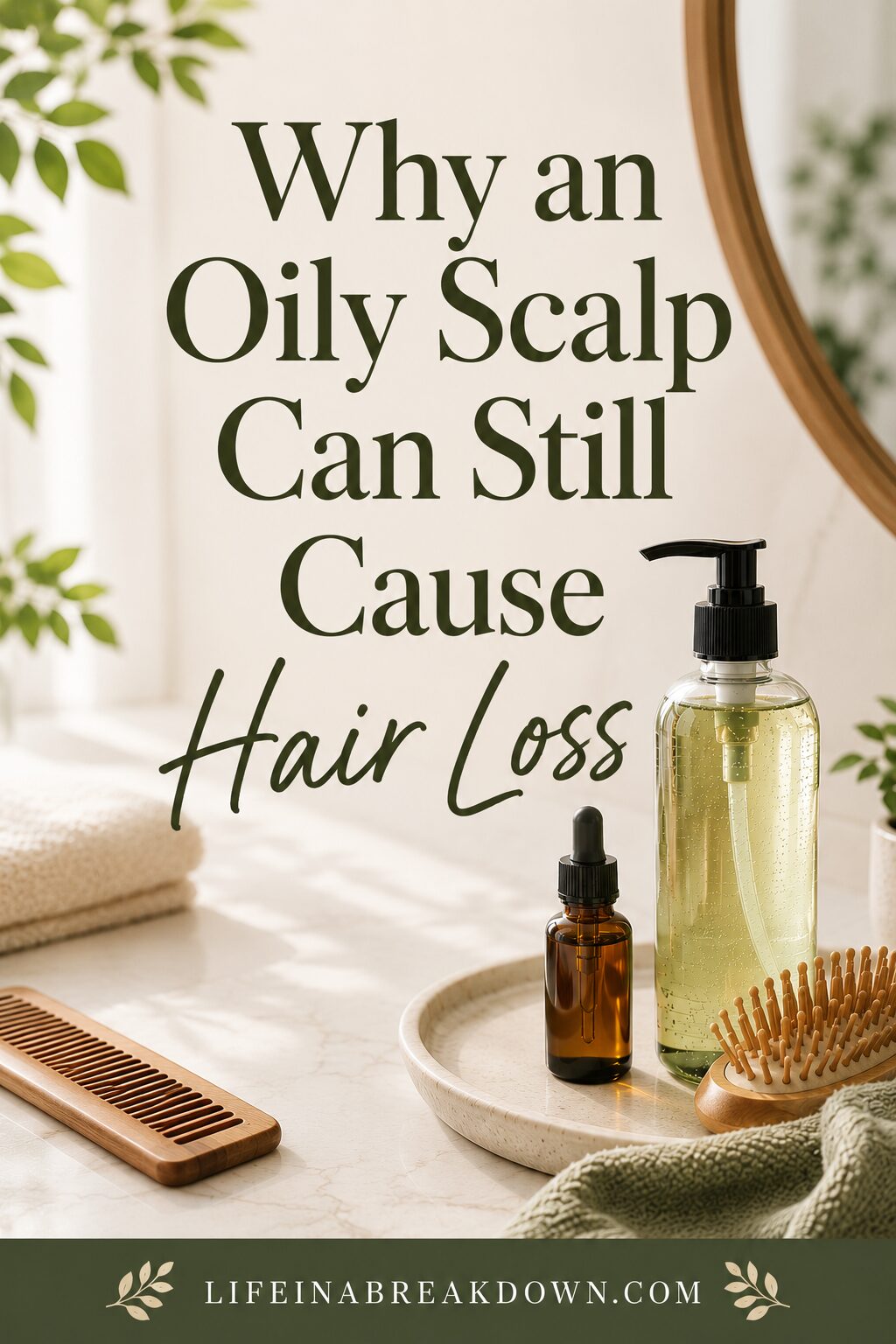
Why an Oily Scalp Can Still Cause Hair Loss
Most people assume that an oily scalp means their hair is well-nourished and protected. So when they start noticing hair loss, they’re confused. Isn’t excess oil supposed to keep things moisturised? The truth is, too much oil on the scalp can actually be one of the quieter triggers of hair loss, and the connection between the two is worth understanding properly.
What Causes an Oily Scalp in the First Place

The scalp has sebaceous glands that produce sebum, a natural oil that keeps the skin and hair from drying out. This is a necessary function. Problems start when these glands become overactive and produce more sebum than the scalp actually needs.
Several things can trigger this overproduction:
- Hormonal imbalances, particularly elevated androgens like DHT
- Chronic stress, which spikes cortisol and disrupts gland activity
- Nutritional deficiencies that throw off the scalp’s natural balance
- Over-washing or using harsh shampoos that strip the scalp, causing it to compensate by producing even more oil
- Genetics, which plays a bigger role than most people realise
The result is a scalp that feels greasy within a day of washing, sometimes even by evening on the same day.
How Excess Oil Damages the Hair Follicle
Here’s where it gets important. Sebum in moderate amounts protects the follicle. But when it accumulates in excess, it starts to mix with dead skin cells, product residue, and environmental pollutants. This forms a layer that blocks the follicle opening.
When follicles are consistently clogged, a few things happen over time. The hair strand doesn’t emerge cleanly and is weakened from the root. Blood circulation to the follicle gets restricted. And in many cases, a scalp condition called seborrheic dermatitis develops, which causes inflammation, flaking, and itching. That inflammation is particularly damaging because it directly disrupts the hair growth cycle, pushing more follicles into the shedding phase prematurely.
This is the real mechanism behind oily scalp and hair loss. It’s not the oil itself causing the strand to fall; it’s the chain of events that excess oil sets off at the follicle level.
The Role of DHT and Hormones
One reason oily scalp and hair loss often appear together is that they frequently share the same root cause: hormonal imbalance. DHT, a derivative of testosterone, is one of the main culprits in androgenetic hair loss. It not only causes follicle miniaturisation but also stimulates sebaceous glands to produce more oil.
This is why someone dealing with hormonal hair loss will often notice that their scalp gets greasier around the same time their hair starts thinning. The two aren’t coincidentally happening together — they’re being driven by the same underlying signal.
Nutrition and Scalp Health Are More Connected Than You Think
What you eat affects how your scalp behaves. Deficiencies in zinc, B vitamins, and certain antioxidants can all contribute to overactive oil glands and a compromised scalp barrier. On the other side, including nutrients that support scalp function can make a meaningful difference.
For example, vitamin e for hair is known for its antioxidant properties that help reduce oxidative stress on the scalp — a factor that can worsen both oil production and follicle inflammation. Getting enough of these nutrients through diet or supplementation supports the kind of scalp environment where hair can actually grow without interference.
Managing an Oily Scalp Without Making It Worse

The instinct is often to wash hair more frequently. That’s not necessarily wrong, but how you wash matters more than how often.
- Use a mild, sulfate-free shampoo that cleans without over-stripping
- Avoid very hot water, which stimulates more oil production
- Don’t skip conditioner — just apply it only to the lengths, not the scalp
- Balance oil production from the inside too, by looking at your diet and stress levels
- Avoid heavy hair oils or silicone-based serums applied directly to the scalp
Brands like Traya approach oily scalp hair loss by looking at both the scalp condition and the internal factors hormonal, nutritional, and lifestyle rather than treating it as a simple hygiene issue.
Final Thoughts
An oily scalp and hair loss might look unrelated on the surface, but they’re often two expressions of the same imbalance. Whether it’s hormonal, nutritional, or inflammatory in nature, the pattern almost always starts beneath the surface. Understanding that connection is the first step toward doing something genuinely useful about it rather than just washing your hair more and hoping for the best.
Pin It!