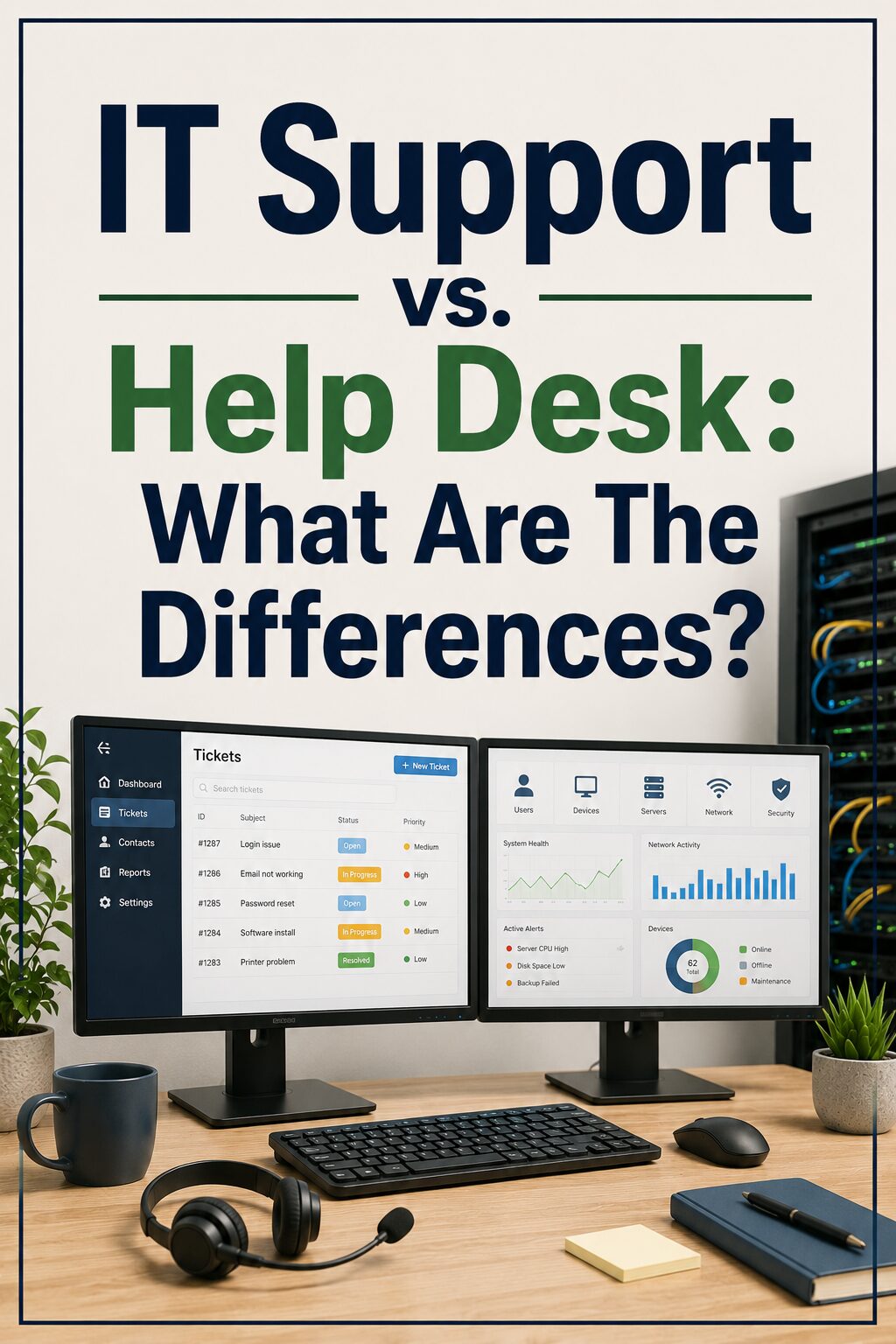
IT Support vs. Help Desk: What Are The Differences?
Technology is the backbone of modern business. Whether employees are working in the office, remotely, or across multiple locations, they rely on technology to communicate, collaborate, and serve customers. When technical issues arise, businesses need reliable assistance to minimise disruption and keep operations running smoothly.
This is where professional IT helpdesk services can make a significant difference. However, many organisations use the terms “help desk” and “IT support” interchangeably, even though they are not exactly the same thing.
While both services focus on resolving technology-related issues, they serve different purposes and provide different levels of support. Understanding these differences can help businesses choose the right solution for their needs.
Experienced providers such as Sereno IT Support often offer both help desk and broader IT support services, ensuring businesses receive assistance that matches their operational requirements.
In this guide, we will explore what IT support and help desk services involve, how they differ, and which option may be best suited for your organisation.
What Is a Help Desk?

A help desk is typically the first point of contact when employees experience technical issues.
Its primary purpose is to provide fast assistance for everyday problems and user requests.
Common help desk responsibilities
- Password resets
- Email troubleshooting
- Software access issues
- Printer problems
- User account management
- Basic technical guidance
Help desk teams focus on resolving issues quickly so employees can continue working with minimal interruption.
What Is IT Support?
IT support covers a broader range of technical services beyond simple troubleshooting.
Rather than focusing solely on user issues, IT support helps manage, maintain, secure, and optimise an organisation’s entire technology environment.
Typical IT support responsibilities
- Infrastructure management
- Cybersecurity protection
- Network administration
- Cloud services management
- Hardware maintenance
- Disaster recovery planning
- Strategic technology planning
IT support often includes help desk services as one component of a wider support strategy.
Understanding the Main Difference
The easiest way to understand the difference is to think about scope.
Help desk focuses on users
Help desk teams solve immediate problems affecting employees.
IT support focuses on systems
IT support teams manage the technology environment as a whole.
In many organisations, help desk support handles day-to-day issues, while IT support works behind the scenes to prevent problems from occurring.
The Role of a Help Desk in Daily Operations
A help desk acts as a central support hub for employees.
When users encounter technical difficulties, they submit tickets or contact support representatives.
Benefits of help desk services
- Fast issue resolution
- Improved employee productivity
- Consistent support experience
- Reduced frustration for users
Without a help desk, employees may spend valuable time trying to solve technical issues themselves.
The Strategic Role of IT Support
IT support takes a more proactive and long-term approach.
Rather than simply reacting to problems, IT professionals work to prevent them.
Strategic responsibilities include
- Monitoring system performance
- Managing software updates
- Planning technology upgrades
- Improving cybersecurity
- Supporting business growth
This proactive focus helps businesses reduce downtime and improve reliability.
Reactive vs Proactive Approaches
One of the biggest differences between help desk services and IT support is how they address problems.
Help desk support is often reactive
A user experiences an issue and requests assistance.
IT support is often proactive
The support team identifies and resolves issues before users even notice them.
Both approaches are valuable, but proactive management typically reduces disruptions over time.
Technical Expertise Requirements

Help desk technicians and IT support specialists often have different skill sets.
Help desk expertise
- User support
- Software troubleshooting
- Customer service skills
- Basic system administration
IT support expertise
- Network engineering
- Cybersecurity
- Cloud infrastructure
- Server management
- Technology planning
Because IT support covers a wider scope, it often requires broader technical knowledge.
Cybersecurity Responsibilities
Cybersecurity has become a major priority for businesses.
Help desk involvement
Help desk teams may assist with password resets and basic security guidance.
IT support involvement
IT support teams typically handle:
- Security monitoring
- Firewall management
- Threat detection
- Security patching
- Incident response
This makes IT support a critical component of business security strategies.
How Help Desk and IT Support Work Together
Rather than competing services, help desk and IT support often complement each other.
Typical workflow
- Employee reports an issue
- Help desk investigates
- If necessary, issue escalates to IT support specialists
- IT support resolves underlying technical problems
This structure ensures users receive fast assistance while complex issues are handled appropriately.
Supporting Business Growth
As businesses grow, technology demands become more complex.
Growth-related challenges
- More users
- Additional devices
- Increased cybersecurity risks
- Greater data storage requirements
IT support helps businesses scale efficiently while maintaining system performance.
Help desk services continue supporting employees as daily demands increase.
Which Service Does Your Business Need?
The answer depends on business size, complexity, and goals.
Businesses that benefit from help desk services
- Smaller organisations
- Teams requiring frequent user support
- Businesses seeking quick issue resolution
Businesses that benefit from comprehensive IT support
- Growing organisations
- Companies handling sensitive data
- Businesses requiring proactive management
Many organisations benefit most from combining both services.
Comparing IT Support and Help Desk Services
| Area | Help Desk | IT Support |
| Primary Focus | User issues | Entire IT environment |
| Approach | Reactive | Proactive and reactive |
| Scope | Narrower | Broader |
| Cybersecurity | Limited involvement | Comprehensive management |
| Strategic Planning | Minimal | Significant involvement |
| Infrastructure Management | Rare | Core responsibility |
Common Misconceptions
They are exactly the same
Although related, help desk services and IT support have different responsibilities.
Help desks only answer phones
Modern help desks often use ticketing systems, remote support tools, and knowledge bases.
IT support is only for large companies
Businesses of all sizes benefit from proactive IT management.
Why Many Businesses Choose Integrated Support
Many providers combine help desk services with comprehensive IT support.
This approach offers several advantages:
- Faster issue resolution
- Better cybersecurity
- Improved system reliability
- Simplified vendor management
- Stronger long-term planning
Integrated support creates a more seamless technology experience.
Frequently Asked Questions
Is a help desk part of IT support?
Often, yes. Many IT support providers include help desk services as part of a broader support package.
Which service is more important?
Both are important. Help desks support users, while IT support manages systems and infrastructure.
Can small businesses benefit from IT support?
Absolutely. Proactive IT support helps reduce risks, improve security, and support growth.
Does IT support include cybersecurity?
In most cases, yes. Cybersecurity is a major component of modern IT support services.
Conclusion
Although the terms are sometimes used interchangeably, IT support and help desk services serve different purposes. Help desks focus on assisting users with everyday technical problems, while IT support manages the broader technology environment and helps prevent issues before they occur.
For many organisations, the most effective approach combines both services. Employees receive fast assistance when needed, while experienced IT professionals ensure systems remain secure, efficient, and ready for future growth.
By understanding the differences and evaluating your business needs carefully, you can choose the right support structure to improve productivity, strengthen security, and support long-term success.
Pin It!