Everyday Things That Are Secretly Trying to Kill You (#5 Will Shock You)
You lock your doors, check the smoke detectors, and maybe even avoid walking under ladders. But what about the hidden risks you face daily without even realising it?
Sometimes, the harmless-looking stuff you encounter daily could be plotting your demise. If you don’t believe it, here are some shocking stats. According to the CDC, 227,039 people die due to unintentional injuries, and 44,630 Americans die because of accidental falling.
Those escalators? Your bath? Surprisingly, these can be sites for accidents. And we’ve not even talked about those (so-called) nutritious baby formulas.
Hold on, we will!
We’re about to expose the shocking truth about the everyday items secretly trying to take you down. But brace yourselves because the #5 hidden danger will blow your mind. Get ready to rethink your daily routine and discover what’s lurking just around the corner.
#1 Escalators

Escalators are harmless moving stairs that whisk you between floors with minimal effort. But don’t let their convenience fool you. These metal staircases are secretly plotting your downfall. Okay, maybe not secretly, but they’re definitely more dangerous than you might think.
In Japan, a 72-year-old man named Mamoru Suzuki got his suit jacket snagged on an escalator handrail at JR Mito Station. The Mirror covered this accident, highlighting that even though Suzuki was conscious when found, he later passed away in the hospital. The cause of death is still a mystery, but police are on the case, scrutinising CCTV footage like Sherlock Holmes.
This isn’t the first escalator escapade to make headlines. The New York Post highlights that some places have a problem with Crocs, the popular foam shoes and them getting stuck in escalators resulting in incidents where the escalators have caused injuries.
Escalators are particularly dangerous for young children who might not be able to react quickly enough. There have been reports of children getting injured because of this.
Falls are common on escalators, especially for the elderly and young children. Fingers, shoelaces, and even loose clothing can get caught in the mechanisms. And if you’re really unlucky, you might end up with a nasty laceration.
Is it safe to sit on an escalator?
No, it is unsafe to sit on an escalator’s steps. Sitting on the steps can cause clothing or body parts to get caught in the moving parts, causing serious injury. Always stand facing forward, hold the handrail, and keep your hands and feet clear of the sides.
#2 Baby Formulas
Okay, folks, it’s time to get serious for a moment. You should get serious about this because we’re discussing toxic baby formulas. Many cow’s milk-based baby formulas, designed to nourish and nurture our most vulnerable little ones, could hide a dangerous secret. The proteins in cow’s milk formula can be difficult for premature infants to digest. This can lead to inflammation in the gut.
Studies have found that cow’s milk-based or bovine-based baby formula increases the risk of necrotising enterocolitis (NEC). NEC is a serious gastrointestinal condition that primarily affects premature infants. It can cause severe damage to a baby’s intestines, often requiring surgery and, in some cases, resulting in lifelong complications.
As a result of these findings, many parents have filed lawsuits against manufacturers. These parents are demanding answers and seeking justice for the harm caused to their children. One of the most prominent cases is the Similac lawsuit. This lawsuit alleges that Abbott Laboratories, the manufacturer of Similac, failed to warn consumers about the risks associated with their cow milk-based formulas.
TorHoerman Law states that if your infant was diagnosed with NEC after consuming Similac, you may be eligible to join the lawsuit. This is a serious issue, and parents must be informed. Do your research, talk to your paediatrician, and consider all your options when choosing a formula for your baby. Remember, their health and well-being depend on it.
Is lactogen harmful to babies?
Lactogen is generally safe for babies when used as directed. It’s a brand of infant formula that provides essential nutrients. However, breast milk is the ideal food for babies, and formula should only be used when breastfeeding isn’t possible or sufficient. Consult your paediatrician for concerns about Lactogen or your baby’s feeding.
#3 Baths

When you hear about baths, the first thing that comes to mind is hot water and bubbles. And why not? It’s where we unwind after a long day to soak our cares away. But, in your unlucky days, you may face untimely demise. Okay, that might be a bit dramatic, but bathtubs can be dangerous.
A study in PubMed highlights that many die in bathtubs. It’s a big problem that doctors and researchers are trying to understand. Around 19,000 people die this way each year, and it’s often treated as an unnatural death that needs to be investigated.
Another study in Cureus talks about why people are getting hurt or dying in hot tubs. The researchers suggest that this may occur when individuals faint or lose consciousness in the hot tub, leading to drowning. Hot water can cause changes in blood pressure and heart rate, leading to fainting or even heart attacks.
Drowning is the most common cause, especially for young children and older adults. It’s easy to underestimate the dangers of a few inches of water. However, slips and falls are also a major concern. Those smooth, wet surfaces are a recipe for disaster. One minute, you’re enjoying a relaxing soak, the next, you’re sprawled on the floor with a concussion.
How long is it safe to stay in a bathtub?
A safe bath typically lasts around 15-20 minutes. Staying longer can dehydrate you, dry out your skin, and, in extreme cases, even lead to overheating or fainting. It’s best to keep the water warm, not hot, and listen to your body. If you start feeling lightheaded or unwell, get out of the tub.
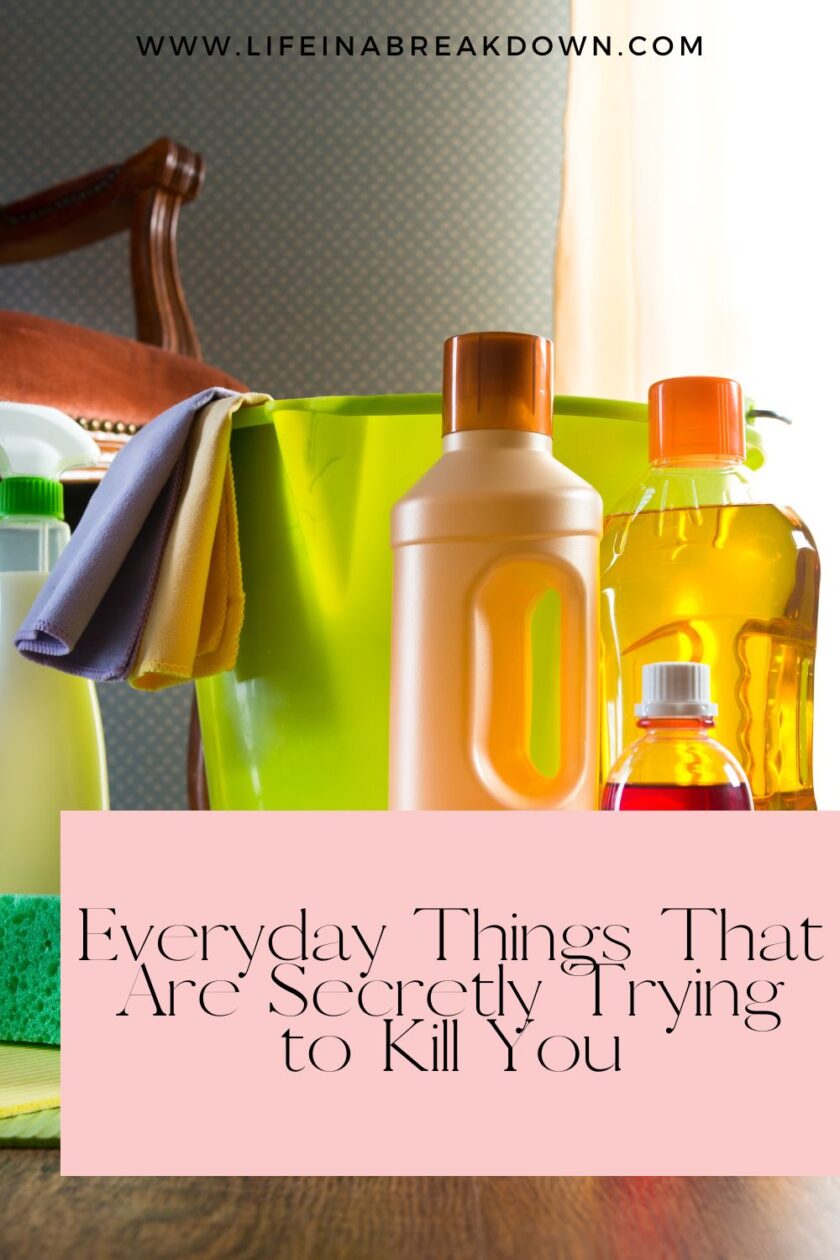
#4 Household Cleaners
We all love a clean house, right? Sparkling surfaces, fresh scents, the whole nine yards. But those cleaning products that promise a spotless home might also harbour a dirty little secret. They can be seriously dangerous!
Think about it. Those bottles under your sink are filled with chemicals. Bleach, ammonia, and disinfectants are designed to kill germs and break down grime. But they can also harm you. CTV News warns about the hidden dangers of everyday cleaning products. It points out that many cleaners contain potentially harmful chemicals, like VOCs, which can cause various health problems, from eye irritation to cancer.
What kind of trouble, you ask? Well, a study (PMC) shows that many cleaning products can irritate or burn the skin and eyes. This is a common problem, and the study found that most injuries from cleaning products were chemical burns.
Some cleaning products can also cause breathing problems. The study found that this hazard might be underestimated, as many reported illnesses were related to the respiratory tract.
And if you accidentally swallow some, you could be in for a trip to the hospital. Kids are especially vulnerable, so keep those cleaning products out of reach!
#5 Your Bed

Believe it or not, beds send almost half a million people to the emergency room each year in the US. That’s right, your bed is a hidden hazard. Falls are the most common reason, especially for young children and older adults.
Mattresses can trap infants, causing suffocation. Bed frames can have sharp edges or unstable parts that lead to injuries. And let’s not forget the psychological trauma caused by that monster hiding under the bed! (Okay, maybe that last one is a bit of a stretch.)
How do you make your bed a safe place that doesn’t take you to a hospital bed? Start with a sturdy frame. Ensure your mattress fits snugly and there are no gaps for little ones to get stuck in. If you have young children, consider using bed rails. And if you’re prone to rolling out of bed, maybe push it against the wall for extra security.
Life is full of surprises, but some surprises are less welcome than others. We’ve exposed some hidden dangers lurking in everyday objects, from escalators to your comfy bed. But the biggest takeaway? Stay informed and be aware of your surroundings. Knowledge is power, and it might just save you from a trip to A&E (or worse!).
Pin It!