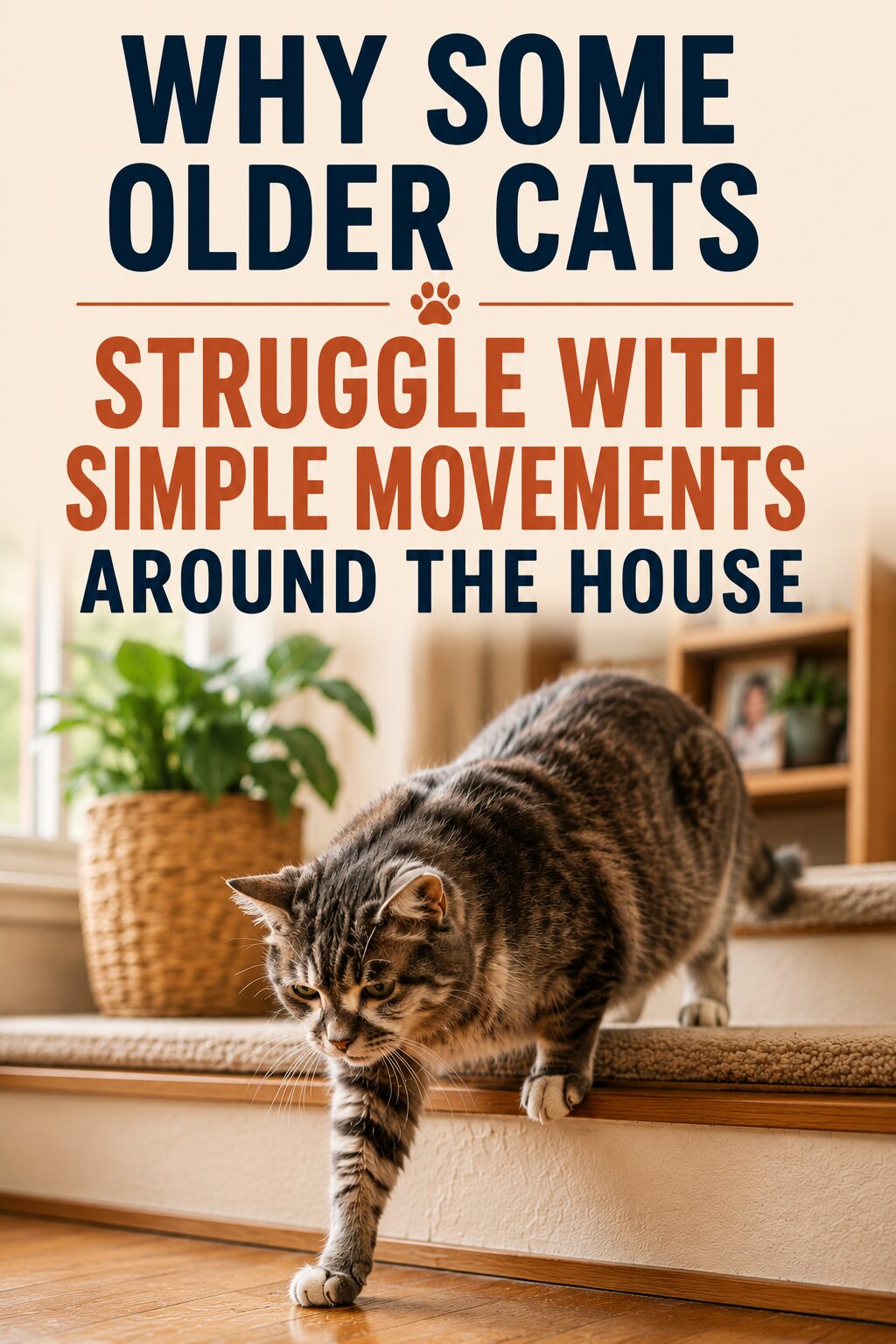
Why Some Older Cats Struggle With Simple Movements Around the House
A leap onto the sofa becomes a careful climb, stairs once taken at speed now require a pause. These shifts happen gradually, which is exactly why they get missed. For older cats, changes in movement are not quirks or laziness; they are signals.
Arthritis hits senior cats more often than owners expect, a lot more often. Unlike dogs, cats never limp dramatically or cry out; they adjust quietly, with less grooming, favourite perches abandoned, and sleep spots moved somewhere that does not require a jump.
Knowing what causes mobility struggles in older cats changes what happens next, when to visit the vet or when to make some adjustments, can be the difference between catching something early and managing something that has already dug in.
Recognising the Subtle Signs of Reduced Mobility in Older Cats

Cats mask discomfort consistently and effectively. A cat that once leapt onto the windowsill without thinking now hesitates. Owners call it laziness, vets call it joint pain until proven otherwise.
Grooming changes tell the clearest story; reaching the back legs and tail becomes difficult when joints ache. Unkempt patches appear specifically around the hindquarters. This is not a grooming preference; instead, it is a physical limitation.
Litter box behaviour shifts next. Accidents just outside the tray, reluctance to step over the sides, the cat finds alternatives because the obstacle is real, not imagined. Morning stiffness shows it the most; the first movements after a long rest are the ones worth watching.
Withdrawal from play, skipping the elevated spots that used to be claimed immediately, avoiding stairs entirely, individually, each looks minor, yet together, they build a picture that points toward something developing.
This shift is significant because the biological drive to seek out high places doesn’t simply vanish; it is suppressed by physical pain. Owners who document these behavioural shifts have more productive conversations with their vet from the first appointment.
How Arthritis Develops in Ageing Felines
Osteoarthritis affects approximately 60% of cats over six years and 90% of cats aged twelve and older. Cartilage degrades, and bones make contact where cushioning once existed. Inflammation follows, with stiffness after that.
Hips take damage, so do elbows and spine, weight-bearing joints carry every step, and every extra kilogram a cat carries accelerates what happens to them. Obesity and arthritis in cats compound each other in ways most owners have not been told about clearly enough.
Previous injuries leave specific locations more vulnerable to arthritic change as the cat ages, old fractures, joint trauma from years back, those spots remember. Breed predispositions exist, but arthritis crosses all breeds without exception.. age drives it and everything else contributes.
Signs of arthritis in cats, when caught early, respond better to management. Feline mobility issues identified late are harder to reverse.
For cat health advice backed by veterinary expertise, the complete guide to cat health covers arthritis management, feline mobility issues, and senior cat care from a specialist veterinary perspective.
Practical Home Modifications to Support Cats With Limited Mobility

Low-sided litter trays are a small change that can really help, as high sides are a genuine physical barrier for a cat whose joints ache with every movement, while extra litter boxes on each floor can help eliminate stair navigation.
Raised food and water bowls mean less bending at every meal.
Hard floors cause sliding, which jolts joints; non-slip mats can help fix this. Orthopaedic bedding in warm spots invites proper rest rather than uncomfortable, compromising positions. While early nail trimming prevents the overgrowth that quietly shifts gait over months, don’t wait until you can hear the clicking of their nails on the floor.
These practical cat wellness tips reduce daily joint strain without requiring major changes to the household routine.
Creating Accessible Vertical Spaces
Senior cats still want height; the leap is what they cannot always manage. Graduated platforms or shelving solve this directly, with steps rather than jumps, so access is maintained without physical demand.
Window perches at floor level keep environmental enrichment intact without requiring height. Arranging furniture to create intermediate steps supports upward movement without strain, and integrating non-slip surfaces on each level prevents accidents and builds confidence during movement.
Textured mats on surfaces boost confidence in cats already showing coordination issues. Remember the goal is access, not restriction; removing height entirely removes something cats genuinely need for well-being.
When Veterinary Assessment Becomes Necessary
Persistent limping or consistent favouring of specific limbs needs examination. A cat that limps regularly has something that requires identification, not observation and hope.
Sudden aggression when touched indicates pain, not a behavioural problem. Weight loss alongside mobility issues suggests broader health concerns that compound quickly without investigation.
Treatment ranges from pain medication to joint supplements and nutritional adjustments tailored to the individual cat. Regular monitoring tracks what is working and what needs adjusting as the condition progresses.
Senior cat care that starts with early veterinary input produces better outcomes. The window for straightforward management narrows with each passing month without a diagnosis. Blood tests can be helpful alongside physical examination, giving vets a clearer picture of what is driving joint deterioration before treatment decisions are made. Try to book an appointment before the obvious symptoms appear, as by that point, something has already been missed.
Arthritis in cats does not pause while owners decide whether to act; it progresses. A cat that hesitates on the stairs today and receives no support will have fewer options in six months; biology does not wait for a convenient moment.
Owners who notice the early signs, adjust the home environment, and arrive at the veterinary appointment with specific observations give their cat a better outcome, including earlier diagnosis, more effective management, and less daily discomfort. Start the observations today, book the appointment this week, the cat already knows something is wrong.
Pin It!