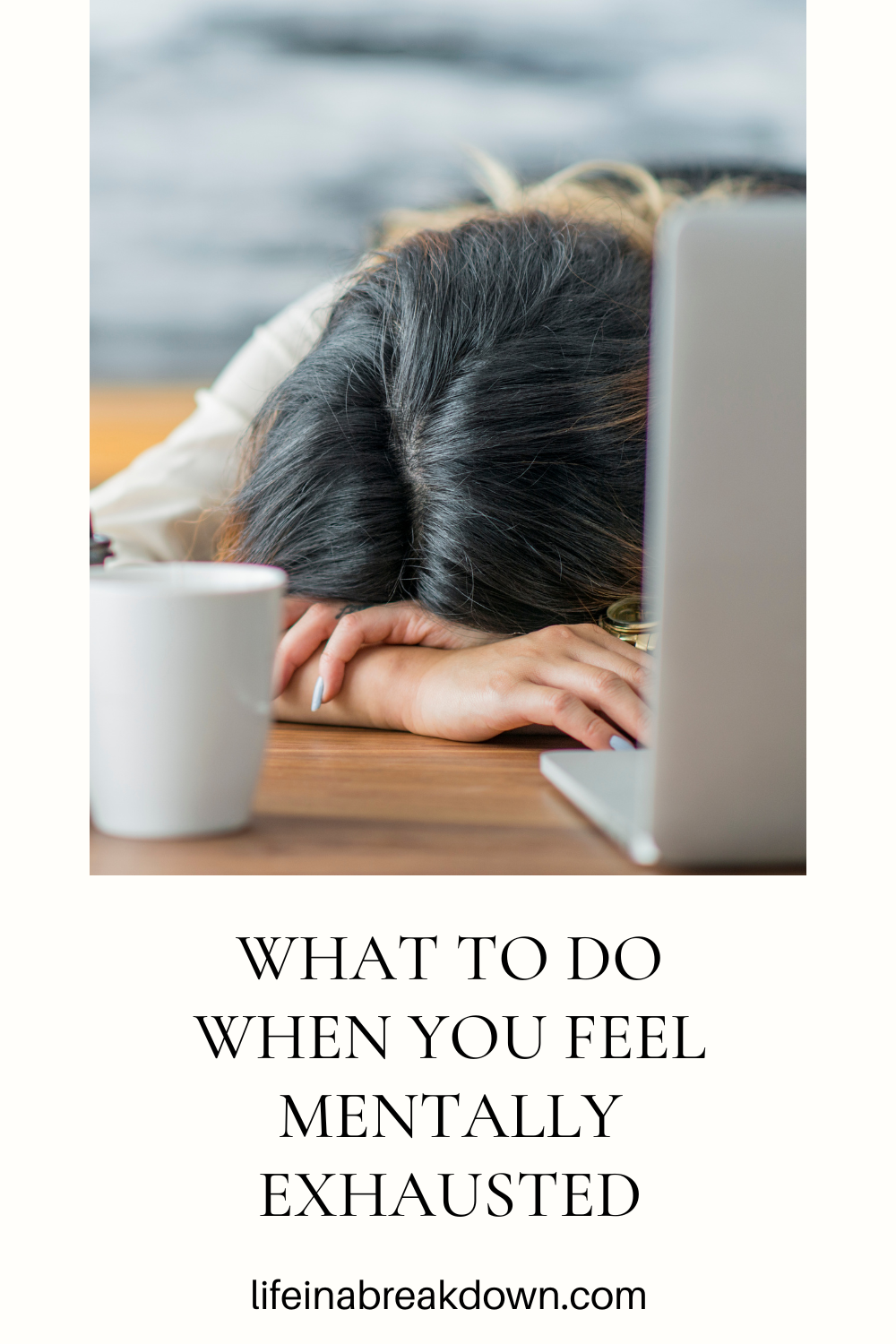
What to Do When You Feel Mentally Exhausted
Have you ever reached a point where even the smallest thing feels like too much?
Perhaps somebody asks you a simple question, a message arrives that needs answering, or you realise you need to make yet another decision. Normally, you might manage it, but suddenly it feels completely overwhelming.
For me, that’s often how mental exhaustion makes itself known.
The trouble is, I don’t always realise I’m getting there until I’ve already reached my limit. I become irritable, decisions feel even harder than usual, and eventually everything just feels like too much.
And while I’d love to say I’ve become brilliant at recognising the warning signs and stopping before things get worse, that wouldn’t be true at all.
In fact, I’m absolutely terrible at pacing myself.
So, what can you do when you’re mentally exhausted, especially when even resting doesn’t feel straightforward?
What Does Mental Exhaustion Feel Like?

Mental exhaustion can affect people in different ways. Some struggle to concentrate, others feel unusually emotional, and some find that everyday tasks suddenly require far more effort.
You might notice:
- Small decisions feel overwhelming.
- You’re more irritable or easily upset than usual.
- Reading or concentrating becomes difficult.
- You struggle to find the words you want to say.
- Conversations feel exhausting.
- You can’t face replying to messages.
- Things you normally enjoy suddenly feel like hard work.
- You feel overwhelmed by everything you need to do.
For me, one of the biggest signs is reaching the point where I simply can’t cope with anything else.
Even a message can become difficult. Sometimes I struggle to read and understand what somebody is saying. Other times, I understand perfectly well but can’t find the energy or words to put together a reply.
It’s not that I don’t want to answer. Sometimes my brain simply hasn’t got anything left to give.
Mental Exhaustion and Physical Exhaustion Can Overlap
I think it’s important to mention that mental and physical exhaustion aren’t always separate experiences.
I live with ME, and one of the biggest difficulties I face is post-exertional malaise, often shortened to PEM. This is a worsening of symptoms following exertion, which can include physical, mental and emotional activity.
One of the particularly difficult things about PEM is that the effects can be delayed.
For example, when I was having hydrotherapy, I sometimes wouldn’t reach my worst point until five or six days afterwards. Mental exertion tends to catch up with me sooner, often the following day or two.
And when I say PEM makes me exhausted, I don’t mean I simply feel a bit more tired than usual.
It’s almost as though my body starts shutting things down. My limbs feel like lead, moving becomes incredibly difficult, my thinking becomes jumbled and finding words can feel impossible. Even my digestion seems to slow down.
At its worst, I’ve struggled to speak and have even found breathing incredibly difficult.
It’s a horrible feeling, and one that can be difficult to explain to somebody who hasn’t experienced it.
Why Mental Exertion Can Be Harder to Manage
In some ways, I find physical exertion easier to anticipate.
I know when I’m going out, when I’ll need my wheelchair and when an activity is likely to be physically demanding.
Mental exertion is different.
Even when I decide I’m going to have a quiet day, I can’t completely switch my brain off. Watching television, listening to an audiobook, talking to somebody or answering a message all require some degree of mental energy.
And sometimes, just when you’ve planned to take things easy, something unexpected happens that needs your attention.
There goes the quiet day.
Having ME and ADHD can make pacing particularly complicated for me. I can become so focused on something I’m enjoying that I lose track of time and don’t realise how much energy I’m using.
Ash often notices I’m doing too much before I do, but that doesn’t necessarily mean I’ll listen!
I know pacing is important, but knowing something and actually managing to do it are two very different things.
When things are particularly bad, I’ll try to stay in bed longer, close my eyes and listen to an audiobook I already know. It gives my brain something familiar to focus on without requiring too much concentration.
Of course, my brain doesn’t always cooperate. Having ADHD means that sometimes my thoughts have other ideas about settling down.
And there’s another thing I’ve noticed during an ME crash: I can become incredibly hungry. It’s as though my body is demanding something from the kitchen, which is particularly frustrating when getting up and moving feels almost impossible.
I think that’s why it’s so important to understand that rest looks different for everyone.
For somebody with ME, even activities that other people consider relaxing can require more energy than they have available.
And for people with severe ME, sensitivity to light, sound and other stimulation can make even the smallest activities incredibly difficult.
Not everyone who experiences mental exhaustion has ME or PEM, of course. But living with it has taught me that mental effort is still effort, even when you’re doing very little physically.
8 Things to Try When You Feel Mentally Exhausted
I wish there was a simple trick that could make mental exhaustion disappear.
Unfortunately, there isn’t one that works for everybody. What helps will depend on what’s causing your exhaustion, how you’re feeling and what you’re realistically able to manage.
These are some of the things I think are worth considering.
1. Give Yourself Permission to Stop
This sounds so simple, doesn’t it?
If you’re exhausted, stop what you’re doing and rest.
Except I know from experience that it’s much easier to tell somebody else to do that than to follow your own advice.
I’m terrible for pushing through. Often, Ash notices I’m struggling before I do and tells me I need to stop.
Do I always listen?
Absolutely not.
But I’m trying to remember that reaching my limit isn’t something I need to prove I can push past.
Sometimes the most useful thing you can do is put something down and come back to it another day.
2. Reduce the Number of Decisions You Need to Make
When you’re mentally exhausted, even deciding what to eat or what to watch can feel like another impossible task.
If you can, try to make things a little simpler.
That might mean choosing a familiar meal, wearing something comfortable without worrying about what matches, or leaving a non-urgent decision until tomorrow.
You don’t need to make every choice perfectly.
Sometimes good enough really is good enough.

3. Find a Form of Rest That Works for You
We’re often told to meditate, go for a walk, have a relaxing bath or spend some time exercising.
And while those things might help some people, they aren’t suitable for everybody.
Walking and exercising aren’t realistic solutions for me. I can’t get into a bath, and even having a shower is exhausting.
As for meditation, I know people love it, but it does exactly the opposite of what it’s meant to do for me.
When I’m struggling, I generally need to lie down and watch something that doesn’t require much thought or listen to an audiobook I’m already familiar with.
I know that complete darkness and silence would reduce stimulation further, but my brain doesn’t particularly enjoy being left alone with its own thoughts.
That doesn’t mean television or audiobooks are effortless, particularly with ME. They still use energy, and sometimes even those are too much.
But I think there’s value in recognising that rest doesn’t look the same for everyone, and even a bad day reset routine needs to work around your own needs and limitations.
4. Let Some Things Wait
There will always be something that needs doing.
An email to answer, a household job, an appointment to organise or another task waiting on your list.
One of the hardest things about exhaustion is knowing that life doesn’t stop just because you’ve run out of energy.
But not everything needs dealing with immediately.
If something can safely wait until tomorrow, next week, or whenever you’re feeling more able, perhaps it should.
I know that’s easier said than done, particularly when you’re already worried about falling behind.
Still, you don’t have to complete your entire to-do list to deserve a break.
5. Be Honest About What You Can Manage
I think we sometimes put pressure on ourselves to keep up with what we think we should be capable of doing.
But our capacity can change from one day to the next.
Blogging is a good example for me.
I love what I do, but sorting through emails, organising posts, writing and dealing with everything behind the scenes can be exhausting.
Some days, even opening my inbox feels like too much.
One of the reasons blogging works for me is that I can set my own schedule. I don’t know how I’ll feel from one day to the next, so being able to switch off when I need to makes a huge difference.
Not everybody has that flexibility, and I know how fortunate I am to have it.
Wherever possible, I think being realistic about what you can manage is important.
6. Remember That Enjoyable Things Still Use Energy
This is something I think we forget.
Just because you enjoy doing something doesn’t mean it can’t exhaust you.
You might love spending time with friends, reading, crafting, gaming or trying some comforting things to do on a bad mental health day, but those things can still require concentration, decisions and emotional energy.
For me, even activities I enjoy can contribute to PEM.
And that can be incredibly frustrating because you don’t want to give up the things that make life enjoyable.
I don’t think the answer is necessarily to stop doing everything you love. It’s about recognising your limits, adapting activities where possible and understanding that enjoyment doesn’t automatically make something restful.
7. Don’t Feel You Have to Reply to Everyone Immediately
Messages can be surprisingly demanding when you’re mentally exhausted.
You need to read them, understand what’s being asked, think about your answer and then find the words to respond.
Sometimes that’s manageable; other times, it really isn’t.
If it’s not urgent, it’s okay to leave a message until you’re more able to deal with it.
You can also let people know that you might be slow to reply.
The people who care about you may not always understand exactly what you’re experiencing, but giving them a little explanation can help.
And if you’re the person waiting for a reply, it’s worth remembering that silence doesn’t always mean somebody isn’t interested.
Sometimes they’re simply exhausted.
8. Try Not to Feel Guilty About Resting
This is probably the hardest one for me.
I already feel as though I miss out on so much of life because of my health.
I can sleep for 12 to 14 hours a day and still spend much of my waking time feeling exhausted.
It’s difficult not to think about all the things I could be doing if I had more energy (even if it’s just simply seeing the morning).
So when I need to stop again, there’s often a sense of frustration or guilt.
But I also know that feeling guilty doesn’t give me any more energy; if anything, it does the opposite.
Rest isn’t a reward you earn by doing enough.
And needing more rest than somebody else doesn’t mean you’re doing life wrong.
What If Rest Doesn’t Make You Feel Better?

I think it’s important not to pretend that a quiet afternoon will solve every kind of exhaustion.
Sometimes mental fatigue is related to stress, poor sleep or having too much on your plate. In those situations, reducing demands and getting adequate rest may help.
But persistent or severe exhaustion can also be associated with health conditions, medication effects, sleep disorders and other issues.
With ME, PEM can involve delayed and prolonged worsening of symptoms after exertion. Simply pushing through or trying to build up activity regardless of symptoms can make things worse.
In fact, I was originally diagnosed back when graded exercise therapy was prescribed for ME. Sadly, for many of us, it did more harm than good, pushing us into what’s often called rolling PEM. This is where you haven’t recovered from one crash before another begins, leaving you stuck in an ongoing cycle of worsening symptoms rather than getting the chance to recover. I can’t say for certain that graded exercise therapy caused my health to deteriorate, but I do know that I became worse after undergoing it.
That’s not to say gradually increasing exercise can’t help people with other conditions. But what works for one illness isn’t necessarily safe or appropriate for another.
That’s why advice needs to be appropriate to the person receiving it.
If you’re experiencing unexplained, persistent or worsening exhaustion, it’s worth speaking to your GP rather than assuming it’s something you just have to live with.
You Don’t Have to Earn the Right to Rest
If there’s one thing I’d like somebody reading this to take away, it’s that mental exhaustion is real.
It can be just as difficult to deal with as physical exhaustion, even when nobody else can see what’s happening.
And sometimes, the things that look easy from the outside are anything but.
I wish I could say I always recognise when I’ve done too much, stop immediately and give myself all the time I need to recover.
The reality is that I’m still learning, and I don’t always get it right.
But I think that’s part of why it’s important to talk about these things.
If you’re feeling mentally exhausted, it’s okay to stop, take some time and give yourself a chance to recover.
I know that’s much easier to say than to do.
Believe me, I really do.
How do you recognise when you’re mentally exhausted, and is there anything that helps you when everything feels too much?
Pin It!