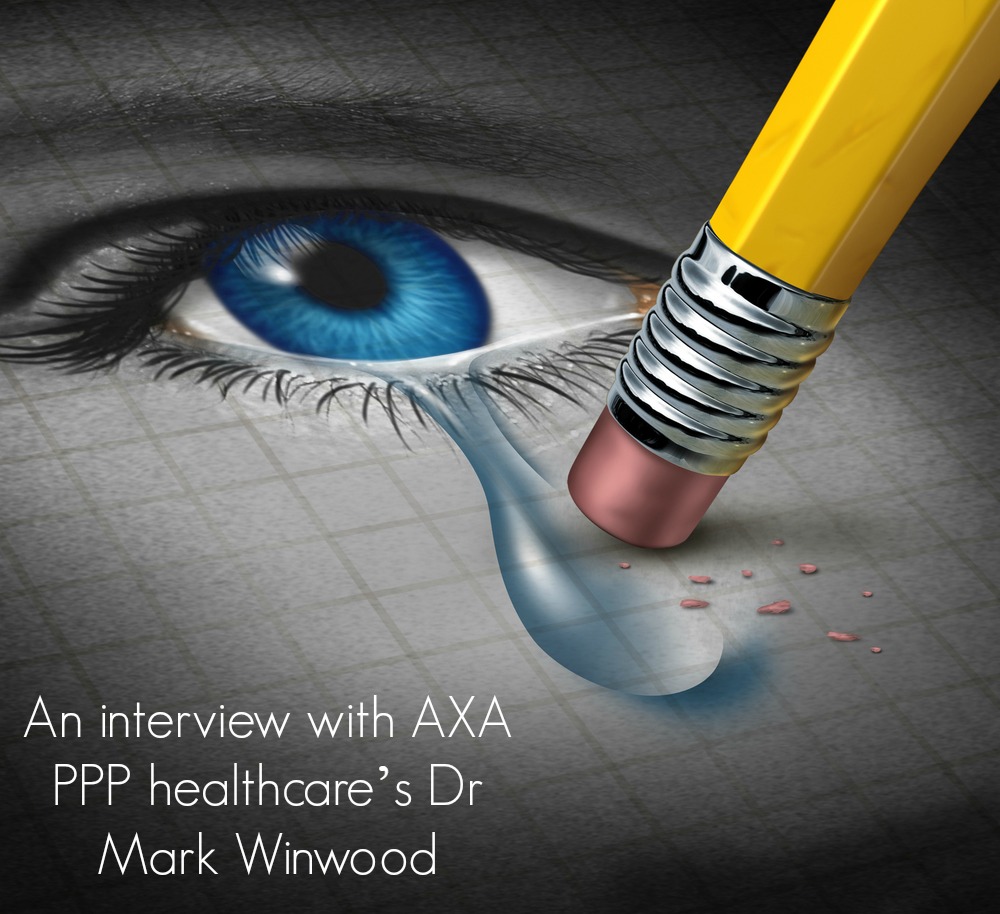
An interview with AXA PPP healthcare’s Dr Mark Winwood
Once upon a time I was ashamed of my mental health issues; I would try and hide them and in doing so only made them all the more obvious. In many ways back then they had taken over my life, I was just a bundle of mental health issues, unable to really control them. These days while I’m not going to pretend I’m 100%, completely cured and better, that day will likely never come as the issues I suffer with are life long and stem right back to my early childhood. However, compared to the place I once was I am a lot better.
Sadly the stigma of mental health issues still runs deep, so many people talk about those with mental issues, as if that is all there is about that person. They seem to forget behind those issues is a human, a human that is suffering and needs kindness and understanding, not the cutting mickey taking comments that can make things worse. Mental Health illnesses can sadly be fatal, they are illnesses that affects everyone close to the person and can be utterly devastating on so many levels.
Not long ago I was given the opportunity to ask Mark Winwood, the Director of Psychological Services at AXA PPP Healthcare a few questions about his take on mental health and the services out there, these are his responses:

1. What are the more prevalent mental health conditions?
Thanks to medical and technological developments over the last few years, we’re far better equipped to spot and treat the signs of mental ill health. Depression and anxiety are the most common mental ill health conditions and awareness of these is increasing. For example, there is far more awareness now of the importance of peri-natal screening depression, which is certainly a move in the right direction.
2. How could people deal with negativity in regards to their mental health? Some professionals dismiss the ideas of mental health; is there any reasoning behind doing so?
We very much encourage an open dialogue around the topic of mental ill health and we want to break down the stigma that still exists around talking about mental health. Ultimately, our aim is for people to talk about their mental health as easily as they talk about their physical health. We appreciate that it can be challenging for individuals who face negativity about mental ill health to be forthcoming about their condition in isolation. There are no easy answers to overcoming the ignorance and fear that underpin people’s prejudices toward mental illness. It is our hope the continuing efforts of government, health and business leaders to increase people’s awareness and understanding of the importance of mental health will help to overcome this. In the meantime, individuals affected by mental ill health can be reassured they are not alone. Help is available – for example, from specialist charities such as Anxiety UK, Mind and Rethink Mental Illness, and from healthcare professionals such as their GP.
3. What reasoning do you think there is behind a rise in mental ill health diagnoses? Is this due to increase in every day stress, financial worries, employment no longer being secure?
There could be a number of reasons. Increasingly we spend our lives switched-on to the news, our email and work. This can lead to feelings of stress and anxiety as we find ourselves unable to escape the daily grind. We may also be seeing a rise in mental ill health diagnoses in the UK simply because people are talking about it more – in this way, the rise can be seen as a positive thing; but only if we are prepared to effectively help the people coming forward. AXA PPP healthcare’s mental health centre offers resources and information to support people in managing their mental health.
4. What do you think is effective in keeping a healthy mind?
There are a number of things you can do to keep your mind healthy. AXA PPP healthcare has been tackling the stigma around talking about mental health by likening it to physical health. We listen to advice on how to eat well and exercise to prevent us from getting cancer, so why not the same for mental health?
Adopting a healthy lifestyle will help with both your physical and mental wellbeing so make sure you get plenty of exercise, eat wholesome nutritious food, and get enough sleep.
5. Where do you see mental health (attitudes and stigma, research and development) in the future?
I think we are already taking a step in the right direction. Our research found that over half (57 per cent) of managers we surveyed said they thought they would be just as comfortable having a conversation with an employee in their company about their mental health as they would be having a conversation about their physical health.*
There is a growing awareness of the subject thanks to charities such as Mind, celebrities and other public figures talking openly about their own mental health issues. I believe this awareness will continue to grow, and hope that one day it will be no more unusual for someone to talk about their depression as it would be to talk about their broken leg.
6. Where can one find more advice if they are concerned about mental ill health?
With mental ill health becoming a more accepted subject, there are many places where you can find resources if you are concerned about your own or someone else’s mental health, or want to build your mental resilience.
There are a number of charities which specialise in helping those with mental ill health, for example, Anxiety UK, Mind and Rethink Mental Illness offer information on their websites and helplines if you need to talk to someone.
AXA PPP healthcare’s website also has a mental health centre which includes support for a variety of issues from anxiety to depression.
*OnePoll survey of 1000 employed adults who manage staff, conducted December 2015.
With that I shall leave you to it, I hope you have all found this as interesting, as I did to read and it has perhaps given you a bit of insight into mental health and those who work with people suffering.






We need to talk about mental health more. It is such an important subject and so many people feel like it is taboo to talk about. It affects so many people.
It is so sad that it is such a taboo subject, I just don’t get why people shy away from it as it is something that affects so many people. x
Mental Illness is a real thing and I feel like it gets such a bad rap. Great post.
Mental health issues are definitely tough to talk about most of the time. This is such a great and inspiring post.
What a great post! Mental health issues are so much more important than some people realise!
This topic is really interesting, I enjoyed reading this. Great interview! This should be shared to everyone.
This is an excellent interview! I know a few people with diagnosed mental health issues and it’s a shame the lack of support and the stigmas they face. It’s an illness not a crime!
It is horrid isn’t it, you just don’t know how to react to it sometimes and the things said can be so hurtful and harmful. x
what a fab thing to get to do and such an interesting interview too x
How wonderful that you got to do the interview. I think it’s important to bring awareness too, to def. negate the stigma.
This is a great interview. I often hear of the stigma associated with any kind of Mental Illness. You are right when saying that when people talk about a person with mental illness, they talk as if that is the only thing about a person.
It is such a shame people think that is all to a person with such issues “is”, while we are all human under it. x
What a great and informative interview. I’m glad that these health issues are getting more awareness.
Great article. It really made me stop and think about how much stress we have to deal with on a daily basis. We need to do better with mental health issues and let those who suffer with them know that they are not alone.
Depression and anxiety seem so widespread and commonplace anymore. I am glad you are at a place where you can talk about mental health. I wish more were able to.
So many people have mental health issues. It’s not as simple as it may seem on the surface.
All should read this to increase awareness and how innovations have been done with mental health issues.
A great misconception because there is still so much unknown about mental health, all those who do speak out and are open about theirs should feel so proud of themselves, because I am sure they speak for so many people x
That is very true – it is such a shame we do really know so little about it. x
Such an important subject which is sadly still too often misunderstood. I just wish the NHS funding was better as at the moment people cannot get the help they need and to me it’s a disgrace.
This is so very true – I don’t have much help these days as they only offer it for so many weeks and then you have to go back to the beginning and I feel like you can’t learn to trust someone so quickly so I am better off without. x
Well said and that is why for so many years I was not open about my own mental health issues because I was always judged for being open about mental health. As he said what people can’t see they will judge and I was always told I was a drama queen. I think that you are brave and I think I can guess what your mental health issues stem from because I recall reading the posts about the abuse you faced and I am sorry for that xx
This was such a great read – thank you so much for sharing x
I am hearing so much more about anxiety and depression lately…which can only be a good thing. Very informative!
What a great opportunity and fantastic read. You should be proud of this Sarah!
I love this post. Its true that there is a stigma behind mental health that needs to be abolished. Very informative and wonderful interview. Thanks for such a great post on a much needed topic!
I really hope one day it won’t exist any more and I think that in itself will help so many people with the issues they are facing. x
It sounds like the acceptance and movement towards understanding mental health issues is moving in the right direction.
It is good because this is a topic that needs to come out of the shadows.
Most definitely – I hope one day it will as easily as accepted as other things people suffer with. x
I don’t think many people understand mental health unless they’ve been there themselves . Most people think you can just snap out of it or control it but sadly that’s not the case
What a wonderful interview with the doctor. Mental health should be taken care of.
People should be dealing with mental issues. It is one of the most taken for granted issues.