How to Clean a Kitchen
The Importance of Keeping Your Kitchen Clean
AD
Why is it important to clean a kitchen regularly?
A clean kitchen is paramount for your health. A clean kitchen helps prevent illness by reducing the risk of contamination. Cleaning countertops, cutting boards, and other surfaces after handling items like raw meat helps prevent the spread of harmful bacteria. A messy kitchen also attracts pests like insects and rodents. Crumbs and spills provide a food source for these pests. Regular cleaning will help prevent this.
What are the health risks of a dirty kitchen?
Harmful Bacteria, such as Salmonella, can be present in raw meats. If these pathogens come into contact with your food, utensils or surfaces, they can cause illnesses when ingested. A dirty kitchen also provides an ideal environment for growing bacteria and mould. These micro-organisms can multiply, which could lead to a potential health hazard.
How often should you clean your kitchen?

To maintain a hygienic kitchen, here are some general tasks:
Daily cleaning:
- Washing up dishes, utensils and cooking pots and pans etc.
- Wipe down countertops and kitchen surfaces after cooking.
- Empty your bins when full.
- Weekly cleaning:
- Mop the kitchen floor. This will remove dirt, spills, and bacteria.
- Cleaning inside and out of appliances, microwave, fridge, air-fryer and oven.
- Disinfect frequently touched areas, cupboard handles, doorknobs etc.
- Thoroughly clean the sink and taps
Monthly cleaning:
- Deep cleaning the fridge, removing shelves and cabinets.
- Clean the entire oven, including the racks and the interior.
What is the best way to clean kitchen countertops?
Use a soft microfibre cloth with warm water or a kitchen cleaning product if you prefer to use chemicals. Always read the instructions and ensure your kitchen surface suits those chemicals.
How can you easily clean your kitchen cabinets?
Empty the cabinets, then use a microfibre cloth to remove dust and loose debris from the cabinet surfaces. Wipe down the interior and exterior of each cabinet, including handles.
Wet your microfibre cloth and wring out excess water or use a mild cleaning solution to scrub tough stains.
Step-by-Step Guide to Cleaning Your Kitchen

What are the essential supplies needed for cleaning a kitchen?
Microfibre Cloths – dusting, wiping down surfaces, absorbing spills and scrubbing stains.
Microfibre Mops – For floor cleaning
Microfibre drying towels – for drying wiped-down areas.
Sponges – soft sponges for scrubbing tough stains
Cleaning solutions – All-purpose or kitchen-specific cleaning
Spray bottle – For water or cleaning chemicals
Vacuum – use to suck up dust, dirt and loose debris from corners and skirting boards.
What should be the first step in cleaning a kitchen?
Declutter: you will create a clean slate for the rest of your cleaning by decluttering and organising the kitchen. With a clear and organised kitchen, you can clean more efficiently.
How do you clean small appliances like a microwave or toasters?
Make sure you unplug these devices. For the microwave, take out the turn table and wash it with soap and a microfibre cloth. Use a wet cloth or a cleaning solution for the interior and scrub away the stains. For tougher stains, use a cleaning sponge.
Toaster: Unplug, remove the crumb tray if your toaster has one and discard the crumbs. Gently turn the toaster upside down over the bin to remove loose crumbs. Use a damp cloth to wipe down the exterior. To clean the inside, use a brush to dislodge crumbs.
What is the best way to clean kitchen floors?
Start with a dry microfibre mop to capture dust and loose dirt particles, or use a vacuum. Then proceed with a microfibre damp mop. If you have a spray mop, that will work great otherwise, spray the floor with water and mop. A microfibre damp mop will remove tough stains. Dry the floor with a clean mop or cloth to prevent water spots.
Maintaining a Clean Kitchen on a Daily Basis
How do you prevent grime buildup on kitchen surfaces?
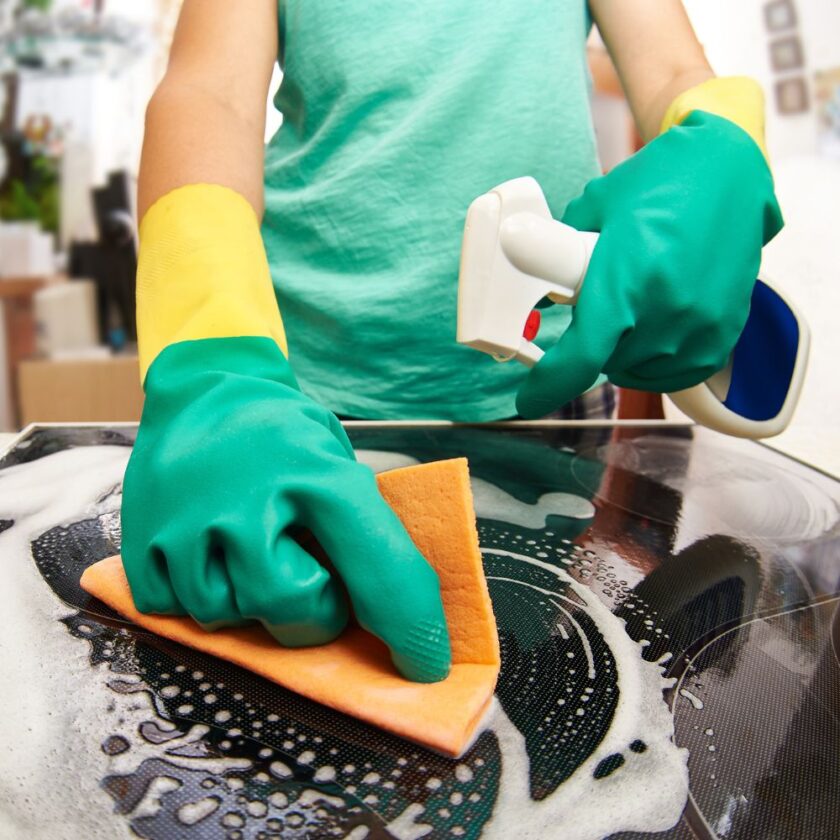
Clean spills immediately: Clean up spills and messes on your kitchen surfaces as soon as they occur. This prevents the liquids from hardening and becoming more of a challenging removal.
Use chopping boards: Always use chopping boards on your countertops when preparing food. This prevents scratches and is easier to clean.
Wipe down: Always wipe down after each meal preparation. Use a damp microfibre cloth. This will remove grease, food and spills.
What are some tips for keeping your kitchen sparkling clean?
Create a daily cleaning routine that includes washing the dishes, wiping down cabinets, and mopping the floor.
- Clean as you cook
- Organise and declutter
- Sanitise highly touched areas
- Clean appliances regularly
- Empty and clean bins
- Clean floors regularly
- Deep clean monthly
Pin It!