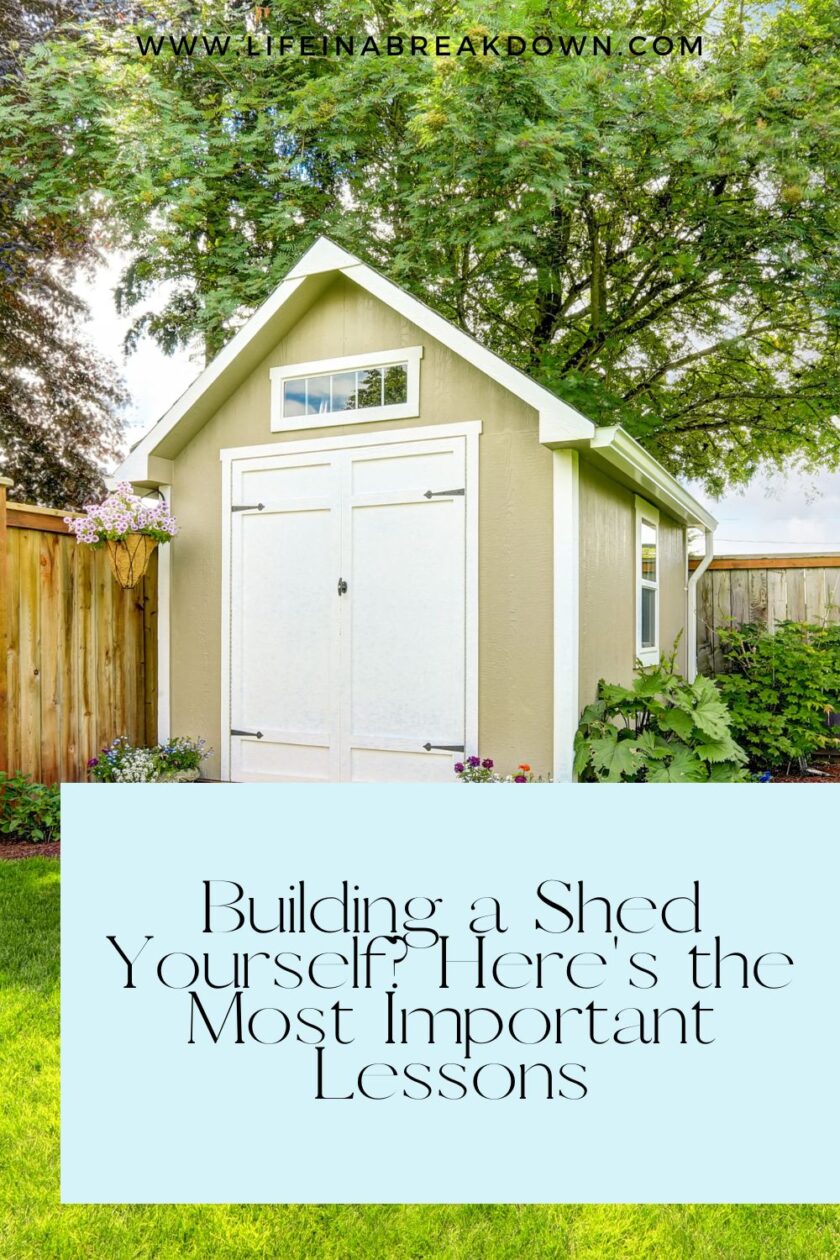
Building a Shed Yourself? Here’s the Most Important Lessons
Building a shed by yourself can be an excellent task that covers a lot of ground, literally and metaphorically. With the abundance of shed kits out there, you can set up your own shed pretty quickly and it’s a great way to give you more confidence in your DIY skills, but if you are setting out on this journey for the first time, you may want to bear in mind some of the following things:
Preparing the Site and Foundation

The foundation is crucial, as this will ensure stability and longevity. There are various options out there, from concrete bases to gravel bases, but if you’re looking for a quick and easy option for smaller sheds, plastic shed bases are very useful.
Don’t forget to select a level area with good drainage, as the shed may look perfect in a particular part of the garden; however, does all the rainwater pool there? You should slope the base slightly away from the main buildings, as this can prevent water from pooling. For extra peace of mind, you need a damp-proof membrane and should insert this into the base at least two inches higher than the surrounding land, as this will prevent moisture problems.
The Right Materials and Tools
You should start with the essentials, namely a tape measure, level, circular saw, hammer, power drill, and safety equipment. Additionally, if you’re using a concrete base, you need to know how to mix properly, but thankfully, there are plenty of guides online to help with this. If you’re using concrete, make sure that you allow it time to cure fully before building on it. The general rule of thumb is 28 days at most to get it to full strength.
The right type of shed will be resistant to rot and insects, which means you need to use treated, high-quality lumber for the base and the framing.
The Right Construction Process

It’s vital to get into the habit of checking frequently that all elements are level during construction. If you don’t use that long spirit level, you may find everything is a little bit slanted, which will be incredibly frustrating if you plan on using the shed as your wellness retreat or somewhere to store a few heavy items.
Also, make sure your base is perfectly square and use the diagonal measurement method here. It’s important to plan for adequate airflow, as this can prevent condensation and mold growth. Either think about adding windows that you can open or vents.
A Few Extra Things to Bear in Mind
Always keep safety at the forefront of your mind; use safety glasses and other protective gear while also making sure that the work area is organized to prevent tripping hazards, and if you’re lifting things that are pretty heavy, like large slabs or framing, either get help or use proper lifting techniques.
Also, plan for ongoing care, for example, clearing the gutters if you’ve got them installed, checking for leaks, and treating the wood.
Focus on these elements, and you will have a shed that will be incredibly functional and last a long time!
Pin It!




We built our own small shed in the garden but the base of it ended up too small so we had to improvise a little. You cannot tell though. Great tips and advice.