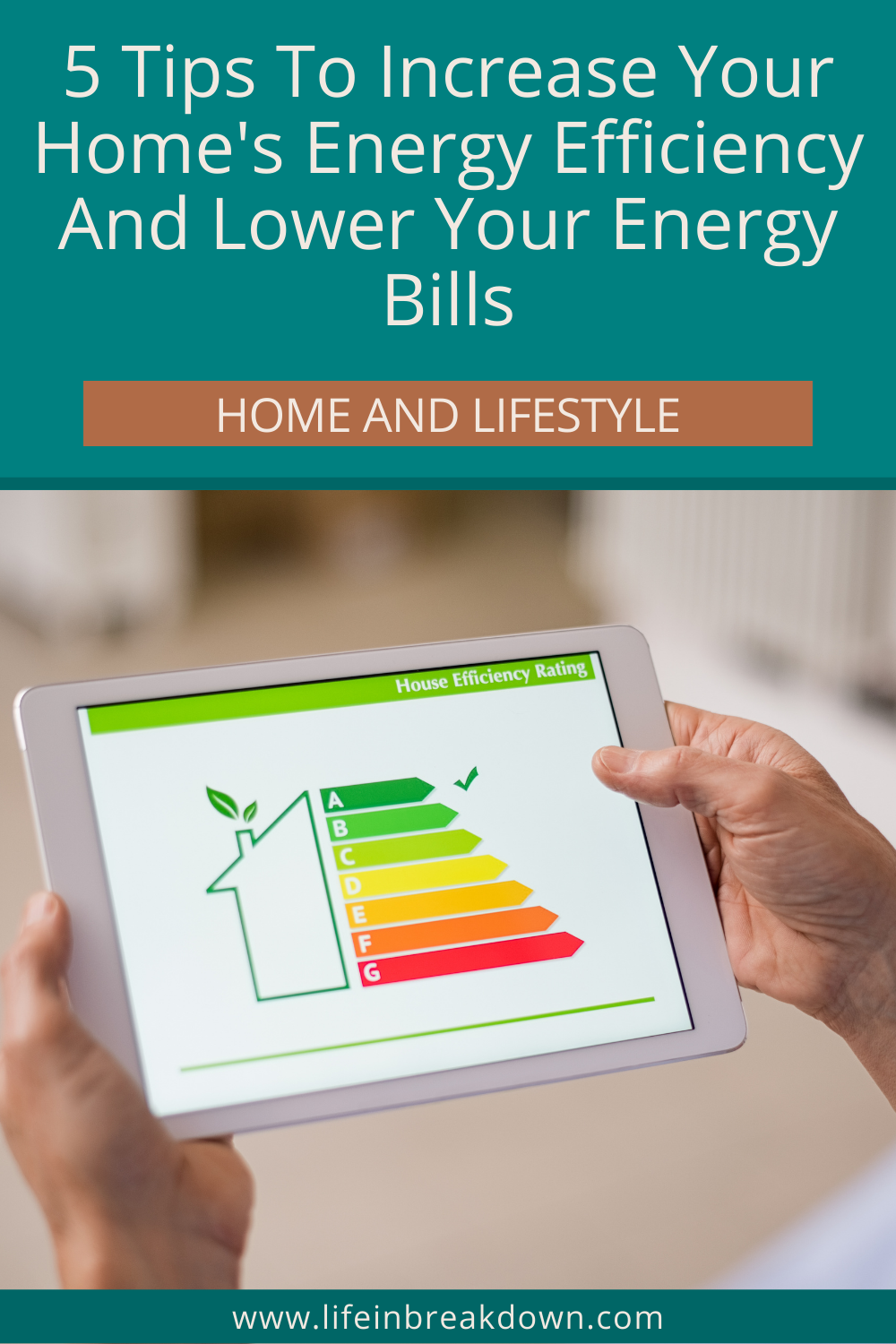
5 Tips To Increase Your Home’s Energy Efficiency And Lower Your Energy Bills
Energy efficiency is defined as the practice of using less energy while still being able to do the same jobs. You can save money and prevent energy waste at home by becoming energy efficient.
Increasing your home’s energy efficiency can provide countless benefits, but do you know how to accomplish it? Do you know what simple actions might help you save money on your energy bills? If you still don’t know the answers to these questions, this article can surely help.
To improve your home’s energy efficiency and minimize your energy expenses, follow these guidelines:
Upgrade Your HVAC System
The health of your home’s HVAC system, which includes heating, ventilation, and air conditioning equipment, may have a major impact on your energy expenditures. Heating equipment alone accounts for around 40% of your home’s energy use.
Work with professionals to upgrade your HVAC system to improve your home’s energy efficiency. If your home’s HVAC system is at least 15 years old, this is very crucial. For example, if you live in Capon Bridge, West Virginia, start looking for heating contractors and maintenance Capon Bridge since it is a cost-effective investment to use their services.
Once you upgrade your HVAC system, you’ll be able to use programmable thermostats and breathe cleaner air. New HVAC systems are also beneficial for the environment because they use 1/3 less energy compared to older models.

Seal Your Home
You won’t be able to experience the benefits of having a new HVAC system if there are too many cracks and holes in your home. The cool and warm air produced by your HVAC system will only escape outside, causing the equipment to use more energy to maintain a comfortable environment indoors.
Sealing cracks and holes as soon as possible is another technique to make your home more energy-efficient and reduce your energy expenses. You may save up to 10% on heating and cooling expenditures by completing this task.
Change Your Day-To-Day Behaviours
Contrary to common assumptions, increasing your home’s energy efficiency and lowering your energy bills does not necessarily necessitate a large financial investment. You can easily achieve these goals by changing your day-to-day behaviours.
If you include the following practices into your daily routine, you’ll be astonished at how much your energy expenses will drop:
- Turning off lights and appliances when not in use is one of the simplest ways to save electricity. This should be done every time you leave the room, even if you’re just out for a few minutes.
- Rather than depending on energy-intensive appliances to do household activities, complete them manually. You may, for example, hang your clothes outside instead of using the dryer. You may also avoid using a dishwasher by hand-washing all of your utensils.
- If you want to save money on heating and cooling, use your air conditioner less in the summer and lower the temperature on your thermostat in the winter. Heating and cooling expenditures account for about half of your energy bills, so making these changes will surely offer more savings.
Replace Your Light Bulbs
Although all light bulbs can brighten a room, did you know that certain light bulbs use less energy than others? Traditional incandescent light bulbs can light a room, but they use a lot of power—60 watts to create 800 lumens (the amount of light emitted by a light bulb).
If you’re still using traditional incandescent light bulbs at home, replace them with compact fluorescent lamps as soon as possible. These lights provide the same number of lumens but use just 13 watts of power. A LED lamp produces 800 lumens, as well, but only consumes 10 watts.
Compact fluorescent lamps and LED are 25 times more energy-efficient than traditional incandescent light bulbs. Using these bulbs at home will definitely provide you with a good return on your investment!

Invest In Energy Efficient Appliances
Manufacturers have begun to create energy-efficient appliances to suit the demand as more consumers wish to save electricity. Today, you can easily buy newer appliances that offer more features but consume less energy.
Consider two factors when purchasing appliances for your home: the annual operating cost and the initial purchase price. Energy-efficient appliances are usually more expensive than older models, but they have lower running expenses by 9 to 25%. In the long term, this means you’ll be able to save money on your energy bills.
Think Long-Term
You won’t see any changes in your energy bills if you use these recommendations for a week and then go back to your old habits. Increasing your home’s energy efficiency requires a long-term commitment since these recommendations must be incorporated into your everyday routine.
If you really want to increase your home’s energy efficiency and lower your energy bills, you must be willing to put up the work to modify your habits. This may be difficult at first, but the end result will be well worth it!
Pin it!