Turning Your Garden Into The Perfect Party Spot
Whether you want to have the occasional get-together or a whole summer of parties, your garden is likely to have the potential to host such events. Of course, it can often mean that you will need to look into some of the ways you can alter it, improve it and upgrade it – and there are often going to be some specific changes that you will need to make if you are going to host people. However, this can be an enjoyable thing to do, and it’s well worth trying out.
A garden can easily become the most useful “extra room” in a home once it’s treated less like a patch of outdoor space and more like a place where people actually want to gather. Turning it into a party spot isn’t about spending a fortune or copying magazine layouts. It’s more about shaping the atmosphere: comfort, light, flow, and a few focal points that make people naturally relax and stay longer than they planned.
Space & Layout

Start with how people move through space. If your garden has a single door leading out, that becomes your natural “arrival point,” so it helps to make that transition feel inviting rather than abrupt. Even something as simple as a cleared path, a few lanterns, or a subtle change in lighting between indoors and outdoors makes a difference. You want guests to feel like they’re stepping into a different mood rather than just walking into the back garden.
Once people are outside, the layout does most of the work. Instead of trying to make everything symmetrical or formal, think in zones. A seating area for conversation, a slightly more open space for standing and mingling, and a focal point that draws people in. This is where something like a fire pit becomes especially useful. It naturally anchors the garden, giving people a reason to gather without needing instruction. People drift towards fire. It’s almost automatic.
Heat & Comfort
A fire pit also solves one of the classic garden party problems: what happens when the temperature drops. Even in warmer months, evenings can cool quickly, and a fire pit keeps the energy going long after the sun disappears. It creates a shared centre, something people can orient themselves around. Conversations become easier too, because no one is stuck in rigid seating arrangements; they’re loosely grouped in a circle, able to come and go without awkwardness.
Comfort is the second pillar. Outdoor furniture doesn’t need to be expensive, but it does need to feel intentional. Hard plastic chairs tend to signal “temporary,” whereas cushions, throws, and mixed seating styles signal “stay a while.” You don’t need matching sets. In fact, a bit of variety often feels more natural. A bench here, a couple of loungers there, some floor cushions if you’re short on space. The aim is simply to make sure nobody is standing awkwardly for long periods or balancing drinks without a place to set them down.
Light & Sound

Lighting does more emotional work than almost anything else. Daylight will carry the party at first, but as it fades, lighting takes over the atmosphere. Overhead string lights are a classic for a reason: they soften the space without demanding attention. Solar lanterns along paths or tucked into corners add depth, while candles on tables or sheltered surfaces bring a closer, warmer feel. The key is layering rather than relying on a single bright source. You’re not trying to light the garden like a stadium; you’re trying to make it feel like somewhere people want to linger.
Sound is another often-overlooked element. Music doesn’t need to be loud, just present enough to fill gaps in conversation. If your garden is large or oddly shaped, consider how sound carries. A single speaker near the house might not reach the far end, so placing sound centrally or using multiple lower-volume points can help keep the mood consistent without overwhelming anyone’s conversation.
Food & Drink
Food and drink should be easy to access, rather than formally served, unless you’re specifically going for a sit-down feel. One of the advantages of a garden party is informality, so lean into that. A central table or side station works well, allowing people to help themselves. If a fire pit is part of the setup, it can also become interactive in a subtle way – something like toasted marshmallows or simple skewers adds a bit of activity without turning the event into a structured experience.
Space & Weather
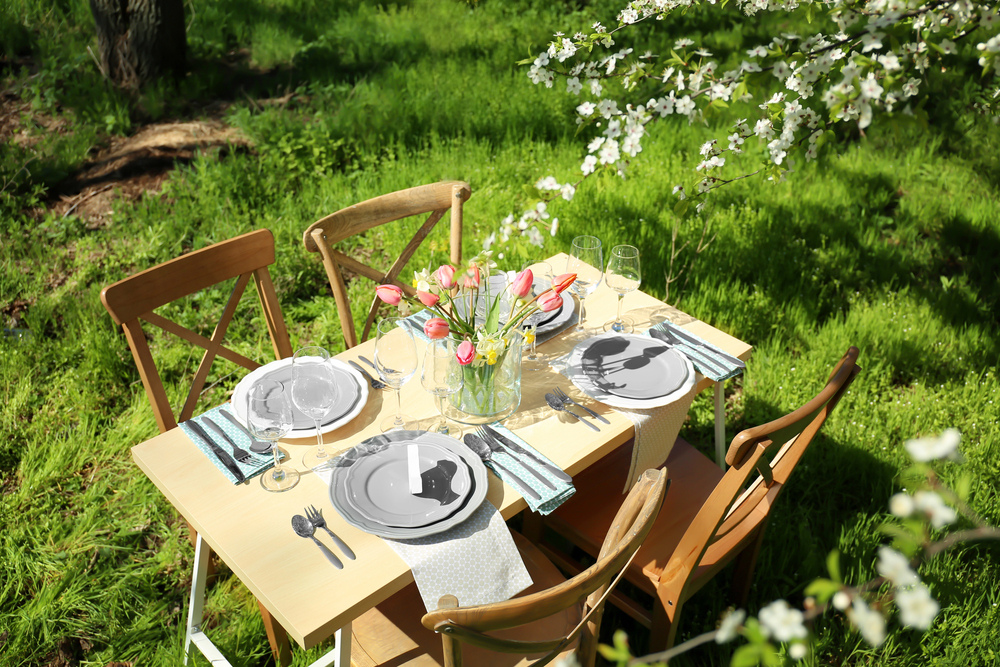
Weather is the one variable you can’t fully control, so it helps to design with flexibility in mind. A few umbrellas, a pergola, or even a simple covered corner can prevent the whole evening from being derailed by light rain or excessive sun. Blankets nearby also quietly extend the usable time of the space. People rarely ask for them; they just reach for them when they’re there.
The most successful garden parties also avoid overfilling the space. It’s tempting to try and use every corner, but negative space is what allows a garden to feel breathable. If every area is occupied, the energy becomes crowded rather than relaxed. Leaving pockets of emptiness gives people room to move, pause, or drift between groups naturally.
Finally, think about endings. A garden party doesn’t need a hard stop, but it benefits from a natural winding down. This is where something like a fire pit again becomes useful. As the night gets later, people naturally migrate towards it, conversation slows slightly, and the atmosphere shifts from energetic to reflective. It’s a gentle way of signalling that the evening is tapering off without anyone needing to announce it.
A good garden party space isn’t really about decoration. It’s about removing friction: places to sit, light to see by, warmth when it gets cold, and a central point that quietly holds everything together. When those elements are in place, people do the rest themselves.
Pin It!