Mobility-Friendly Towns and Cities in the UK You Need to Visit
There’s so much to see in the United Kingdom. It’s got everything you need from picturesque towns and villages to historic cities to beautiful mountains and beaches.
For someone with mobility issues, whether you are living independently or have a Disability Accommodation arranged to make daily activities easier to enjoy a fuller life, however, planning a day trip or staycation can cause anxiety about being able to get around easily without missing out on all the fun.
Thankfully, hotels, attractions, and city planners are becoming more aware of accessibility, and it’s starting to get easier for people with disabilities or mobility issues to visit many of the wonderful places we’ve got here.
There’s some great information in this ranking of the most accessible cities in the UK. It’s an interesting study that looked at every UK city and ranked them by how accessible they are.
The city of Wells in Somerset came out on top, but you can find out where your local city ranks too.
Here’s my pick of the most mobility-friendly towns and cities in the UK you need to visit.
What Are the Most Accessible Towns and Cities in the UK?
While you might think of the UK as being a small place, it’s a huge area covering four different countries, so I had a lot of places to choose from. When researching, I took into account accessible accommodation options, public transportation, and mobility-friendly attractions.
Some of the most accessible towns and cities in the UK include Edinburgh, London, Belfast, Birmingham, Lincoln, Llangollen, and Harrogate.
It’s not an exhaustive list of accessible places to visit in the UK, but it will give you some ideas to get you started.
Edinburgh

Edinburgh is a city well-known for its stunning medieval castle, which houses the Crown Jewels. While Edinburgh Castle is set on a steep hill, staff can arrange for a mobility vehicle to whisk you straight up to the top if you would prefer to avoid the challenging slopes.
Check the website before you visit to see which exhibits are open to the public, and call in advance if you need to book Blue Badge parking as it is limited.
Another Edinburgh attraction you won’t want to miss is the Royal Yacht Britannia where you can see how the other half live! This ship was used by Queen Elizabeth for 40 years to entertain political figures and celebrities as well as relax with her family.
You can access each of the five decks via a central lift, and you can easily navigate the paths and wide doorways using a wheelchair.
If you need to get a taxi, rest assured that the entire fleets of Edinburgh’s two main black cab firms are wheelchair accessible – all 900 of them!
There is lots of accessible accommodation in Scotland, so you’ll have plenty of choice.
London

You would probably assume that London, being a large bustling city, is not a mobility-friendly place. It really has something for everyone though.
If visiting famous landmarks is your thing, Tower Bridge and the London Eye offer panoramic views of the Thames and London’s iconic skyline. Although the London Eye is wheelchair accessible, be aware that you need to book a slot in advance as it can only accommodate two wheelchairs per pod and eight wheelchairs total at any one time.
Are museums more your thing? The British Museum houses historic artefacts from all over the world, and the Science Museum showcases amazing technological advances that have happened throughout history.
Both museums are free, wheelchair-friendly, and accessible by public transport!
Save your money to visit the theatre. Several of London’s theatres have wheelchair spaces and hearing loop systems including Shakespeare’s Globe and the Prince of Wales Theatre.
You’ll definitely need more than one day in the capital, so make sure you book a few nights in a hotel to make the most of it. Chain hotels like Travelodge, Premier Inn, and Holiday Inn score well with disabled travellers.
If you need accessible car parking, check out the Tower Hotel near Tower Bridge.
Belfast
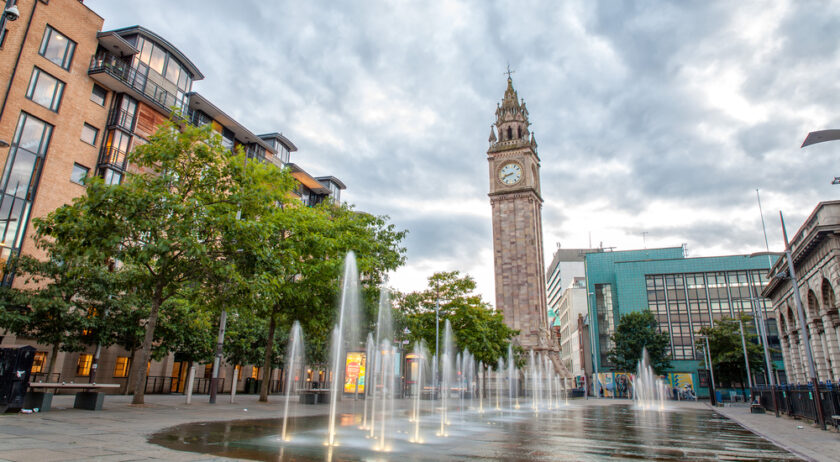
If you’d like to go slightly further afield, why not hop on a plane or boat to Northern Ireland’s capital, Belfast. As the birthplace of the Titanic, Belfast is steeped in history, but it’s also popular with people looking for a cosmopolitan city break.
You can’t go to Belfast and not visit the Titanic Belfast museum where you can learn more about the ‘unsinkable’ ship through real artefacts, interactive exhibits and an up-close look at the historic Harland & Wolff slipways and the SS Nomadic, the last remaining White Star Line vessel. All circulation spaces and galleries at Titanic Belfast are fully accessible, and there are numerous accessible toilets on site.
When you’ve had your fill of history and want to spend some time in nature, check out the Botanic Gardens, which were established in 1828 and contain exotic tree species, tropical plants, giant bird feeders and a rose garden. The gardens are located beside the Ulster Museum.
Both are free to visit and are accessible to people with limited mobility.
If you want to see more of the Northern Irish countryside, consider getting a bus tour to the UNESCO World Heritage site, Giant’s Causeway, a two-hour drive from Belfast. Make sure you check that the wheelchair accessible shuttle bus is running from the visitor centre to the stones before you go though otherwise you might find the walk or roll to and from the stones a little difficult.
Also, a heads up, the Dark Hedges made famous by Game of Thrones are located about 12 miles from Giant’s Causeway.
There is lots more to do as well. Sylvia from Spin the Globe has a list of ten wheelchair accessible things to do in Belfast.
Looking for accessible accommodation to stay in while you’re visiting Belfast? The Titanic Hotel Belfast is perfectly located beside the Titanic museum and close to the city centre.
Birmingham

With shopping, entertainment, and most importantly, a chocolate factory, Birmingham has got it all!
First things first, all chocolate lovers should make a beeline to Cadbury World, which has extensive parking facilities near the entrance. Take a self-guided tour to learn how Cadbury chocolate is made and enjoy some delicious samples!
The factory has been adapted with ramps throughout, lift access, accessible toilets, and a Changing Places facility. The Cadabra ride and the 4D Chocolate Adventure cinema have wheelchair spaces.
When you’ve had your fill of chocolate (if that’s possible!), head over to Birmingham Museum & Art Gallery, which is fully accessible for visitors with mobility difficulties with lifts to all floors, accessible toilets on all levels, and seating areas throughout.
If music is your thing, Birmingham’s got one of the finest concert halls in the world, Symphony Hall. There’s something for everyone from pop to classical to jazz to comedy shows.
The venue has wheelchair seating and step-free access in certain parts, and it’s got an infrared hearing enhancement system for hearing impaired patrons. Make sure you book your tickets early so you don’t miss out.
When you’re ready to retire for the day, the Grand Hotel Birmingham is one option that got a good review on Euan’s Guide.
Lincoln
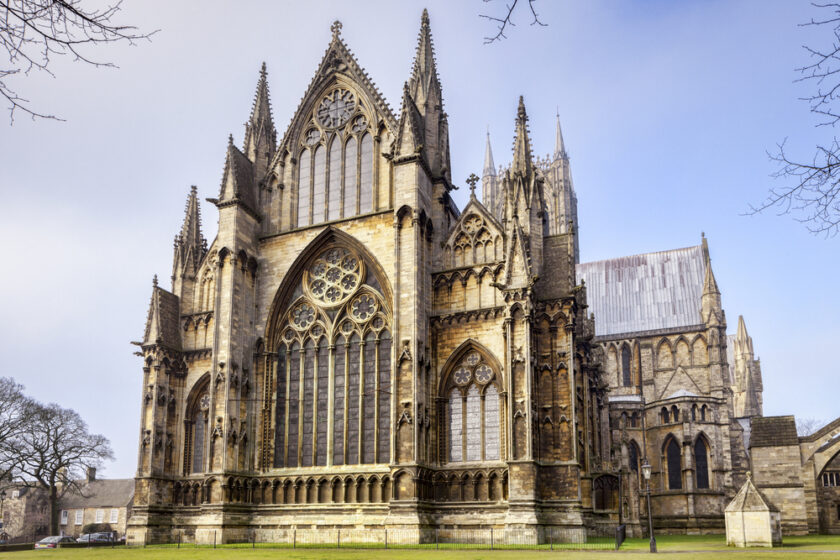
If you’re looking for a mix of history and vibrant culture, the cathedral city of Lincoln might be right up your street with its mix of historic buildings and quirky boutiques, cafés and restaurants.
When you think of a medieval town, you think of steep hills and cobblestones, and you would be right, but Lincoln has a wheelchair accessible shuttle bus that will take you straight to the Cathedral Quarter without having to struggle up the hill. You can also hire a wheelchair or scooter from Shopmobility on Melville St.
Lincoln Cathedral is the most iconic landmark in Lincoln. People have been worshipping at this cathedral for almost 1,000 years!
According to its access statement, around 85% of the cathedral and its grounds are wheelchair-friendly. Hearing loops have been installed at various points and accessible toilets are available.
Right beside the cathedral is Lincoln Castle. Built in 1068 by William the Conqueror, Lincoln Castle is one of the most impressive historical sites in England and home to one of only four surviving copies of Magna Carta.
Most of the grounds and castle are wheelchair accessible. However, some areas aren’t, such as portions of the medieval wall walk and prison.
Note that the East Gate entrance is accessible, and there is no car parking on site, but there are car parks in the vicinity.
If you’re there to visit the cathedral and castle, the Castle Hotel is conveniently located beside them.
Llangollen, Wales

Cities tend to get a lot of attention, but many small towns are well worth a visit. Llangollen in North Wales offers adventurous activities like white water rafting and rock-climbing, but there are also plenty of other options for people with limited mobility who want to enjoy the scenery.
You can enjoy the picturesque Dee Valley by steam train with the Llangollen Steam Railway. The majority of these trains have specially adapted carriages for people with mobility issues, and there are ramps available to help passengers board.
If you want to visit the country then you will want to check out this list of the best campsites in Wales too.
If you’re looking for a unique experience, take a leisurely trip along the canal from Llangollen Wharf toward the Horseshoe Falls in a horse-drawn canal boat!
The boats are wheelchair accessible via portable ramps. However, electric wheelchair users might have difficulty, so it’s best to call them first to check.
The Bryn Howel Hotel is a family-owned hotel situated a few miles from Llangollen and the Pontcysyllte Aqueduct.
Harrogate, North Yorkshire
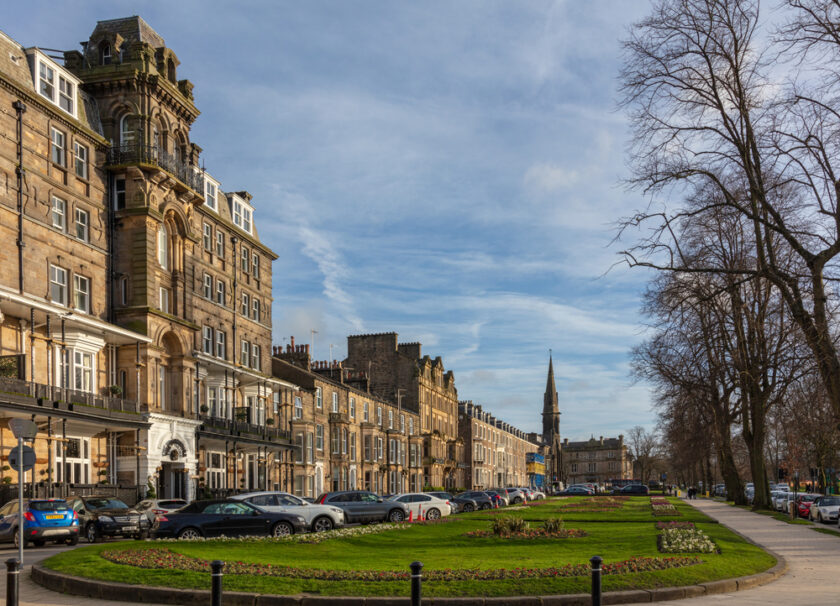
Harrogate is a traditional spa town in Yorkshire full of old manor houses, pretty gardens, antique stores and boutique shops.
If you enjoy walking around beautiful gardens, visit RHS Garden Harlow Carr, which has lots of different types of planting from tropical flowers to tranquil woodlands. The gardens and buildings are accessible except for some sloped or pebbled areas.
You can hire manual wheelchairs and mobility scooters, but they recommend booking in advance.
Don’t miss out on afternoon tea from Bettys Café Tea Rooms, which overlook the gardens and have a disabled parking bay right outside the entrance.
The Crown Hotel is located in the centre of Harrogate, close to everything, and receives good reviews on Tripadvisor from people with reduced mobility.
Is It Worth Exploring Mobility-Friendly Towns and Cities in the UK?
One good thing that has come out of the last couple of years is that British people are becoming more aware of what we’ve got right on our doorsteps. Foreign holidays can be amazing, and we all look forward to being able to travel freely again, but it’s also worth exploring all the mobility-friendly towns and cities the UK has to offer as well.
Accessible travel is possible with a little bit of research.
I’ve given you several years’ worth of UK holiday ideas in this post!
Images in this post are stock images of the local area and not exact locations.
Pin It!






I just spent 2 weeks in the midlands. The WORST for mobility are Corby and Kettering. Corby’s shopping centre has lots of handicap spaces moving away from the lifts, not clustered around. Even if you manage to get to the lifts, you’ve still to wheel several hundred yards to even get to the shops.
Kettering has mobility spaces tucked far away from any useful place. Some of the automatic doors don’t work, some are difficult to work. Anyone who plans for accessibility should be made to spend at least one day getting around in a wheelchair JUST to experience how difficult it it.
It is awful how bad some places are, I really think some just don’t care about their disabled residents at all.
Edinburgh is definitely not accessible! Its full of steep hills and steps. I visited several times when my mobility was better but now its worse I have not gone back. There are cobble stones everywhere so no good for wheelchairs and just trying to find a route on googlemaps without steps was a nightmare. Its a beautiful city but very cold, windy, wet and steep. It would require taxis to get around and even then if you are in a wheelchair or have impaired mobility it would be a struggle.
This is helpful, thank you. I never realised how very difficult things can sometimes be until I developed my own mobility issues!
It is crazy isn’t it the UK just isn’t accessible if you have mobility issues in so many ways.
Very helpful and thoughtful article. Thank you for reminding me to reread it.
I would love to visit Edinburgh but have always been put off by my sister saying how steep the roads were. I walk so badly on a level surface, never mind trying to navigate an incline! How great to hear help is available – it’s really put my mind at rest.
I hope you have a lovely time if you do decide to go!
It’s certainly true that mobility problems make you view travel in a whole new way. It’s a great petty that there is such a difference in the way different places support mobility problems.
Definitely, I don’t think people think about how access is for people if they don’t have a disability.
It’s great to see lots more cities becoming accessible.
It is so nice isn’t it? I just wish more would catch up and realise that “aesthetic” isn’t a good reason not to be.
It’s great to see one of the more accessible cities is Lincoln, I live near there, and we are often accused, as a county, of being quite behind the times
It is great some places are being more open, as all should be! Sadly Lichfield is very behind the times.
Such a useful list for people. It’s amazing how many places aren’t accessible.. I really feel like everywhere should be, although that’s probably just not possible. ♥
Definitely it is such a shame that so many places aren’t and some just don’t even want to try which is sad.
This is a great list. Unfortunately we live in Devon and have a disabled son and really struggle with mobility friendly places to visit near by.
I love the Donkey Sanctuary in Devon for being mobility friendly, took my first big wheelchair outing there.
Very useful, I have disabled family who would benefit from knowing these
I hope they find it useful to help them visit some new places.
Whart a great list, we have visited most and yes the others look well worth a visit
I hope you enjoy the ones you haven’t been to if you decide to visit them at some point.
Thank you for introducing me to Llangollen, Wales. I’ve always wanted to visit Wales with the kids but didn’t think it was possible with a pram.
I hope you get to go and visit and have a good if you do.
I am lucky enough not to need a wheelchair and my wheelchair using Dad is no longer well enough for these sort of trips. However these issues came back to me trying to take twin babies out in a double buggy. All towns and cities need to follow suit.
Oh definitely, I can imagine it is hard taking out kids in a pram, the world around is really made for people who can walk.