How to Deal with External Property Issues when Renting
If, like a lot of people today, you rent rather than own your home, you are entitled to suitable living conditions.
This might be affected by a wealth of factors related to the inside of the property; however, there are also certain external issues that can arise and as a tenant, you need to be aware of what could go wrong…
Roof problems

As a minimum, you should expect a watertight roof in your rented property. Even the smallest leak can quickly deteriorate and ruin a property.
You should obviously keep an eye out for visible leaking, but also for yellow or dark brown coloured ceiling patches, mould and stale air.
Keep an eye on the shape of the roof, too, as any deformation could be a sign of issues with the supports and joists, thereby necessitating inspection.
Should any of these issues be evident, it’s crucial to let your landlord know as soon as you can.
Damage to the walls
The property’s external walls are of obvious importance for making sure water doesn’t penetrate the interior.
However, the journey that water has to take to get through an external wall and then accumulate in the space between the external wall and drywall means that any water damage issues may take a while to show discernible signs.
Nonetheless, if you see black mould and colouration inside the property, this definitely suggests water is getting into your home from outside!
These kinds of issues will call for inspection of the walls to determine where and how the water is getting through.
It might be that the walls themselves are not solely to blame, or even necessarily at all, given that faults with the roof or gutters or even an internal plumbing problem can all bring about such issues as well. Again, any of these faults should be reported to your landlord as soon as they are discovered.
Doors and windows that are poorly resistant to damp and draught

A key area of a property through which wind and rain can sometimes pass to get inside is, of course, its doors and windows.
Again, as a minimum you should expect your rental property’s external doors to be damp and draught-proof.
The good news is that you can partly address any such issues yourself for little money, simply by purchasing and applying some draught-proof strips.
If you do this though, make sure that you keep hold of your receipts so that the landlord can hopefully cover the cost for you.
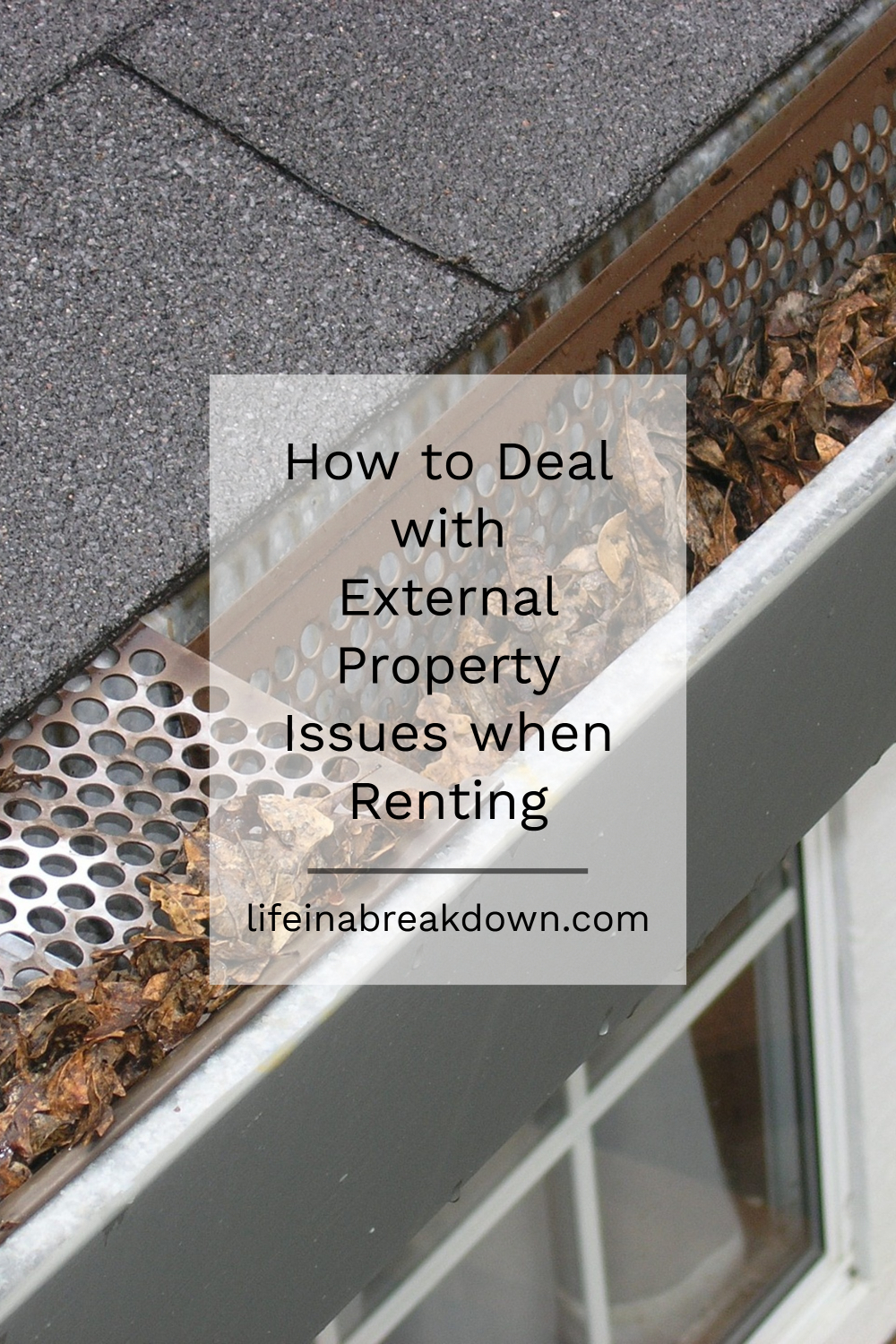
Faulty, loose or blocked gutters
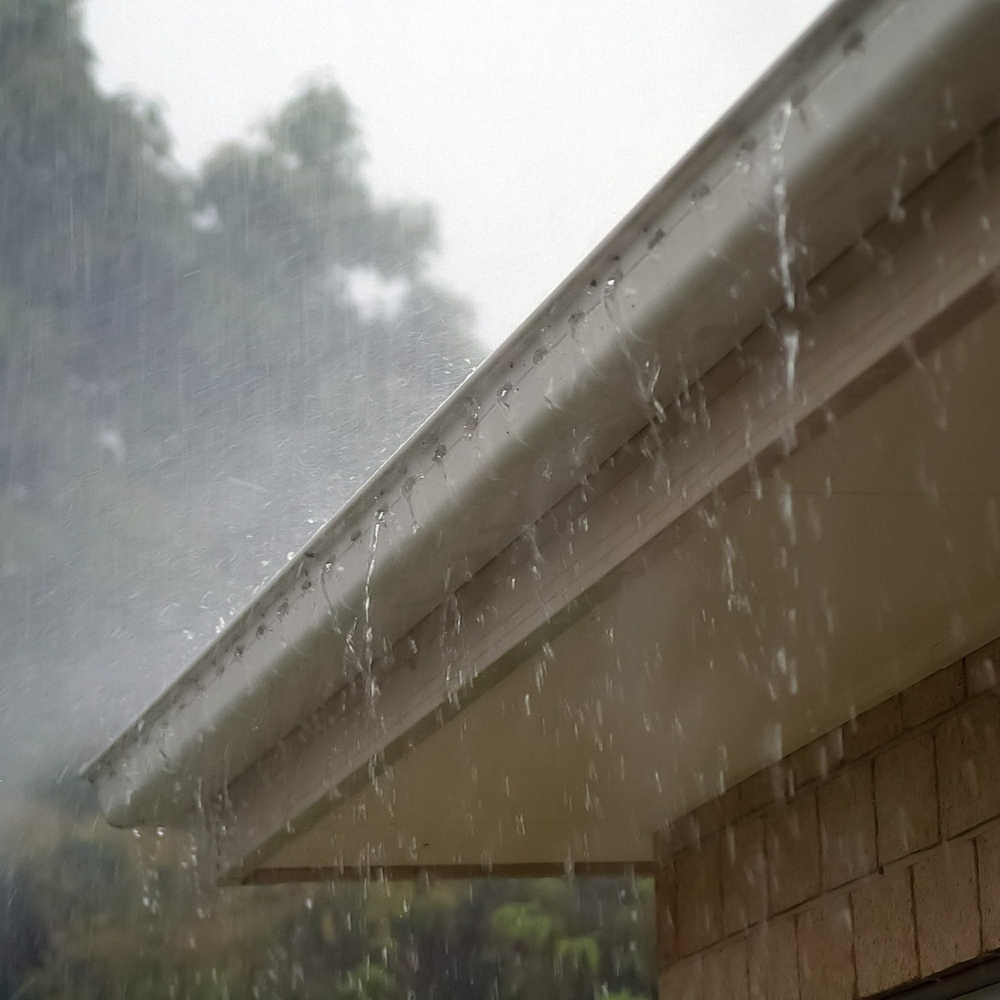
Any of the aforementioned issues with your rental home’s gutters could lead to huge volumes of water gushing down the exterior walls, which could cause significant damage to them over time.
A loose gutter can be repaired much more easily and cheaply than damaged external or internal walls, which is why it is important to always keep a close eye on your gutters, and observe the house from the outside during times of rainfall.
This way, if problems appear, you will be able to alert the landlord so that they can take swift action.
So, what’s the key takeaway?
There’s some good news for tenants when it comes to all of these exterior elements of a property: it is the landlord, rather than the tenant, who is generally responsible for their repair and maintenance. This is laid out in the Landlord and Tenant Act 1985 and Housing Act 2004.
Either way, as a tenant it is you who is responsible for monitoring the property and quickly reporting any problems as they occur. You should also pay close attention to the exact terms of your tenancy agreement.
The high level of responsibility that your landlord has for maintaining your rental home’s exterior is also a strong reason for them to ensure they are suitably protected against the worst that could happen.
Hopefully, they made the decision to compare landlord insurance online a long time ago, and now benefit from the kind of comprehensive policy that means both you and your landlord can rest easy in the knowledge that the right cover is in place for whatever the eventuality!
Pin it!