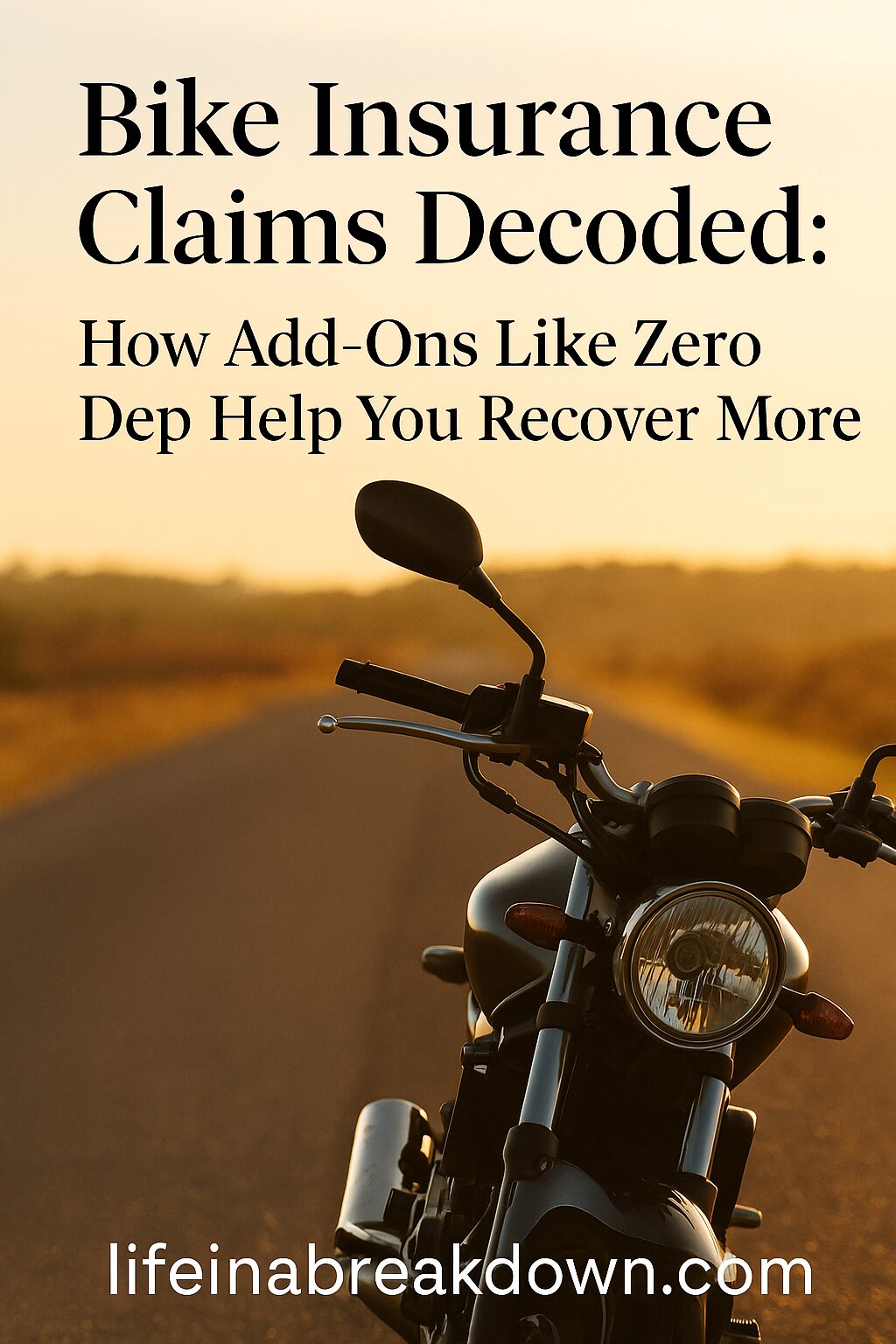
Bike Insurance Claims Decoded: How Add-Ons Like Zero Dep Help You Recover More
If you’ve filed a bike insurance claim and ended up paying more than expected, depreciation probably caused the gap. Parts lose value with age, and standard policies apply that loss when settling claims. The fix is simple: choose the right add-ons, with zero depreciation at the top of the list. This guide shows how add-ons and a clean claim process help you recover more.
First, the basics: what your policy really pays for
Most riders buy comprehensive bike insurance because it covers third-party liabilities and damage to their own vehicle. Your payout for own-damage claims depends on the IDV (insured declared value), compulsory and voluntary deductibles, and depreciation on parts replaced. Rubber, plastic and fibre components attract the steepest depreciation; metal parts attract lower rates. That’s why two similar accidents can produce different settlements.
In a standard claim, the insurer typically deducts:
- Policy excess/deductible you must bear on every claim
- Depreciation on parts based on age and material
- Consumables like oil, nuts, bolts and filters, unless you’ve purchased a separate cover
The problem depreciation creates during claims

Take a minor fall that breaks a brake lever and scuffs a side panel. The garage estimate is £12,000. After depreciation on plastic and some metal parts, the insurer approves £9,000. Add a £1,000 deductible, and you still pay £3,000 plus consumables. Nothing is “hidden”; it’s simply how standard bike insurance policies work. Planning better can change that outcome.
Meet zero depreciation: the add-on that caps your losses
Zero depreciation bike insurance (also called “zero dep” or “nil dep”) removes depreciation on approved parts in a covered claim. In plain English, the insurer pays based on the cost of new parts, not their age-reduced value. You pay only deductibles and any excluded items. This can lift your payout substantially, especially for plastics, alloy wheels and painted panels.
Practical points to know:
- Eligibility and age limits: Often available for bikes up to five years; some extend further at a higher price.
- Claim count caps: Certain policies limit the number of zero-dep claims per year.
- Premium impact: Costs extra, but one moderate claim can recover the additional premium.
- Network garages: Cashless repairs are smoothest at authorised workshops.
Standard vs zero-dep claim: quick comparison
| Scenario | Parts cost (£) | Depreciation deducted | Insurer pays* | You pay (excl. deductibles) |
| Standard claim | 12,000 | 3,000 | 9,000 | 3,000 |
| With zero dep | 12,000 | 0 | 12,000 | 0 |
*You still pay compulsory/voluntary deductibles and any non-covered items.
Other add-on covers that boost your payouts
Pair zero dep with focused add-ons for stronger protection:
- Engine protect: Covers damage from water ingression or oil leakage, useful in monsoon flooding.
- Consumables cover: Pays for engine oil, coolants, screws and clips, often excluded.
- Roadside assistance: Towing, on-the-spot repair, jumpstart and fuel delivery.
- Return to invoice (RTI): In total loss or theft, reimburses the original invoice value, not just IDV.
- NCB Protect: Lets you retain your no-claim bonus after limited claims.
Claim process: how to get the most from your cover
When mishaps happen, speed and documentation shape outcomes. Use this simple playbook:
- Stay safe and record the scene. Take clear photos.
- Inform your insurer quickly. Intimate within 24–48 hours via app.
- Choose a network garage. Cashless repairs reduce upfront payments.
- File an FIR if required. Needed for theft, major accidents, or third-party injury.
- Surveyor assessment and approval. Share add-on details; confirm the insurer’s share and your share.
- Settle deductibles and close. Pay your share; the insurer settles the rest with the garage.
Documents checklist
- Policy copy
- Driving licence and RC
- PUC certificate
- Photos/videos of the damage
- FIR copy (if applicable)
- Garage estimate and invoices
Smart buying tips for Indian riders
- For new or premium motorcycles, pick comprehensive bike insurance with zero dep for the first few years.
- Set the right IDV. Don’t understate it to save premium; it caps your maximum payout.
- Mind the deductibles. Voluntary deductibles lower premiums but raise your share on each claim.
- Check the garage network reach. A wider network means easier cashless claims while travelling.
- Read exclusions. Tyre damage, aftermarket accessories or riding without valid documents often lead to rejections.
- Compare bundles. A plan that adds engine protection and consumables can save more at claim time.
A few common questions answered

Is zero dep worth it on older bikes?
If your bike is beyond the usual age cut-off, the add-on may not be offered. For mid-age bikes, weigh the extra premium against your repair risk and city traffic.
Will my premium rise after a claim?
Your NCB can be reduced, which raises next year’s price. NCB Protect can soften the impact for limited claims.
Bottom line
Depreciation is the quiet reason many claims feel disappointing. Zero depreciation bike insurance counters that by paying for parts at full replacement cost, not a reduced value. Add smart companions – engine protect, consumables and RTI – and you’ve built a sturdy umbrella around your ride. With the right add-on covers and a disciplined claim process, you keep surprises low, payouts high, and your focus where it belongs: enjoying the open road today..
Pin It!