Cut, Clarity, Colour, Carat Weight: The 4 Cs Of Diamond Engagement Rings Explained
Navigating the world of diamonds can be complex, but fear not! We’re here to illuminate the cornerstone of diamond valuation: The 4 Cs.
The 4 Cs are cut, colour, clarity, and carat weight. These four parameters play a pivotal role in determining a diamond’s aesthetic qualities and therefore its value.
In order to choose the perfect engagement ring for your partner, you need to have a comprehensive understanding of these factors. In this article, we’ll guide you through the intricacies of these crucial elements, helping you to make an informed decision when choosing that perfect symbol that your partner simply can’t turn down.
Once you’ve armed yourself with the requisite knowledge to choose the right engagement ring, you’re ready to start shopping. You can browse Larsen Jewellery engagement rings to begin the process of considering which piece of jewellery is right for you.
With a wide range of styles and prices on offer, it’s the perfect place to start your quest of finding a symbol of true love.
Cut

The ‘cut’ of a diamond doesn’t refer to its shape (round, oval, pear, etc.) as one might initially believe. Rather, it refers to the proportions and faceting of a diamond.
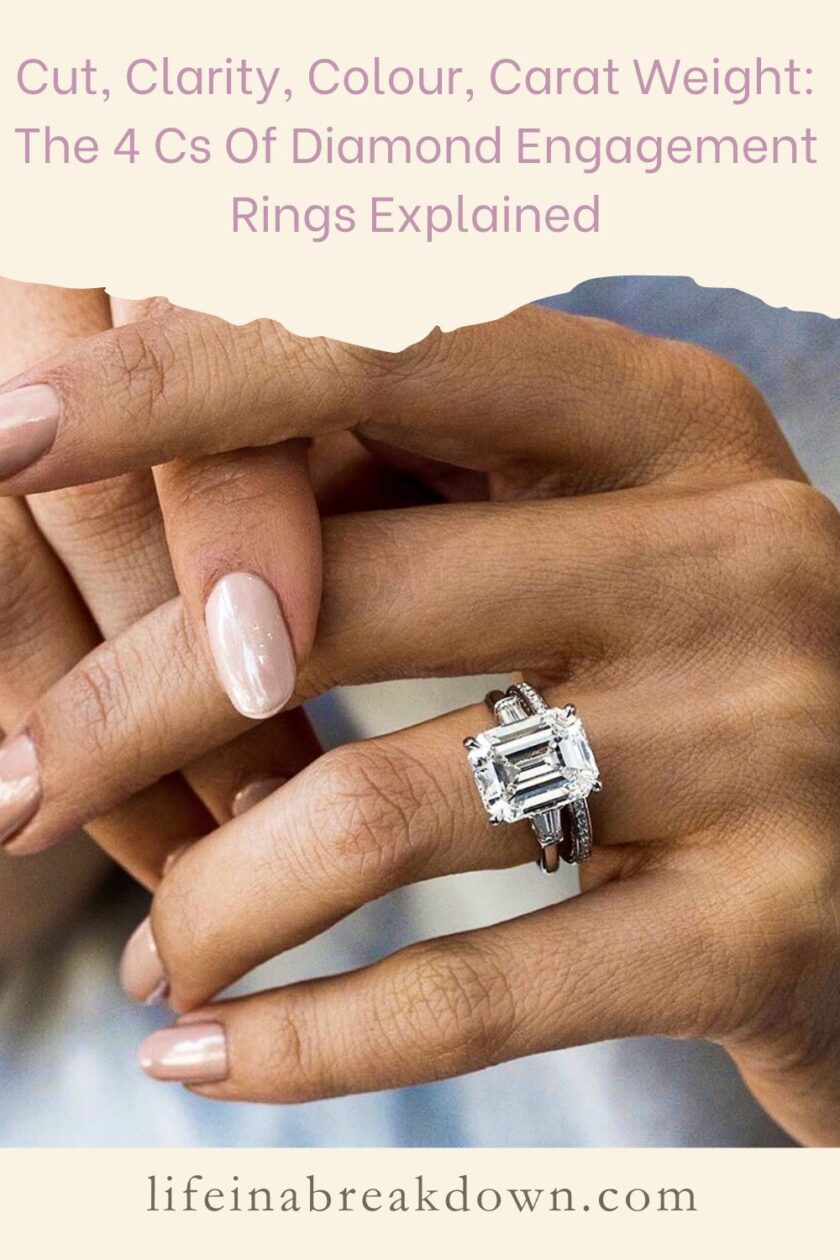
The cut greatly influences a diamond’s brilliance (how much light it returns to the eye). It is, without question, one of the most vital aspects to consider when choosing an engagement ring.
Cut quality dictates how light entering the stone is refracted within and then returned to the viewer’s eye. A well-cut diamond maximises this light return, creating the coveted sparkle and brilliance that your partner is dreaming of.
Conversely, a poor cut can leave a diamond looking dull and lifeless, regardless of its size or clarity.
The reason for this comes down to precision and craftsmanship. A diamond cutter’s skill in creating symmetrical facets at precise angles is what allows a diamond to properly reflect light.
The slightest miscalculation can dramatically impact the stone’s sparkle.
The better the cut, the more expensive the diamond. This is because a larger amount of rough diamond is wasted in order to achieve a higher quality cut.
The process also requires a more skilled operator and more time, thereby adding to the cost. That said, it isn’t the most important factor in dictating the price of a diamond.
When shopping for engagement rings, you should be able to find a well-cut diamond without blowing your budget too dramatically.
Colour
In the world of diamonds, ‘colour’ refers to the presence or absence of colour within a diamond. A truly colourless diamond is extremely rare and highly coveted, earning the highest grades on the colour scale.
The Gemological Institute of America (GIA) grades diamond colour on a scale from D (colourless) to Z (light yellow or brown). To the untrained eye, many of these differences are not noticeable.
Still, these minute differences can significantly affect a diamond’s quality and price.
While many seek the perfect opaqueness of a colourless diamond, others prefer warmer hues present in lower grade colours. Moreover, in recent years, diamonds with distinct colours, called ‘fancy colour’ diamonds, have gained popularity.
These stones can exhibit hues including blue, green, pink, or yellow.
The closer a diamond is to being colourless, the more expensive it becomes. However, ‘fancy colour’ diamonds defy this rule.
Their pricing depends on the rarity and intensity of the colour. Some coloured diamonds can command higher prices than even a D-graded colourless diamond.
In sum, the ‘colour’ of a diamond is a nuanced characteristic that has a significant impact on both the aesthetic and price of your engagement ring. If you’re keen to save some money in your shopping journey, consider opting for a less perfectly-coloured diamond.
Clarity

‘Clarity’ refers to the presence of internal or external imperfections—known as ‘inclusions’ and ‘blemishes,’ respectively. A diamond’s clarity grade indicates the degree to which these microscopic features are present.
Inclusions can range from tiny crystal lines or minerals trapped within the diamond, while blemishes can include scratches, chips, or pits on the diamond’s surface. The clarity scale, created by the GIA, ranges from Flawless (no inclusions or blemishes visible under 10x magnification) to Included (inclusions and/or blemishes visible to the naked eye).
The significance of clarity in choosing an engagement ring lies in its impact on a diamond’s beauty. Generally, fewer imperfections mean a more aesthetically-pleasing diamond.
However, many inclusions and blemishes are too tiny to be seen by anyone other than a trained diamond grader. In fact, a diamond with a lower clarity grade can look identical to one of a higher grade to the naked eye, making clarity an area where you can often economise without too much sacrifice.
Diamonds with higher clarity grades are rarer and therefore command more gaudy prices. However, since most imperfections are microscopic, opting for a lower clarity grade diamond—such as Slightly Included (SI) or Very Slightly Included (VS)—can provide excellent value while still maintaining exceptional beauty.
In essence, while clarity is undeniably important, it should be evaluated with a keen eye for value, as very minute differences in clarity can result in a far more affordable engagement ring.
Carat weight
The ‘Carat Weight’ of a diamond is probably the most straightforward of the 4 Cs. It refers to the actual weight of the diamond, with one carat equivalent to 200 milligrams, or 0.2 grams.
In choosing an engagement ring, carat weight plays a significant role because it’s often the most noticeable aspect of the ring. Therefore, it’s a clear symbol of value.
However, a larger carat weight does not always mean a more beautiful diamond. In fact, a smaller diamond with better cut, clarity, and colour can often be more beautiful—and more valuable—than a larger diamond of poor quality.
In summary, while carat weight can be a significant factor in your engagement ring selection, it should never be considered in isolation. Balancing carat weight with the other Cs ensures a perfect blend of size, quality, and price.
In conclusion, navigating the shining maze of engagement ring shopping requires a solid understanding of the 4 Cs. Each of these components plays a significant role in determining a diamond’s visual appeal and cost.
A well-cut diamond exudes brilliance, while colour and clarity make it all the more aesthetically pleasing. Carat weight, a measure of size, impacts the rarity and, consequently, the price. It also plays a role in aesthetics, but bigger is not always better.
By balancing these elements, you can find the perfect engagement ring to present as you’re down on one knee. Remember, the goal is to find a diamond that speaks to your partner’s heart as much as their eyes.
This is a collaborative post.
Pin It!





Beautiful rings – but I would be scared to wear anything valuable! My engagement ring is small, cos that’s what we could afford.