15 Most Eco-Friendly Cities in North America
There are a number of cities around the world competing for the title of most eco-friendly, whether they want the title to attract more residents or just for the bragging rights.
Every year, a new ranking of the world’s most eco-friendly cities is published, with results varying based on everything from geography to local culture.
This healthy competition between cities encourages them to come up with their own initiatives, which ends up benefiting the world as a whole and pushing more cities to do the same.
While European countries often top the list, the recent rise in eco-consciousness among the North American population is pushing some of its cities to the forefront as well. Here are 15 of the most eco-friendly cities in North America.

San Diego, California
San Diego won the title of the greenest city in the United States in the 2018 rankings by Wallethub. Wallethub used factors from greenhouse gas emissions per capita to how much power in the area was generated from renewable sources. They also factored in things like how many farmers’ markets there were and the number of green jobs.
The city’s mayor recently stated that the city achieved this ranking mainly thanks to their Climate Action Plan, which calls for the elimination of half of all greenhouse emissions and seeks to get the city to 100 per cent renewable power by 2035. That is ten years sooner than the law Governor Jerry Brown signed setting a statewide mandate to do so by 2045. However, San Diego was only one of six California cities to hit Wallethub’s top ten.
Los Angeles, California
Los Angeles may be famous for its traffic and smog but it has also earned its place on the list of greenest cities in the United States. It is already on this list due to the results of the 2013 U.S. Energy Annual Survey. While San Francisco tends to beat it in various international green city lists, Los Angeles stands out for having the highest solid waste recycling rate of any big city – more than sixty per cent.
It was also the first city to require city-owned buildings meet LEED certifications, which was back in 2003. This fueled a boom in solar panel installation in Los Angeles that hasn’t yet slowed down. For example, the Los Angeles Convention Center, or LACC, is the single largest solar generating building in not just the United States but all of North America. Plus, the CSUN campus has the largest fuel cell power plant at any university in the world.
The city has been actively working to reduce greenhouse gas emissions. Furthermore, they have many plans on the drawing board to take things even further. For example, Los Angeles is pushing for more solar power installation. A large number of solar contractor Los Angeles firms helps explain why the city gets roughly a sixth of its power from renewable sources. The cost of solar panels Los Angeles is subsidized by various local and state regulations intended to encourage even more solar power installations. The city wants to generate at least ten per cent of all its power needs via solar panels by 2020.
The city is also home to one of the best solar power companies in Los Angeles and the country in Semper Solaris. Not only are they known for offering some of the most cutting edge solar panels in the business, but they also specialize in areas like roofing, which allows homeowners with particular roof styles to get the benefits of solar panels as well. They offer a variety of solar panels systems of different sizes and capacities so you can find one that suits your home, budget, and energy needs. In addition, they offer all sorts of battery storage solutions, which allows users to store up the power they’ll be able to use during brownouts and blackouts the area is prone to on hot summer days. If you want to learn more about Semper Solaris and what they have to offer, you can visit their website at https://www.sempersolaris.com/locations/los-angeles/.
San Francisco, California
San Francisco, California, hit the top of WalletHub’s rankings of greenest cities in 2017 and came in second place in 2018. The factors the city ranked high on included air quality and jobs one could reach via public transit.
San Francisco has also ranked high on other eco-friendliness rankings. For example, Siemens gave them first place on their Green City Index in 2011. Siemens’ ratings included laws that require people to separate compost and recyclables from trash to solar energy mandates. This led to them almost entirely eliminating their need for landfills. By eliminating 44,000 tons of waste, they also eliminate the carbon dioxide emissions and traffic required to transport all of it to landfills.
Honolulu, Hawaii
While Honolulu isn’t geographically in North America, no list of eco-friendly American cities would be complete without it.
Honolulu hit the Daily Beast’s list of greenest cities in the United States in 2014, which used a mix of government data and rankings from Experian. They used factors from the number of energy-efficient commercial buildings per capita to the percentage of people who think and live “green.”
They found that two-thirds of Honolulu residents were considered eco-conscious, and this is perfectly understandable considering that Honolulu is easily one of the most beautiful and untouched cities in the whole country.
Honolulu also has the most farmers’ markets (using the per square root of the population measure) at 0.1216. The city that ranks the worst in this regard, Newark, Jersey, came in at 0.0019. This measure allows you to compare the number of farmer’s markets not just in total but in availability to the average person.
Portland, Oregon
Portland, Oregon, was ranked the greenest city in the country by Travel and Leisure in 2015, which ran a survey amongst its readers. The city received high marks for mass-transit and locally sourced cuisine in restaurants and was also ranked high for its sustainability. This was reflected in Portland coming in tenth on the Wallethub list in 2018.

Austin, Texas
Austin, Texas, was classified as the greenest city in the United States by ListShack. Some of the biggest factors in its favour were the vast amount of bike lanes and farmers’ markets. The city also ranked highly because of its abundant parks and green space. The Barton Creek Greenbelt alone has roughly thirteen miles of trails.
Austin stands out all the more for being the only Texan city to be considered among the greenest cities in the United States. Despite being alone, they still try to be the biggest and best in everything. That probably explains why the neighbourhood of Mueller was given LEED gold certification; it is the largest neighbourhood in the world to receive that green building certification.
Austin stands is in sharp contrast to Corpus Christi, Texas, a city that ranked 99 out of 100 of greenest cities in the U.S. Only Baton Rouge, Louisiana, was less green than Corpus Christi. Another Texan city mentioned in the WalletHub report was Lubbock. They were notable for having the lowest median air quality index. It was found to be 25, four times worse than cities like San Bernardino, California.
Washington, DC
Washington, DC, regularly ranks high on lists of green cities. It came in third on WalletHub’s list of greenest cities in 2018. This was partially due to their pioneering bike-share programs, which were active for more than ten years. The city is also notable for having the most eco-friendly buildings in the country, and they offer tax credits to encourage all new buildings to be such.
Seattle, Washington
Seattle took the meaning of green literally and counts nearly five hundred parks. They were designated a 5-STAR community for their sustainability efforts. For example, they’ve encouraged so much green construction that they’re home to a building that’s considered 140% green. Seattle is notable as the first city in the country to open a carbon neutral electric utility. All of this explains why Seattle came in eighth on the Wallethub list of greenest cities list in 2018 and forth on World Atlas’s list.
Minneapolis, Minnesota
Minneapolis is one of the smaller cities on this list. To many, it is surprising that they make the list given their large manufacturing sector. Yet, the city made environmental stability a top priority. This has resulted in the city having one of the lowest levels of electricity consumption relative to its GDP in the United States. What is amazing is that they achieved this despite their cold winters. Minneapolis has the largest urban solar array in the Midwestern U.S. They’ve also switched from coal to natural gas, significantly reducing their carbon emissions.
All of this explains why Minneapolis came in second on the Travel and Leisure reader’s poll of most eco-friendly cities as well as the World Atlas’s list.
Denver, Colorado
Denver ranked fifth in the Green Cities Index by Siemens. One factor was their work cleaning up toxic brownfields, former industrial sites. Another was their policies encouraging alternative fuel sources and adoption of electric vehicles. The final major point in their favour was the massive park system. They have more than 240 urban parks and another fourteen thousand acres of mountain parks. This makes it no wonder they host international urban park conferences.
Boston, Massachusetts
One of the points in Boston’s favour is its high walkability. They came in third on Walk Score’s rankings of top cities for pedestrians. New York had the highest walk score, coming in at 89. San Francisco came in second. Boston is also home to the nation’s oldest subway systems, though New York’s is more famous.
Boston was ranked second place on Conde Nast Traveler’s list of greenest cities. The size and accessibility of green spaces like the Boston Common contributed to that ranking. Boston is notable for being the first city to require builders to meet green building certifications. This, plus their regulations encouraging the installation of solar panels and adoption of hybrid cars, led them to rank fifth on the World Atlas list of greenest cities in North America.
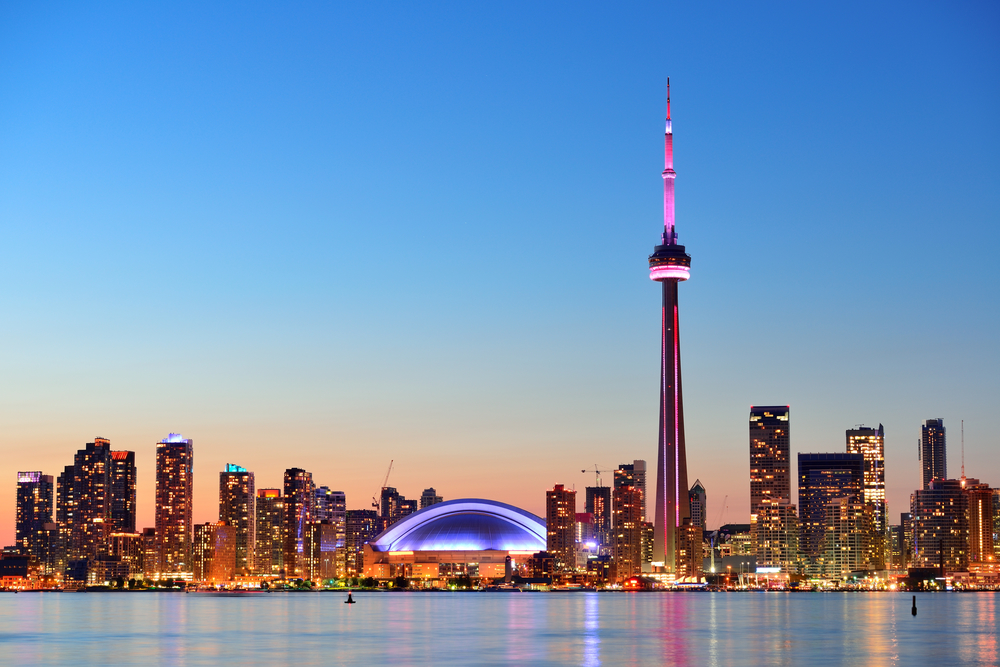
Toronto, Canada
Toronto is considered one of the greenest cities in Canada. They were the first city in the country to endorse a plan to enlarge their greenbelt. They’ve also taken advantage of deep lake water-cooling to reduce air conditioning needs.
The city also made efforts to capture methane gas from their landfills to generate power. Toronto also wants to build more offshore wind turbines. They’re encouraging skyscrapers to turn off lights in the evening so that migratory birds aren’t confused. All of this contributed to Toronto ranking ninth on the World Atlas list of greenest cities in North America and hitting other international lists of eco-friendly cities.
Vancouver, Canada
Vancouver came in ninth in the World Atlas list of greenest cities around the world due to their many eco-friendly initiatives. They’re working to do even better too. The city is also working to improve its local economy, and this has resulted in efforts to encourage local food production.
New York City, New York
New York City is the largest city in the United States. Yet, it’s managed to be one of the greenest cities in the world. A major contributor to this is their excellent subway system and the sheer number of people who use it.
Another chunk of the population walks or bikes to work. The city’s most famous green space is Central Park. However, the city launched the Million Trees Program in 2007. The goal was to plant a million trees by 2017, and they finished it ahead of schedule. Then, there is the city’s dense development. This led to it ranking first in the U.S. for land use on the Siemens Green City Index.
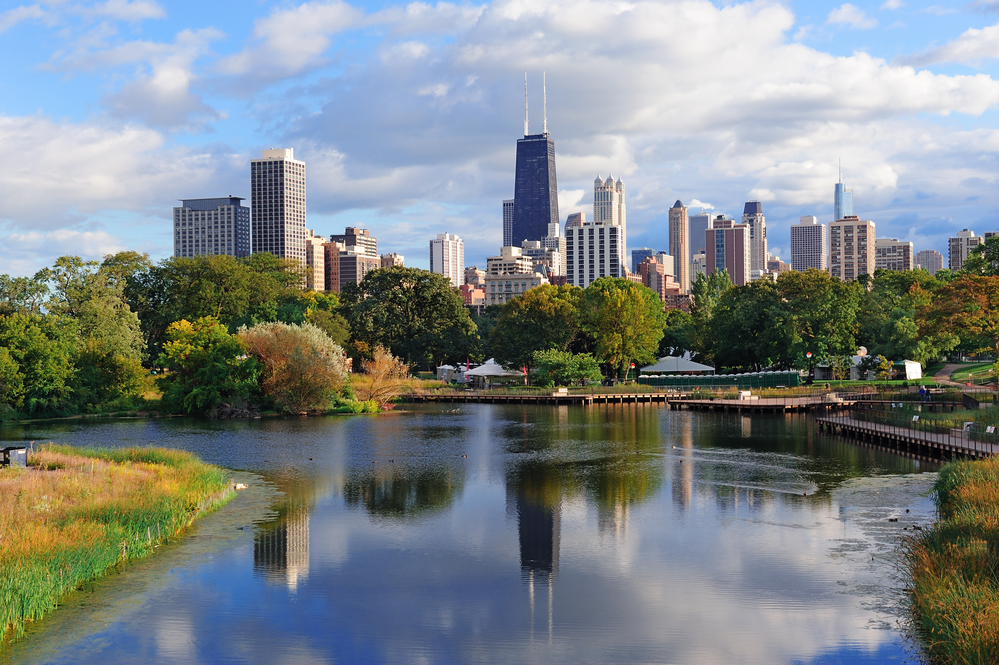
Chicago, Illinois
Chicago, Illinois, has far more green space than people give it credit for. The city has more than six hundred parks, and that’s aside from one of the biggest greenhouses in the United States. One of the notable features of the city is their high number of green roofs. They have more than five million square feet of green roof coverage, the most of any city in the United States. Chicago also has the most LEED-certified buildings of any city in the United States.
Conclusion
Our list of greenest cities in North America includes well-known icons. But it also includes newcomers that weren’t always known for being eco-friendly. But, what they all have in common is that they’re all setting examples as leaders in the sustainability and eco-friendly living movement, changing the world one green effort at a time.
Fancy checking out another post? Just click here!
Pin it!







It’s great to see that there are eco-friendly cities in the US. I used to live in San Diego, I love it there!