Villa Borghese Gardens History, Things to Know About this Public Park
This might not be the biggest park in Rome, but it is definitely its green heart. Indeed, the garden of Villa Borghese has centuries of history on its back and ever since the 19th century the Romans could have walked through it during festivities and celebrations before it was finally opened to the public.
But let’s proceed gradually and discover all the things to know about Villa Borghese park.
The numbers of this public park
As there are so many things to see in the 85 hectares of Villa Borghese public park, it is highly recommended to choose Villa Borghese tours to guide you in the park with Segway and also make you skip the line for a tour in the Borghese Gallery (which has its exposition of pieces of art from some of the most famous artists in history, like Caravaggio, Tiziano, Raffaello, Bernini and Canova, going through twenty frescoed rooms).
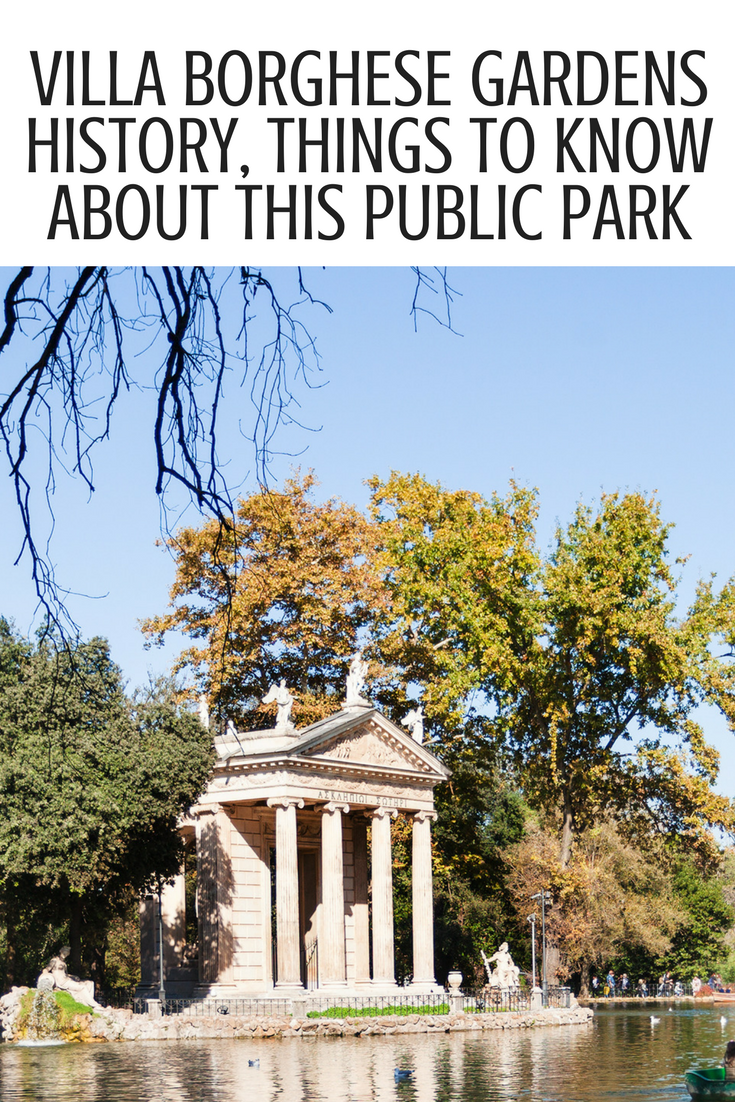
With three museums and a 17-hectare Biopark hosting more than 200 different species of animals, a Guinness World Record Cinema for being the smallest structure as a cinema-building with its 72 square metres, and the only Elizabethan Theatre in Europe outside England, as well as bicycles, a small train, ponies and boats for sailing in its lake, we can guarantee you will not get bored in this park.
Do not miss the unique fountains and the water clock. Keep your eyes open also for the commemorative monuments dedicated to famous writers, a gift of their nations to the city of Rome, such as those of Goethe, Victor Hugo and Lord Byron.
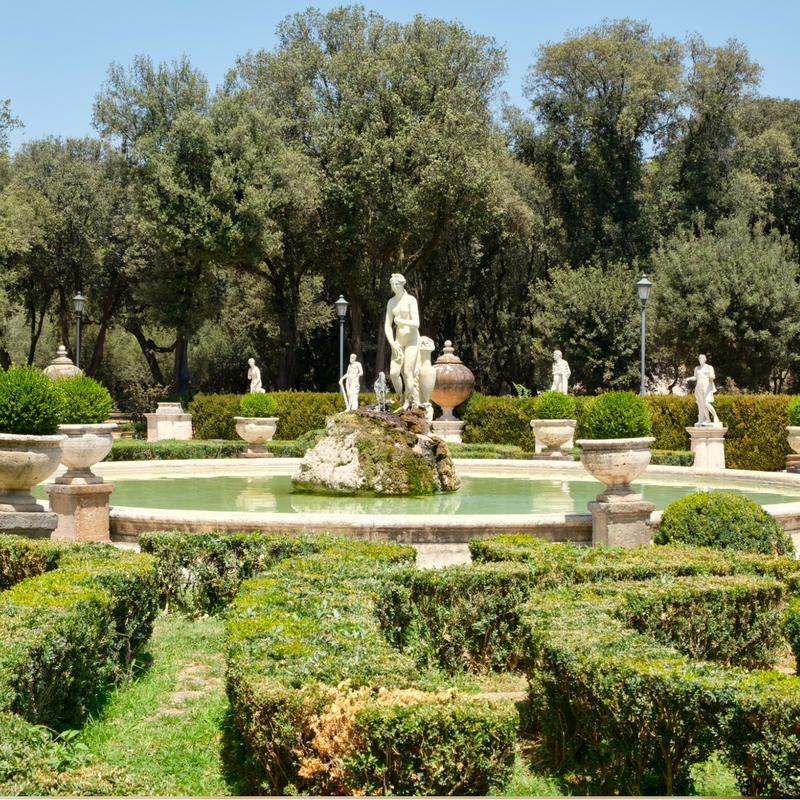
The long-time history of Villa Borghese
Nowadays, the park of Villa Borghese has five entrances of which the most famous and easy to reach is the one at Piazzale Flaminio (metro A, stop Flaminio), but it had not been like this ever since. In fact, in the early 17th century, it was Cardinal Scipione Borghese, nephew of Pope Paul V and member of this noble family arrived in Rome from Siena, who started buying the vineyards surrounding a family property to realize the beautiful villa, and then the magnificent art collection, that we see today.
The park was originally divided into two parts, the “urbana” with gardens, fountains, roads and small temples, and the “rustica” which was used for hunting (it partially became the Biopark). It was further enlarged, enriched and restored during the following century until 1807, when Prince Camillo Borghese, married to Paolina Bonaparte, was forced by Napoleon himself to sell part of the family collection of statues and paintings to France where it is still located, at Louvre, in Paris.
At that time, the park was occasionally opened by the family to the people of the city until it was purchased by Italy, including all the pieces of art, and then given to Rome making it officially and permanently public in 1903. Since then, it has become a milestone not only for the people of the city but also for tourists who love to enjoy some rest from the stress and noise of the streets or the view over the Eternal city from Pincio panoramic terrace.
This is a collaborative post.
Pin It




I can just imagine all of the history that occurred in these gardens. They are very beautiful and definitely calming and relaxing.
Such a gorgeous park. I havent ever been to Rome or out of my own Province before but if I ever do something like this park would be a place I’d love to explore. Would love to learn more about the history!
This park is not only lovely, it is also rich in history! I would love to visit the next time I am in Rome. I will add Villa Borghese Gardens to my travel list. Thanks for sharing the pictures!
hat a gorgeous park. I have never been to rome but I want to go now just to tour the incredible landscape shown here.
If am ever in Rome this park would be a wonderful place to visit.
This is a beautiful park to enjoy. I love that it’s a public park with such beautiful sculptures. Glad you shared some information about Villa Borghese Gardens.
This looks like a really neat park to visit. The Segway tour sounds like a great option and it would be fun to ride on one.
Here’s another reason to move out of Oklahoma. This is such a beautiful park.