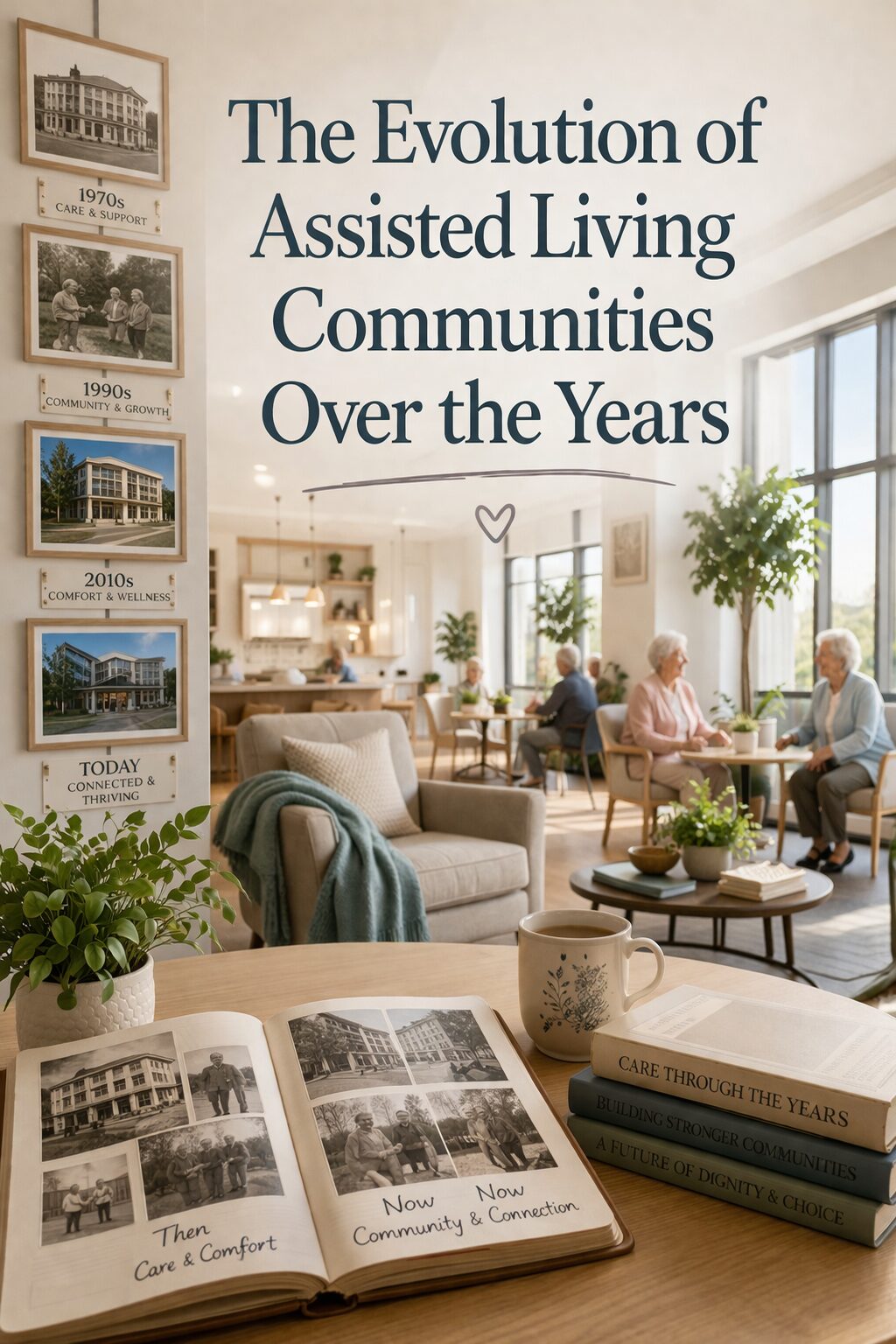
The Evolution of Assisted Living Communities Over the Years
Elder care looks nothing like it did a century ago. The shift away from grim institutional wards toward thoughtfully designed residential communities has been one of the quieter revolutions in American health and social policy, and it’s still going on. For families weighing options for an ageing parent or spouse, knowing the history makes the current choices much less overwhelming.
From Institutions to Homes

For most of the 20th century, older adults who couldn’t live independently had very few real options. State-run institutions and nursing homes dominated, built around clinical efficiency rather than anything resembling a decent quality of life. Overcrowding was common, and rigid schedules ruled. Residents shared rooms, had little say over their daily routines, and personal autonomy wasn’t exactly a priority.
That started changing in the 1970s and 1980s. Advocacy groups, healthcare researchers, and families who had watched loved ones disappear into impersonal systems began demanding something different. Oregon is widely credited with introducing the modern assisted living model in the late 1980s. It replaced institutional setups with smaller, homelike settings where residents had private rooms and actual involvement in their own care. Communities across the country, including Assisted Living in Casa Grande, have since built on that resident-first philosophy, creating environments where support and safety don’t require trading away personal freedom. It wasn’t a cosmetic update. It was a fundamental shift in what elder care is actually supposed to do.
The Rise of Regulation and Standards
Popularity brought problems. As assisted living expanded through the 1990s, the absence of standardisation became hard to ignore. One facility might offer nursing-level medical care; another, using the same label, was essentially a supervised boarding house. Families had no reliable way to know what they were actually getting until it was often too late.
States responded by building regulatory frameworks, and most now require communities to meet specific licensing standards covering staffing ratios, safety protocols, medication management, and resident rights. The CDC estimates that over 30,000 assisted living communities currently operate across the United States, serving roughly 900,000 residents at any point in time. Oversight has grown alongside that expansion, though the depth of that regulation still varies considerably from state to state.
The Shift Toward Person-Centred Care
Institutional care was designed to manage people, not serve them. That distinction matters more than it might sound. Person-centred care starts with each resident’s history, preferences, and goals rather than organising everything around staff schedules and operational convenience. They may seem obvious in hindsight, but it still took decades to become the norm.
The research backing this up is consistent. Studies published in journals like The Gerontologist have found that older adults in person-centred environments report higher satisfaction and lower rates of depression than those in traditional settings. Autonomy and a sense of purpose were repeatedly flagged as key factors. Practically speaking, that means residents get real input on meal times, room personalisation, activity choices, and care planning conversations, rather than being handed a schedule and told to adjust.
Technology’s Growing Role
Remote health monitoring in a residential care setting would have seemed far-fetched two decades ago, but now it’s table stakes. Wearable fall-detection devices, electronic health records, and real-time monitoring tools have made it easier for staff to respond quickly and coordinate care without hovering over residents throughout the day.
The COVID-19 pandemic pushed a lot of this forward faster than anyone expected. Video calling shifted from a convenience to an essential connection point almost overnight, and many communities have kept those tools running as a permanent part of their programs. Telehealth and pharmacy fulfillment followed a similar trajectory, reducing the frequency with which residents need to leave for routine medical consultations. Telehealth followed a similar trajectory, reducing the frequency with which residents need to leave for routine medical consultations. Smart home features like voice-activated lighting and adjustable temperature controls aren’t considered extras anymore. For residents with limited mobility, that kind of environmental control is what makes independent daily life workable.
Wellness as a Core Offering

The bar for what residents expect has moved a lot. Fitness programs, cultural events, art studios, lifelong learning classes, and restaurant-style dining with chef-prepared menus are now standard offerings in well-run communities, not upgrades. Aquatic therapy pools appear in more facilities than most people would guess.
Mental and emotional wellness has earned more serious attention alongside the physical side. Social workers and activities directors trained to address loneliness, anxiety, and cognitive decline are increasingly routine hires rather than optional additions. Memory care wings designed for residents living with Alzheimer’s or other forms of dementia have become a baseline expectation in most larger communities.
A Reflection of Shifting Expectations
This transformation tracks closely with what ageing adults and their families have started to demand. Baby Boomers entering retirement age bring expectations regarding autonomy, comfort, and quality of life that previous generations simply didn’t have. According to the U.S. Census Bureau, adults 65 and older are projected to outnumber children under 18 by 2034. That demographic weight will continue to shape how the industry responds.
Assisted living communities have adapted by becoming more intentional, more resident-focused, and more connected to the broader wellness conversation. The road from institutional wards to genuine residential communities wasn’t short, but it has been moving consistently in one direction. For families making these decisions right now, that matters.
Pin It!