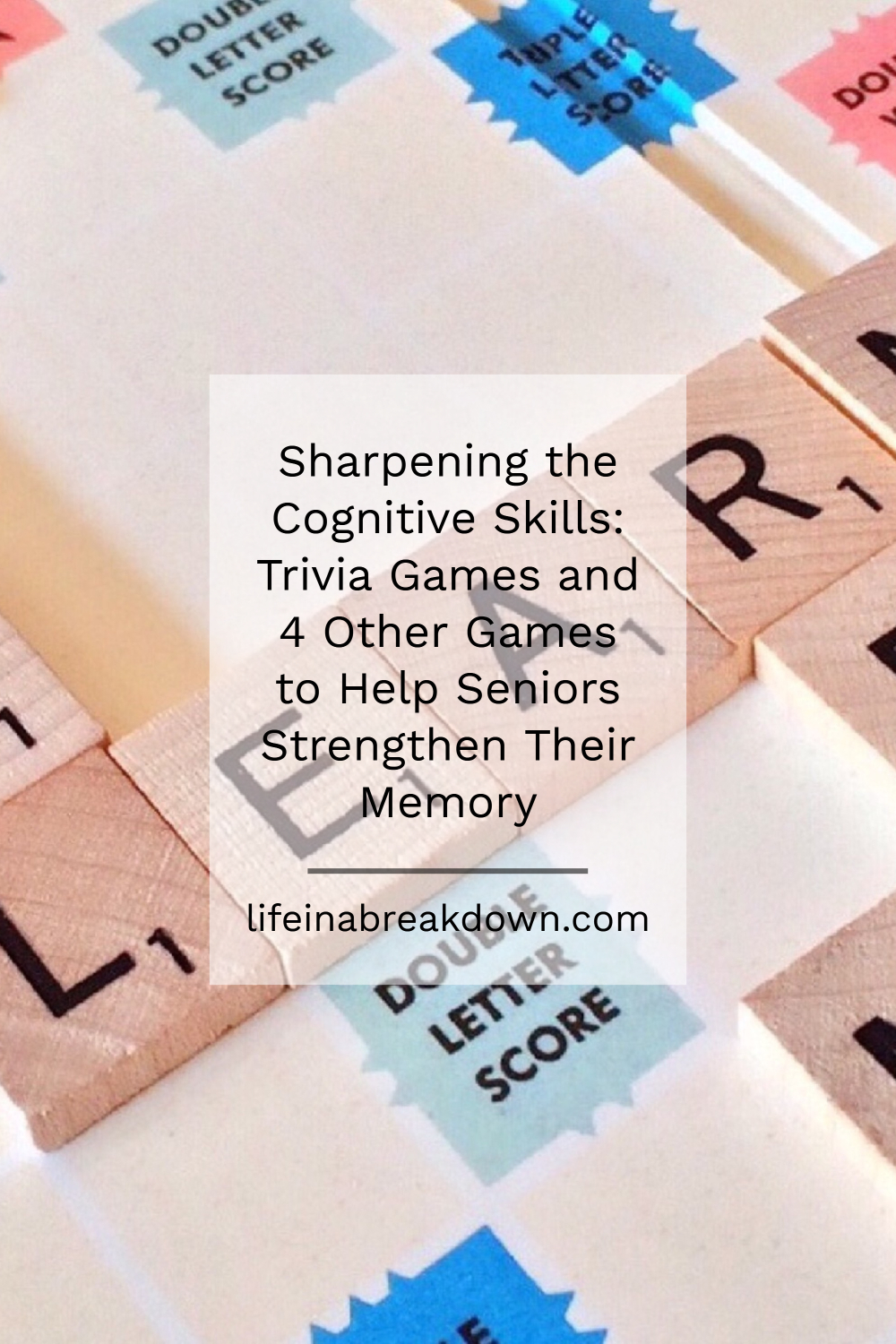
Sharpening the Cognitive Skills: Trivia Games and 4 Other Games to Help Seniors Strengthen Their Memory
Just about everyone has heard the phrase, “if you don’t use it, you lose it” at some point in his or her life. More often than not, this axiom is used in the context of physical exercise. However, the same applies to mental functions like memory and cognition.
Seniors often experience age-related memory loss. The right games can help them keep their minds sharp and strengthen their memories. Read on to find out about five types of games that can help.
Trivia Games
Trivia games are great for players of all ages, including seniors. Try to find a game with questions that are relevant to a person’s life or interests. If an ageing loved one has always loved musicals, look for a trivia game that focuses on them or if he or she has spent a good deal of time studying history, look for a game that will put all that knowledge to good use.
Try playing trivia games in inter-generational teams for even better results. It will not only help ageing loved ones retain their cognitive function but will also facilitate the generation of fun new memories with kids and grand-kids. Those who are wondering about other ways to make sure their loved ones are ageing well can get more help from mcknightplace.com or read on to find out about other games to play at home.
Word Puzzles

Crossword puzzles used to be almost ubiquitous, especially in the days of daily newspapers. Today, a wide variety of word puzzles are available online and in books. Since word puzzles require the use of both the right and left hemispheres of the brain, they’re great for maintaining the neural connections necessary to create new memories and hold onto old ones.
Sudoku Puzzles

Not everyone loves words. Seniors who want to find a different way to put their problem-solving skills to the test can try Sudoku. This popular game is available in both digital and paper forms and is great for improving concentration, decision-making, and even self-esteem.
Jigsaw Puzzles

Jigsaw puzzles simultaneously provide mental stimulation and relaxation. Studies have shown that they can help people relax, lowering their blood pressures, slowing their breathing rates, and almost inducing a kind of meditative state. Since stress plays a large role in memory formation and retention, doing jigsaw puzzles is a great way to protect against cognitive decline. Plus, jigsaw puzzles are fun to make with friends and family members of all ages, so they offer a great option for low-stress socializing.
Logic Puzzles
Logic puzzles are best for those who are not suffering from dementia, as this category of organic brain diseases impacts patients’ abilities to reason. Those who are simply trying to stave off age-related memory loss and cognitive decline often find that a book of logic puzzles provides a fun and stimulating way to reinforce neural pathways used in lateral thinking.
Never tried a logic puzzle? Try starting off with some ease puzzles online. If it goes well, buy a book of logic puzzles to develop further mental acuity.
The Bottom Line
Almost everyone experiences some level of memory loss as he or she ages. Playing brain games either alone, online, or in-person with family members and friends can help to protect against the worst effects of memory loss, though. There are plenty of different kinds of puzzles and games out there, so try a few to see which one feels like the best fit.
Pin it!