A Q&A with Shutterstock on Image Usage in Blogging
As some of you may know, as well as writing Life in a Break Down, I also run UK Bloggers both the website and the Facebook group. A subject that often comes up is where you can get images from and know it is OK to use them. As well as what happens if someone uses your photo and what could happen if you just take images from around the internet.
I was kindly invited by the people over at Shutterstock to ask them a few questions and I hope there answers are useful to you. Do remember Shutterstock are a company based in the US and as such these answers are sometimes based towards that audience, but they make a very interesting read nonetheless.
These responses were written by Sejal Patel, Senior Counsel, IP, Shutterstock
The following does not constitute legal advice. If you have further questions about these topics, please consult your own attorney.
What is the best way to credit a photo and where within the post?
An image credit shares information about the source of the image, which helps protect the licensor’s and photographer’s abilities to further license the image. So, it’s best to credit a photographer either with text on the image itself, or with text adjacent to the image.
Also, for images covered by specific licenses, make sure to read the license for any specifications on how to provide attribution — otherwise you may be breaching the license.
How can you protect your images?
There are a few things you can do to protect your images, although, unfortunately, they may not be able to completely prevent others from misusing your content.
The first, and most obvious, way to protect your image is to use a watermark on your images. This can help deter others from using your image without your permission (and hopefully encourage viewers to get your permission to use the image). The key is to make sure that the watermark is not localized to one part of the image — which is easily croppable — but also be cautious that the watermark does not detract from the quality of the image. An option that takes both of these considerations into account is a watermark which constitutes a layer on the image file with a level of opacity that is visible, yet not too intrusive, when viewing the image.
Another way to protect your images is to add your copyright information to the metadata. While unauthorized users of your images could scrub this information out of the metadata, many might not. If you regularly license your images, this can help you cross-reference and confirm any misuse of your images.
You can regularly monitor whether your images are being used on the internet without your permission by using a tool like Google Reverse Image Search (images.google.com) or TinEye (tineye.com). These tools are free; all you have to do is upload an image to either search engine and it will give you a list of where the image appears on the internet. Of course, these search engines cannot scour the entire web, but they are very useful for detecting any prominent misuses of your images.
Finally, consider registering your content with the U.S. Copyright Office. Doing so may help establish the validity of your copyright ownership, as well as serve you well if you bring a legal claim. This measure will allow you to claim more damages, if you need to enforce your rights through the legal system.
What should you do if someone steals your images?
This question is highly dependent on where and how your images are being used.
In the United States, the Digital Millennium Copyright Act (the “DMCA”) can be useful in taking down infringing content hosted by internet service providers (“ISPs”). Generally, an ISP is a website or server that hosts content uploaded by users. For example, online marketplaces such as eBay or Amazon can be considered ISPs, as well as social media sites like Facebook and Instagram.
The DMCA offers ISPs protection from copyright infringement liability if the ISP follows certain requirements — including by taking down infringing content upon receipt of a DMCA notice. If you believe your content is being infringed, you can send a DMCA takedown notice to the ISP hosting the content; in general, this is a pretty effective way to remove infringing content.
Unfortunately, a DMCA takedown notice may not be as useful at removing infringing content hosted by a website in another country, or where the infringing content is hosted by a non-ISP (for example, on an individual’s blog). In this case, your best bet may be to work with the website owner about removing the infringing image, or to take further legal action.
If shared on social media does a photo in anyway become public property?
When posting content to social media, you should make sure you understand the terms of the site to understand exactly how the site — and other social media site users — are permitted to use your content (and vice versa).
In general, posting your content to a social media site does not make the content “public property” or in the “public domain.” Similarly, you do not have the right to use anyone else’s content without their permission just because you are able to view the content! Also, many social media sites prohibit users from posting content that infringes a third party’s intellectual property rights, so it is in your interest to make sure you are not posting third-party content.
Even though many social media sites prohibit users from infringing third-party intellectual property rights, you should be comfortable with the risk that others may use or repost your content without your permission anyway. If this is a concern, consider changing your privacy settings, and only posting content you wouldn’t mind others using without your permission.
Can you use a photo without permission by just crediting it?
There are few defenses to using an image without permission, and crediting the creator of the image is not one of them! In some very limited instances, such as where a use of the image may be considered a “fair use,” you may have a defense to using the image without permission.
An example of “fair use” would be using an image that depicts an event in the context of reporting news regarding that specific event. On the contrary, an example that would likely not be considered “fair use” would be using an image simply to enhance the look of a blog or website.
Ultimately, fair use is a defense to copyright infringement and not permission to use an image. So, if you are not sure whether your use of an image would constitute fair use, it is best to not use the image, or to obtain a license to the image for your particular uses.
What would you as a large company do should you find a blogger using your photos?
Shutterstock takes the intellectual property rights of its artists very seriously (as we hope is the case with other media licensing companies), and so we investigate every infringement claim we receive. We do take a look into whether the end user of a Shutterstock image holds a proper license to use the image.
Many of our artists are sole or small business owners, and we are very protective of their rights.
Therefore, we generally enforce our artists’ rights where appropriate, which may be in the form of takedown notices or further legal action.
It is interesting to note that while artists commonly bring potential misuse of their images on blogs to our attention, a surprising number of our misuse complaints actually come from blog readers or via social media. If we see or hear a number of complaints about certain websites or blogs, we do take a look at them.
Can a blogger be fined for using photos without permission?
Using content without permission poses a risk that the content owner may discover your unauthorized use and decide to take legal action. An obvious risk is that the content owner may bring an action in court, which could subject you to legal costs, as well as damages.
Another practical concern is that an infringement issue could hurt your blog, website, social media site and general reputation. A content owner could attempt to send a takedown for their content to your website host or to your social media page, which could result in the takedown or removal of your blog or social media page. They might also be vocal about your misuse on your blog or social media site. Why risk all the work you’ve put into your blog, website or social media page?
How would you suggest bloggers combat copyright infringement?
In general, a few things can help combat copyright infringement, most of which we have already touched on: watermark your content, let readers know they do not have permission to use your content without your permission, and monitor the uses of your content online using a reverse image search engine.
If you do see that your content is being misused, your best bet is to ask any ISPs that are hosting the content to remove it.
Finally, you should be aware that despite your best efforts, your content may inevitably wind up being misused, and it may be difficult to correct. Therefore, make sure you understand the terms of any site to which you post your content, and adjust your privacy settings as well as the choice of content you post to meet your expectations on how the content will be used.
For more information on how content owners can protect their rights, check out Shutterstock’s Protect Your Content guide at https://submit.shutterstock.com/guides/protect_your_content.
I hope this helps answer some of those burning questions you may have had. Good luck blogging.
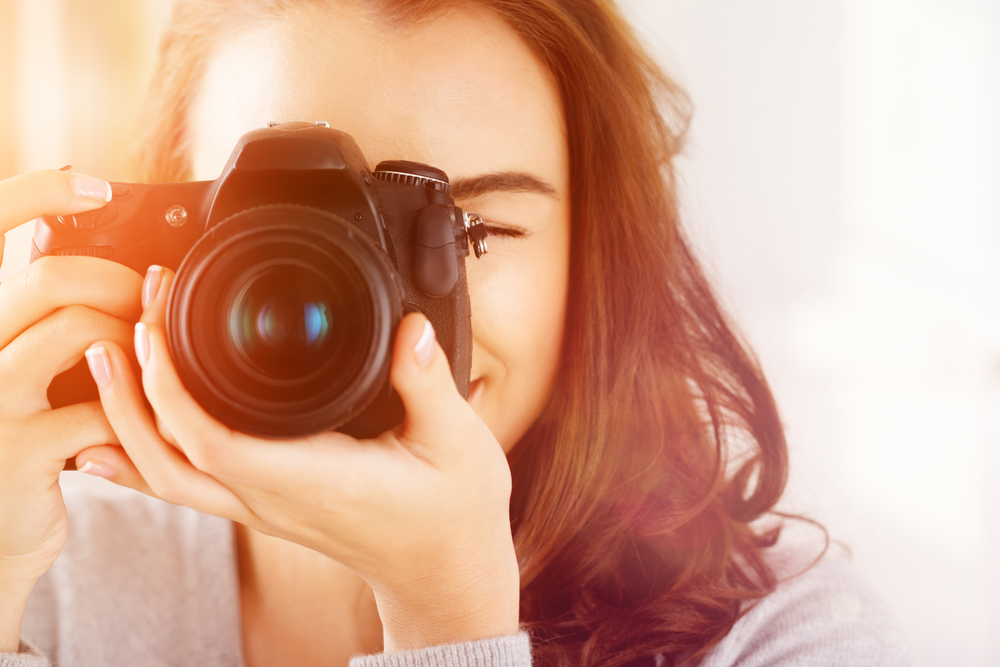
*Women taking a photograph photo from Shutterstock.





Lots of great tips on here! It sounds like a lot to think about when using images for your blog 🙂
These are really good tips, thanks. Tend to use my own images but every once in a while I worry about using other ones!
What a great post Sarah. It’s really good to read this as a photographer and as someone who might use stock images too. Thank you for sharing 🙂
This is fantastic – there always seem some confusion about what can or can’t be used so this is great. Thank you!