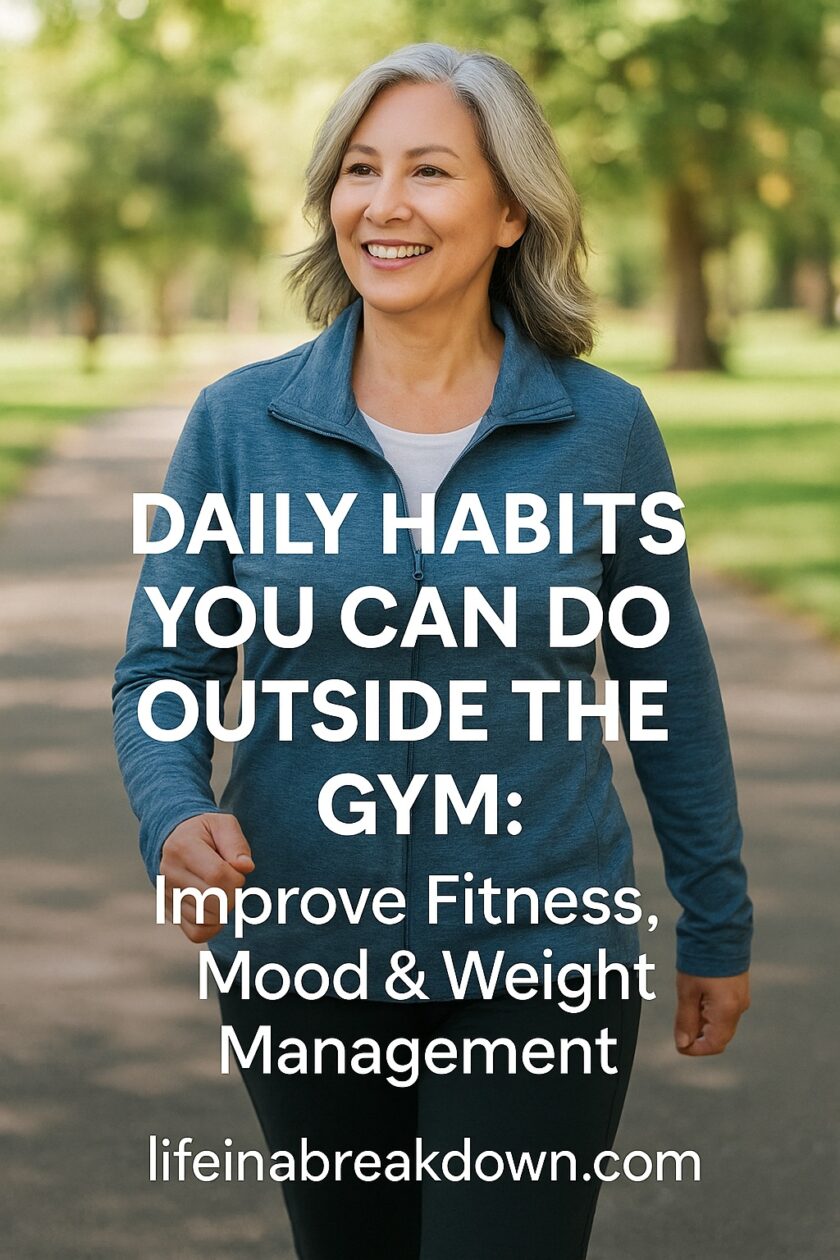
Daily Habits You Can Do Outside the Gym: Improve Fitness, Mood & Weight Management
When we think of fitness, the image that often comes to mind is a busy gym filled with treadmills, weights, and machines. While gyms can be effective spaces for structured workouts, they aren’t the only environment where healthy progress happens. In fact, much of your physical health, mood regulation, and weight management depend on the daily habits you engage in outside the gym.
Fitness is not simply about intense workouts; it’s about building a lifestyle that supports strength, mental well-being, and energy balance. By making small, consistent choices throughout the day, you create a framework that complements any exercise routine. In this article, we’ll explore practical daily habits that can enhance your health outside of traditional gym sessions, with a focus on movement, mindset, and nourishment.
Movement Beyond the Gym

Walking as a Foundation
Walking is perhaps the most underrated form of exercise. It’s accessible, low-impact, and doesn’t cost anything. Aiming to walk 7,000–10,000 steps daily can significantly improve cardiovascular health, support healthy metabolism, and regulate mood. Walking to the store instead of driving or taking stairs instead of escalators are subtle choices that accumulate benefits over time.
Incorporating Micro-Movement
Not all physical activity needs to be formal exercise. Micro-movements, such as stretching while waiting for the kettle to boil, standing up every half hour at work, or performing a few bodyweight squats during TV commercials, improve blood circulation and prevent stiffness. Over time, these habits contribute to calorie burn and reduce sedentary-related complications.
Active Commuting
Cycling to work, walking part of the way, or even getting off the bus one stop early are ways to integrate movement into your day. Active commuting is not only good for physical health but also contributes to better mood regulation by reducing stress and improving focus before and after work.
Nutrition Habits Outside the Gym

Mindful Eating Over Restrictive Dieting
Eating is a daily opportunity to manage energy levels and weight. Instead of following strict diets that often backfire, adopt mindful eating habits, listening to hunger and fullness signals, eating slowly, and savouring flavours. Studies show that mindful eating reduces overeating and emotional eating tendencies.
Hydration Rules
Staying hydrated supports metabolism, brain function, and satiety. Often, fatigue and cravings are linked not to a lack of food but to dehydration. According to research on hydration and weight loss, keeping a reusable bottle nearby and sipping water throughout the day helps manage energy balance without unnecessary extra calories.
Balanced Meals
Prioritise balanced meals that include lean proteins, fibre-rich carbohydrates, and healthy fats. A balanced plate not only powers recovery from physical activity but also stabilises mood and minimises energy crashes. Here’s a simple table framework for planning meals:
| Meal | Example Combo | Benefits |
| Breakfast | Sustained energy, fibre, protein | Plant protein, fibre, healthy fats |
| Lunch | Quinoa salad with chickpeas, avocado, and leafy greens | Plant protein, fiber, healthy fats |
| Snack | Apple with natural peanut butter | Satiety, good balance of carbs and healthy fat |
| Dinner | Grilled salmon, brown rice, and roasted vegetables | Protein, Omega-3s, vitamins, and minerals |
Mental and Emotional Wellness

The Role of Sleep
Quality sleep is one of the most underestimated contributors to fitness and weight management. Lack of sleep not only increases cravings for high-calorie foods but also reduces recovery and impacts mood. Aim for 7–9 hours of consistent, restful sleep. Creating a bedtime routine with reduced screen exposure can dramatically improve sleep quality.
Daily Stress Management
Chronic stress increases cortisol levels, making weight management harder and affecting emotional health. Simple habits like meditation, journaling, deep breathing, or spending time in nature reduce stress and bring mental clarity. Even 10 minutes of mindfulness a day can make a measurable difference.
Social Connections
Fitness is not only physical, it’s also about mental resilience. Regular interactions with friends, family, or community groups bring emotional stability, reduce loneliness, and motivate healthier lifestyle choices. Inviting a friend for a walk or cooking healthy meals together can merge social and physical wellness.
Functional Fitness in Everyday Life

Home Activities That Count
Chores like vacuuming, gardening, cleaning, or carrying groceries are actually forms of light exercise. They require bending, twisting, pushing, and lifting movements that mimic functional workouts. Incorporating intention into these activities means you can gain both a clean house and improved fitness.
Desk-Friendly Movements
For those spending long hours at a desk, prolonged sitting can stiffen muscles and weaken posture. Incorporating small stretch breaks, rolling shoulders, standing up and stretching hamstrings, or practising seated twists improves comfort, posture, and energy levels throughout the day.
Posture Awareness
Good posture strengthens core muscles and improves breathing. Becoming mindful of posture while sitting at a computer, driving, or standing in line can prevent back problems and enhance physical alignment.
Outdoor Lifestyle Choices

Exposure to Natural Sunlight
Spending at least 15–20 minutes in natural sunlight supports vitamin D synthesis, which is essential for strong bones, immune function, and mood regulation. Vitamin D deficiency has been linked to fatigue and poor weight management, making outdoor exposure vital.
Recreational Activities
Activities like hiking, swimming, playing a casual sport, or simply biking around the neighbourhood provide fun, social ways to stay active without feeling like you’re working out. By choosing enjoyable activities, you build long-term commitment rather than forcing yourself into routines you don’t love.
Habit Stacking and Consistency
The success of daily health habits lies in consistency, not intensity. This is where the habit stacking method of building new habits by linking them to existing behaviours comes in. For instance, if you want to start stretching regularly, do a two-minute stretch routine right after brushing your teeth each morning. Over time, these tiny, paired choices turn into sustainable routines that shape your overall lifestyle.
Final Thoughts
Gyms are helpful, but they are not the exclusive route to better health. By focusing on deliberate daily habits, walking more, hydrating effectively, eating a balanced diet, managing sleep and stress, and enjoying outdoor activities, you can significantly enhance your fitness, mood, and weight management outside the gym environment.
These habits may look simple, but when practised consistently, they reshape daily routines into powerful wellness tools. Ultimately, health doesn’t have to be complicated; it comes from conscious choices and small steps, repeated daily.
Pin It!