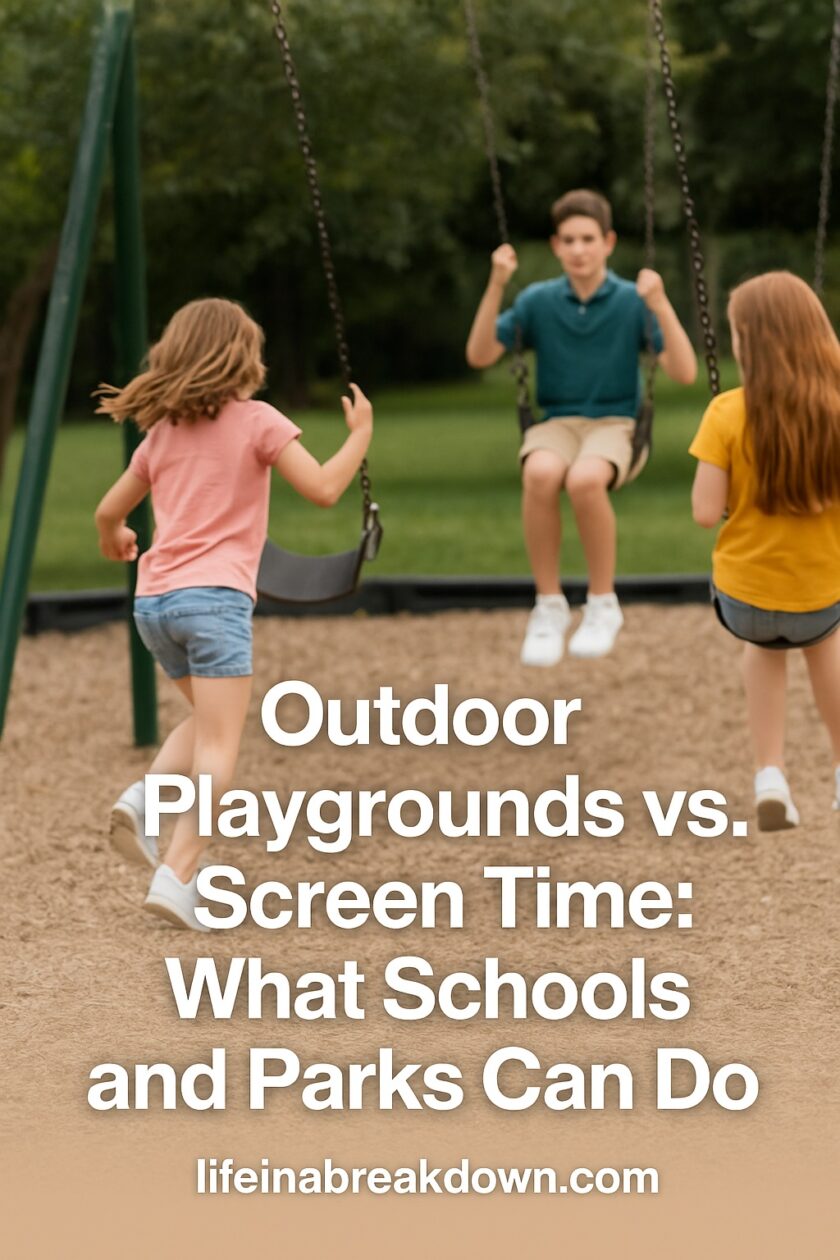
Outdoor Playgrounds vs. Screen Time: What Schools and Parks Can Do
You hear it all the time: kids spend too much time on their screens. Virtually every parent, teacher, and caregiver has brainstormed ways to get kids off their screens. The reality is that staring at a device is addictive, and even adults suffer from this issue. It really will take a village to shift the energy from screen time to more time outside. This article will outline the role schools and parks can play to help get kids playing outside more and looking at devices less.
Create More Engaging Play Areas

Let’s face it: some parks are just sad. The flora and fauna are lacklustre, if they even exist. The play structures are falling apart and minimal. Even the tanbark is old, outdated, and filled with dirt and other objects. No trees are available to climb, and the grass is dead. It happens. In communities across the country, parks become a low priority, and the cycle sets it. Kids don’t want to play in uninteresting parks, so they sit on screens, and the parks sit empty, so no one fixes them.
But you can change that. Schools and parks can shift the conversation from empty play structures to outdoor learning and holistic health. When you prioritise playgrounds as a pathway to children’s overall learning, you can find creative ways to make play areas more engaging. Install eco-friendly playgrounds with swing sets, and turn it into a lesson. Start a community garden and get kids involved in growing plants. Or encourage outdoor classrooms. Nature can be just as addictive as a screen when you present it properly.
Celebrate Diversity and Accessibility
Another reason kids might not be interested in playing on outdoor playgrounds is a lack of diversity and accessibility. Some structures are far too big for little kids. Conversely, some are way too small for older children. And among the children of America, many kids have different abilities and interests. So, if your playground is a cookie-cutter structure modelled after one from the 1970s, it’s probably time to rethink it.
Today’s most innovative playgrounds have something for everyone. With big, bold colours or interesting themes, kids are encouraged to imagine themselves in a whimsical setting. You can plant drought-resistant and native plants to enhance that experience. Make sure your playground has accessible areas and sections for kids with diverse interests, like music or gardening. That way, you’re sure to capture the interest of virtually any kid, even those with their eyes glued to a screen.
Organise Outdoor Activities
Of course, it’s not just about what the park or schoolyard looks like. It’s also about what you do with that space. Kids can find the most interesting, diverse, accessible play structures, and they still end up bored within minutes. This phenomenon holds especially true in the modern day, where so many kids have a genuine addiction to their electronic devices. These electronics are like a drug, and many children are losing their ability to take pleasure in outdoor play.
The good news is that it’s not too late to change that, even for the oldest kids. You can help rewire their brains to enjoy outdoor activities by organising and encouraging them. Instead of simply creating a great playground, organise football games, games of tag, fort building, or even just a picnic. When you show kids how to have fun outside with their peers, they’re likely to take it from there. You’ll quickly find them making up their own outdoor entertainment independent of your instruction.
Plan Outdoor Events

You can take outdoor activities a step further and plan entire events around being outside. Far too many people have lost interest in doing anything outside, and it shows. Adults move from home to work and back again, and even family entertainment is often inside. Movie theatres, arcades, and indoor playplaces are still thriving across the country. But it doesn’t have to be that way.
Schools and parks can encourage more children to get outside and off their screens by holding outdoor events. These could include a school carnival, a book fair, mock Olympic games, and a schoolwide clean-up day once a month. Parks can plan flea markets, farmer’s markets, barbecues, and carol singing. At almost any time of year, you can think of fun events to stage in your school or park that will engage kids and have them begging their parents for more.
Get Parents Involved
Yes. The parents play a huge role in this plan to get kids outside more. One of the many reasons kids have become so addicted to screens is that their parents allow it. This isn’t an insult to parents by any means. Many adults these days are busy, stressed, and overwhelmed. And they may be addicted to screens themselves. They’re likely looking for ways to break these habits, and you can help.
When you get kids and parents outside, you help both parties relax, rest, and enjoy themselves. That energy feeds on itself and is likely to get them outside even more. Schools can reach out to parents with suggestions for outdoor activities with their kids. You can send studies home in emails or newsletters that show the deleterious effects of too much screen time on adults and kids. And parks can reach out to the parents in their communities to get more involved in outdoor activities and events.
In the end, it will take the whole community, from parents to school administrators to parks and recreation officers and to city and state legislators. Everyone has to decide as a society and a culture that the top priority is happy, healthy, well-adjusted children. This doesn’t mean no screen time at all. Instead, it means creating a balance that helps kids build a healthy relationship with nature and movement outside. Schools and parks can do a lot to foster that relationship.
Pin It!