Fibromyalgia: What is it?
When I started Life in a Break Down, it was just after I had been diagnosed with Fibromyalgia, I had more or less given up on life; I had just felt as though I was regaining some control of my life when it came to my mental health issues when suddenly I had to deal with more things.
Over the years I have come to deal with the issues a little more, that I face every day, but I know it is a hard thing for others to understand and so when I was given the chance to interview a doctor I knew that I wanted to ask them some questions on ME and Fibromyalgia that in the long run will not only help me, but also might help others come to understand this misunderstood illness.
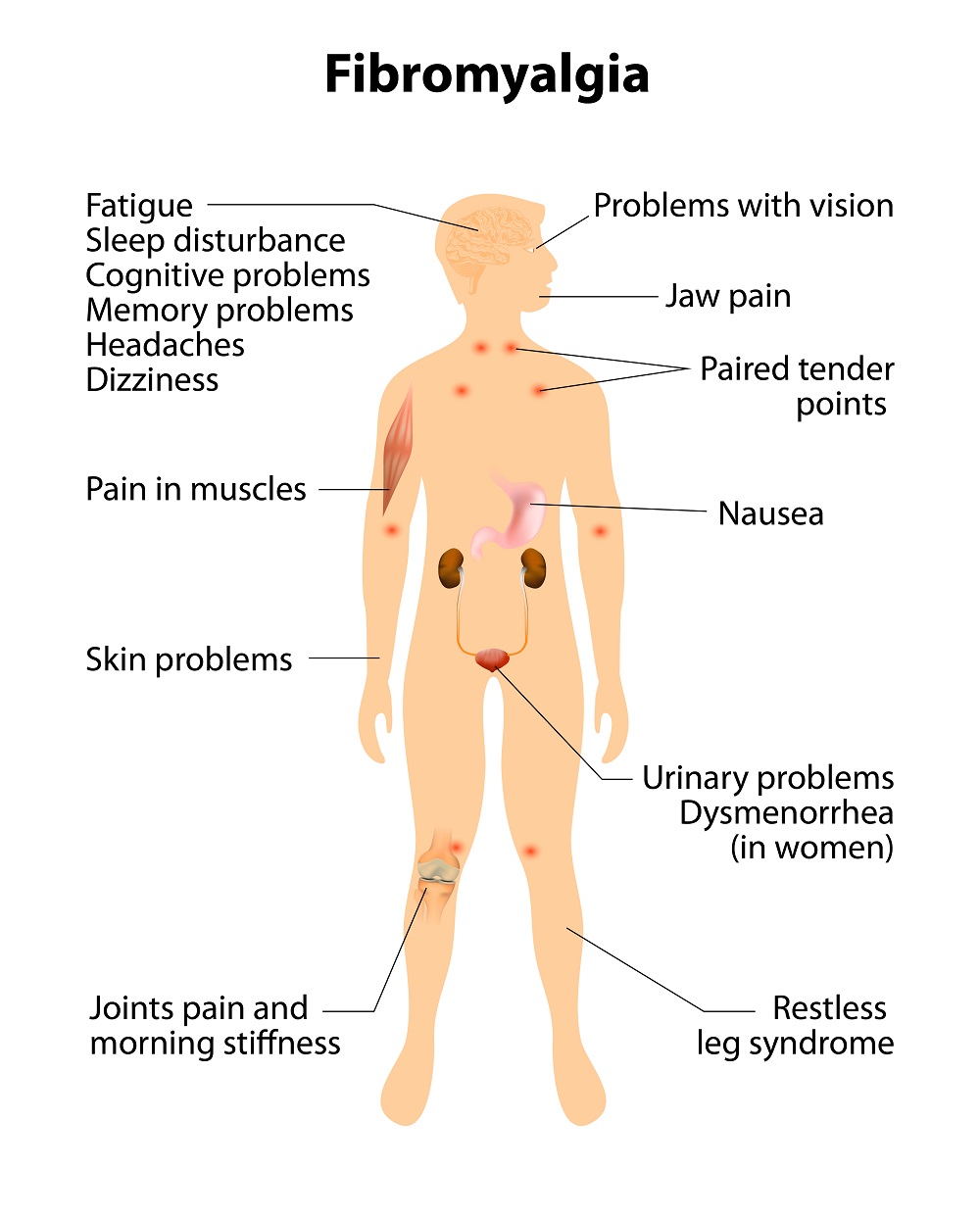
1) How do you explain to a new patient what ME (myalgic encephalopathy) / Fibromyalgia is and how life will be for them?
It depends on the patient’s pre-conceptions and what they already know about this illness. Most patients come from an age and social group whom are very Web savvy, and so know a lot about this illness already. We then are able to add additional information as is needed. The basic information is as follows:
Fibromyalgia
What is fibromyalgia?
Fibromyalgia is a chronic (long-term) condition in which there is widespread pain affecting the muscles, and tenderness affecting specific areas of the neck, spine, shoulders and hips. It is sometimes referred to as fibrositis or muscular rheumatism.
What are the symptoms of fibromyalgia?
People with fibromyalgia often ache all over, sleep badly, and are always tired. They may find it difficult to do simple tasks, such as climbing the stairs.
Other symptoms include:
* Headaches, memory and concentration problems.
* Tingling or numbness in the hands and feet.
* Irritable bowels.
* Fluid retention.
* Depression.
Who gets fibromyalgia?
It is estimated that between 2 and 4% of the population have fibromyalgia. It can affect anyone, although it mainly affects women of child-bearing age.
What causes fibromyalgia?
Although the exact cause is unknown, it is known that people with fibromyalgia have an abnormal deep sleep pattern, causing them not to have enough deep sleep. It is not known why this happens, but, once fibromyalgia sets in, it can lead to a vicious circle of more pain and more sleep disturbance.
How is fibromyalgia diagnosed?
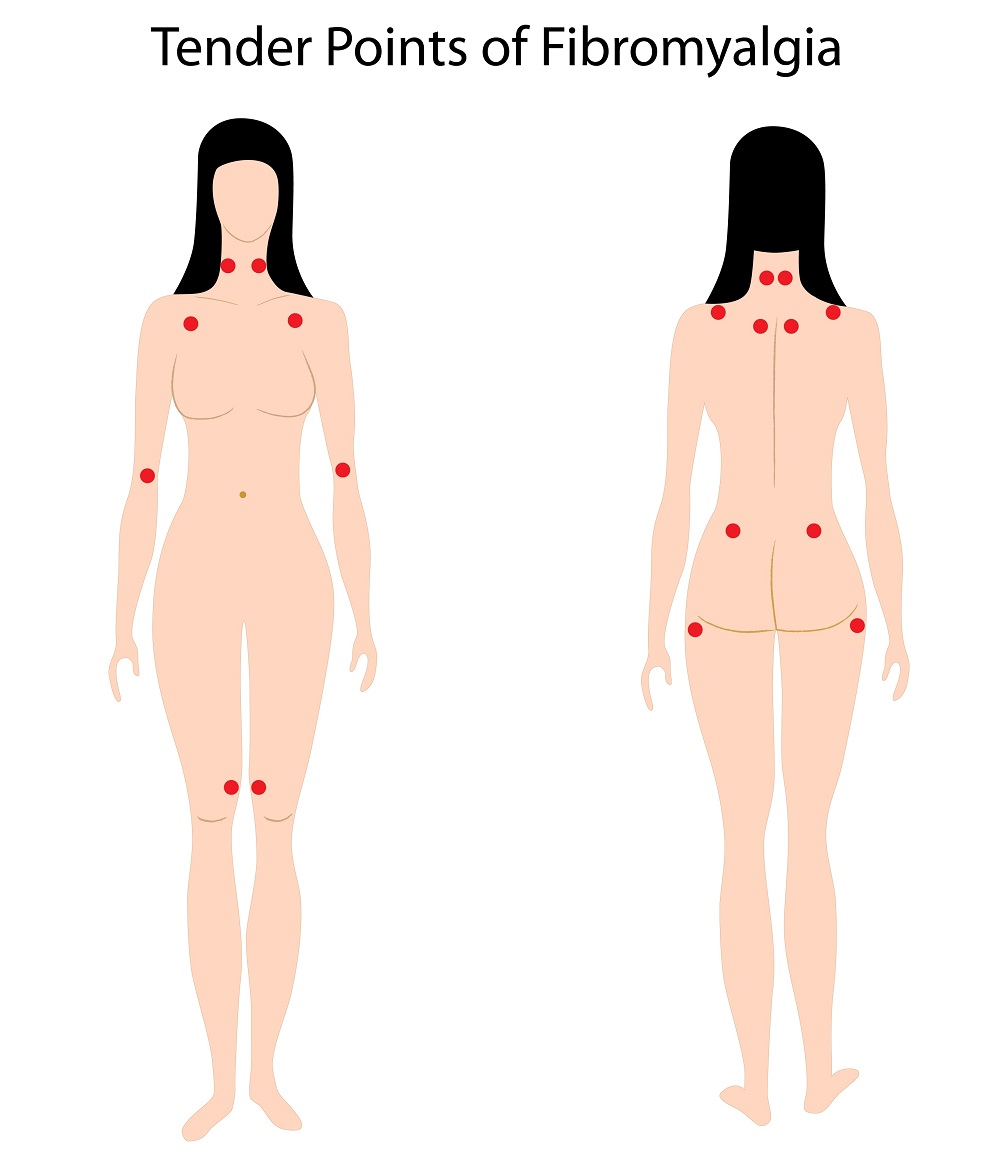
There is no test that will diagnose fibromyalgia, and diagnosis can be difficult because it mimics other disorders. However, the presence of characteristic tender points will help with the diagnosis.
How is fibromyalgia treated?
Medication, such as painkillers, anti-inflammatory drugs, and anti-depressants may all help control the symptoms, and some people are helped by physiotherapy. However, a self-help regime will be more effective in the long-term. Self-help measures include:
* Make sure you go to bed at the same time every night, and get an adequate amount of sleep.
* Avoid drinking alcohol, tea and coffee, particularly late at night.
* Eat healthily and keep your weight down.
* Try to reduce stress levels.
* Start an exercise regime. Only do what you can cope with to start, and gradually build up to around three hours of exercise a week. Swimming is ideal, but avoid jogging and any vigorous exercise. You should expect it to be painful initially, so, if you find you’ve overdone it one day, don’t do quite so much the next.
* You may find therapies such as massage, osteopathy, or acupuncture helpful.
Other useful sources of information:
The Arthritis Research Campaign, PO Box 177, Chesterfield, Derbyshire S41 7TQ.
STIFF (UK), PO Box 1484, Newcastle, Staffs ST5 7UZ. Telephone: 01782 562 366
The Fibromyalgia Association UK, PO Box 206, Stourbridge, West Midlands, DY9 8YL. Telephone: 0870 220 1232. Website: https://www.fibromyalgia-associationuk.org
2) What changes do you think will help people with such a health issue?
Lower life goals temporarily, increased family support and a clear understanding of the illness process.
3) What is the long term prognosis for someone with chronic pain / tiredness?
Good, if accepted additional therapies with a good evidential base are also used. The 2 best are Low Dose Naltrexone [LDN] and Hyperbaric Oxygen [HBOT]
4) Do you have any coping strategies you recommend to patients?
The best is to access a support group and to regularly meet other sufferers who are improving.
I hope these answers, will help some of you reading this and most of all if you are suffering from either of these issues please do not feel alone, there are many of us out there just waiting to lend an ear.
Pin It!
Signs and symptoms photo from Shutterstock.
Pressure points photo from Shutterstock.



After years of explaining my wide range of symptoms to various doctors, on my last visit I finally had “possibly Fibromyalgia” added to my notes. All previous medics have been trying to fix me one thing at a time despite my protestations that surely one person can’t be that unlucky to have several things wrong, surely they must all be linked in some way?!
I’m already taking migraine preventatives, anti-depressants, various supplements for aches & pains but now have something that’s helping with the pins & needles and numbness. Still a way to go but I think I’m finally making progress 🙂
Most people are supportive, just my Dad that thinks if I lose weight by some miracle everything will be OK. He seems to forget I was skinny when I first got sick! Bless him.
I had no idea what fibromyalgia was, so thanks for this Sarah. It gives me a little tiny taste of understanding, what it must feel like to be in your shoes and other sufferers. xx
so sorry that oyu have to deal with the longterm of this , i hope you get some ease from the pains it causes and the support you need
Wow this is a great write up of a really horrible illness. I hope you are finding enough pain relief.
I originally became ill after suffering with glandular fever when I was 17; although I wasn’t diagnosed at the time my doctors now believe that this is when I first had M.E. symptoms. After feeling like death warmed up for around three years I improved to the point I thought I was cured.
I then had a very small car bump two days before my 30th birthday at the end of January 2004. By April I was unable to stand up due to extremely high pain levels. I finally had a diagnosis of fibromyalgia in February 2006 and the relief at knowing what was wrong with me was immense. I had been diagnosed by the registrar; unfortunately the consultant was of the opinion the fibromyalgia did not really exist and was very dismissive.
I am very fortunate that I attend one of the best GP surgeries in my area, as they have worked with me to find the best medication solution for me. I have several other conditions so at times meds have been, shall we say, plentiful at 20 different meds at one point. I’m now down to 11 different meds and beyond happy with that!
Just because I am largely bed-bound due to my health conditions it doesn’t mean that I don’t enjoy life. Since I became ill I have achieved four qualifications with the Open University and worked as a volunteer for the Chronic Disease Self-Management course, though I am no longer able to do that.
While I still hear a lot of negativity from the ill-informed and poorly educated about fibromyalgia, I do think that more people now know about the condition than when I was diagnosed. I must admit my temper is less than great with I encounter them and I have, on occasion, wished the condition on them…
Thank you for bringing this topic up. I have fibro and have had it for nearly 15 years. And since I had a car accident, not only did I receive spinal nerve damage, it also intensified my fibro. Rarely does a day go by that I am not in pain. They push exercise, and though my brain knows it helps, my body does not. I have a horrible time keeping up with the dishes (I have a dishwasher, now, but it’s an older portable and its heavy to move around), not to mention the rest of the housework. The only bright spot I have sometimes is my oldest grandson(14) who lives with me. While some may think that would add to my situation (it does to a degree, but mostly financial), he keeps me company and I don’t feel so alone. I lost my husband a few years after being diagnosed because he didn’t believe it and wasn’t going to deal with it (and we had been together for over 25 years and his open heart surgery) and then lost both my parents within just a few years of each other. After I was in the car accident, I lost my job and house, while waiting on my accident settlement and disability to come in. I had worked for over 25 years as a legal secretary and several different political positions. I went from living in a two story home to a mobile home, which should be easier to take care of, however I think I have been running the gambit of depression, gilt, shame – all of which I know in my head is ridiculous, but still happened and still happens. I find that being able to use my iPad that my youngest daughter got me, that it’s easier for me to feel connected to the world and I’m getting lots of hope and clarity from reading blogger pages – and I thank all my bloggers that I follow for that.
Thanks for this Sarah, I have had this for 10 years now, my latest problem has been constant nightmares! now that I see we don’t actually get into a deep sleep I can understand why I am dreaming all night. It is just one thing after another isn’t it.
This is really helpful. I know a couple of people who suffer from Fibromyalgia, so this helps me understand a bit more.
x
I must admit I knew you had some health problems, but for some reason I hadn’t realised it was Fibromyalgia. A friend of mine has fairly recently been diagnosed with it, so I know a little about it and now I know a little more.
Great write up, thorough and clear. I’ve heard of fibromyalgia but wasn’t really sure what it was so this makes it much clearer. It must be so hard to live with.
I have a friend with Fibromyalgia, recently diagnosed, and I know how much it can wipe her out. I’ve often wondered in the past if I suffer, but, on balance, I know I have a lot of pains, daily, but I don’t think they are caused by this. I can relate to feeling chronic pain – it’s very hard x
I have a friend with fibromyalgia and it is very debilitating. x
Thanks for posting this Sarah. I only just posted a link explaining why we can’t get a decent nights sleep. So just spamed my news feed with this for good measure. I’ve broken ties with the less supportive, some being friends I went to school with. It saddened me at the time but I feel loads less stressed about it now. xxxx
Thank you Sarah for articulating what you & other sufferers go through on a daily basis. It emphasises the need for regular deep sleep to help the body to repair itself and swimming as an all-round exercise – you could have told them that! It’s interesting that your Doc advocates HBO Therapy, I wouldn’t have thought that there was enough conclusive evidence that this treatment is of any great value and the use of longterm Low Dose Naltrexone is still pretty much at the experimental stage. I guess when your faced with a patient who is in constant pain anything is worth a try. A lot also depends on your GP/practice’s experience of debilitating conditions such as ME, MS, FM etc.
I also found it interesting that it tends to be women in their prime who are most at risk. I wonder if this is a reflection of the fact that these are the women who would be most likely to attend their doctor? If this is the case then the real numbers could be much higher.
What a fab explanation. it is horrible for anyone that is suffering and they have my sympathy
Hi Sarah, thanks so much for this. I have the same condition but no-one has told me what is normal. I have tingling in arms, legs and sometimes even my nose when I was in the car! Very odd. I am also suffering menopausal symptoms so it’s hard to tell what’s what at the moment, save for the hot sweats! The Royal London Hospital for Integrated Medicine is helping me as they believe conventional medicine can work alongside homeopathic and herbal, but as natural as possible first.
One of the articles I have read recently is about muscles not getting enough oxygen, so the oxygen treatment would make sense, only goodness knows how much it would cost as I doubt it’s an NHS treatment.
I have a couple of friends that suffer from this and it is such a horrible condition. Hope you find some treatment that works x
Great article Sarah. I’ve heard about the hyperbaric treatment but I’ve not looked into it- I must. I have to say that I giggled at the ‘lower life goals temporarily’. 3 yrs and counting and although I’ve improved in that time, my life goals are still pretty low! Thanks for spreading the word x
Great write up explaining fibromyalgia. I suffer with fibromyalgia and Rheumatoid Arthritis and totally understand what you you mean about how it effects you mentally as well as physically.