Jurassic Coast Fossil Hunting Tips
Stretching across East Devon’s Orcombe Point all the way to Old Harry Rocks in West Dorset, the Jurassic Coast World Heritage Site is a beautiful region of the south coast that spans an incredible 96 miles.
The Dorset coast has many stunning cliffs and walks to explore, making it perfect for families of all ages. It includes natural landmarks like Durdle Door.
Here, many tourists enjoy Jurassic Coast fossil hunting as a fun pastime, with the name coming from the best known of the geological periods found within it, created millions of years ago.
However, the region also includes rocks from the Triassic, Jurassic, and Cretaceous periods. All of these are of scientific interest.

How do I find fossils here?
Most fossils are found on the beach due to natural erosion or get washed from the cliffs. So the safest place to hunt for fossils is along the beach amongst the loose shingle. The best time to go fossil hunting is during calmer weather on the outgoing tide.
The most common types of fossils in this area are Ammonites and Belemnites; both extinct types of Mollusc, which includes mussels, clams, snails, and slugs.
Ammonites had spiral shells, which fossilised to form the ammonite fossils we find today. Like modern cephalopods, ammonites had soft body tissue, in which tentacles are attached to the heads to catch prey, such as crustaceans, plankton, and other ammonites. They were born with small shells, building new shell chambers as they grew, used for buoyancy. Ammonites had sharp, beaklike jaws, capable of hunting larger fish and reptiles.
In contrast, belemnites were closer in appearance to squid and had a rear part commonly named as ‘bullet-shaped’ fossils. Belemnites were marine animals with squid-like bodies with a hard internal skeleton. Most belemnites lived in oxygenated water masses. They survived 1 to 200 meters water deep and with temperatures ranging from 10°C to 30°C.
Sometimes, fossil collectors may also find parts of fossil bone from marine reptiles, most often sections of vertebrae.

What do I need to know before fossil hunting?
Fossil hunting is a great activity for the whole family, and it can be exciting if you find fossils to take home from your day at the beach.
As well as doing it alone, there is also the option for a guided fossil hunt. Here, an expert Jurassic Coast guide will take you on a tour of the beach and you will be able to learn from experienced fossil hunters on how to find them.
Before beginning your fossil hunting walks, there are a few things you need to know: it is recommended to only collect loose fossils on the beach, and not chisel or dig our rocks from the Jurassic Coast cliffs, as some parts of the coast are fragile and easily eroded.
There are a couple of places along the way that do not allow fossil collecting, so be sure to check out local information to make sure that you are in the correct spot before beginning your hunt.
If you want to learn more about the fossils you’ve collected, you could pay a visit to the Charmouth Heritage Coast Centre or the Lyme Regis Museum.
To stay close by, Sweetcombe Cottage Holidays has a selection of seafront accommodation for those who enjoy the sand between their toes from morning to evening.
Magpie Chalet is a gorgeous detached cedarwood chalet situated on the beach at Branscombe with direct sea views. This location offers total peace and quiet along one of the most stunning parts of the English coastline. Which is perfect to retire to after a day of fossil hunting and exploring.
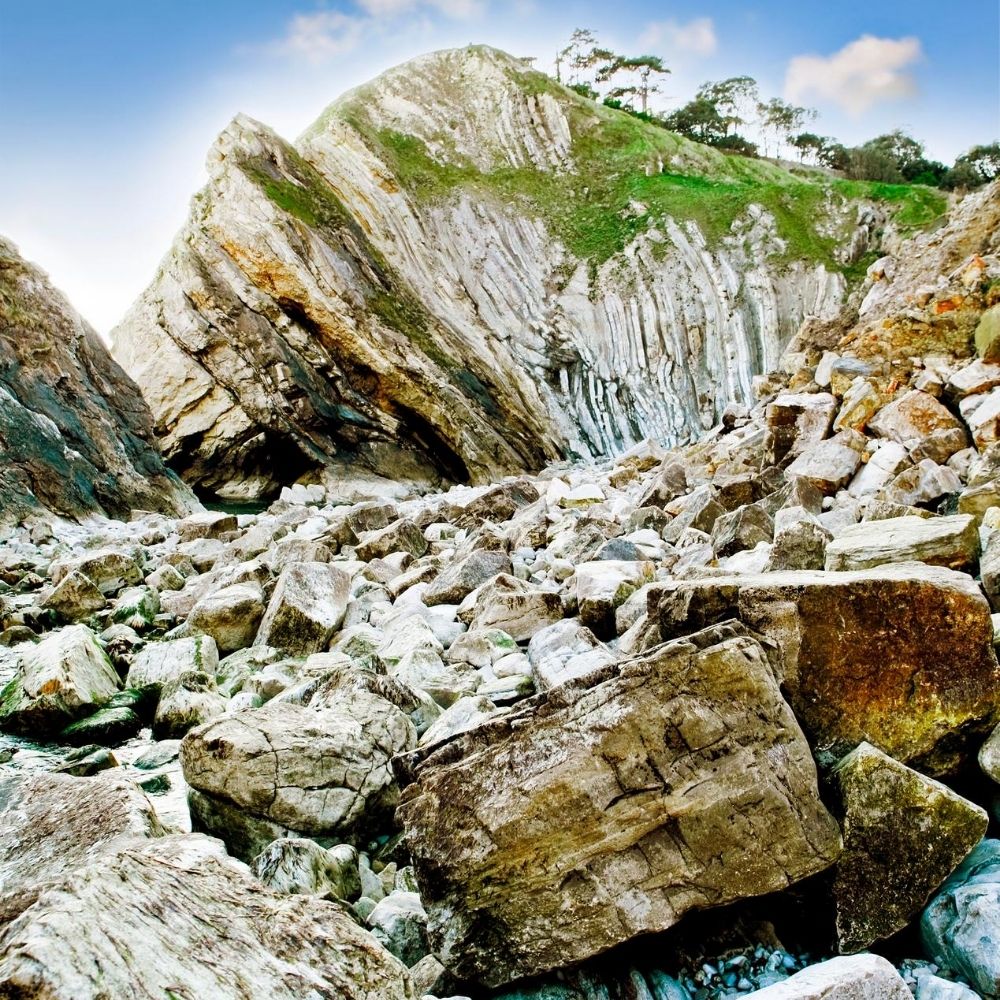
What do I need for fossil hunting?
For many aspiring palaeontologists, the idea of digging your first fossil is a milestone that brings a great chance to be a part of history. So, what do you need to make fossil hunting more unforgettable and productive?
If you are going fossil hunting with children, it may be handy to take a magnifying glass and a small brush to allow you to clean off debris and see the fossil in more detail.
A camera and a notebook may also come in handy if you want to record and take pictures of your findings. If you are visiting on a winter’s day, be sure to wrap up warm and always wear the correct footwear for rocky areas.
As you become more acquainted with the Jurassic Coast and fossil hunting, you’ll need a drilling hammer and a geological hammer to break away rocks. You’ll also need chisels to extract fossils. Of course, don’t forget to wear gloves and goggles for protection, as extracting fossils from rocks may put you at risk for cuts, abrasions, and wounds. If you search in water, it’s best to wear a pair of good quality waders for convenience and to search easier.
Whilst on the Jurassic Coast, you must make sure to pay attention to the tides that sweep in and out at certain times of the day. The tide can be dangerous, so you should always make sure you are walking along the beach at the safest time.
While you are visiting this vast stretch of coast, enjoy the views of unspoilt land and have a brilliant fun-packed day out.
Have you ever been fossil hunting, what did you find?

This is a collaborative post.
Fancy checking out another post? Just click here!
Pin it!






What a fabulous place! Fossil hunting sounds fun!
My daughter is going to this coast for her birthday in November and is looking forward to fossil hunting. I will send her a link to this article which will help tremendously, thanks,
Aww, I hope she has the most amazing time, my birthday is in November as well 😉
Happy birthday for next month x
Thank you!
Thanks for the tips,me and my partner want to do this x
It is such an awesome thing to do – I hope you enjoy it if you give it a try.
Wow so nice
Would love the opportunity to visit the Jurassic Coast in the future. A fossil hunt tour appeals to me. Meantime I have acquired to books to read. Also hope to get involved in some Arts and Crafts.
It is a beautiful location – with so much to do and see definitely one of my favourite places.
omg I’ve never heard of this before and it looks and sounds incredible. Thanks for this!
Your welcome – it is such a lovely area I hope you enjoy it if you go!
May be something that we will consider in the future :- Life Long Learning.
We tried to go fossil hunting last week but its been picked dry by all the tourists. The best time to go is between October and April as the fossils get washed from the cliffs onto the beach. Charmouth is my fave spot!
Oh no that’s such a shame. I have to admit we normally go out of season anywhere as I don’t do heat and it’s cheaper!
Charmouth is my favourite as well! I have totally fallen in love it.